Showing posts with label career. Show all posts

Sunday, October 21, 2012

Mentor Every Moment

Last week, the Hudson-Mohawk Chapter of the American Society of Training & Development (http://hudsonmohawkastd.org/) kindly invited me to participate on a panel discussion: Not Just Orientation: Onboarding is New Employee Development.

Philosophically speaking, I'm a firm believer that successful onboarding engages the employee at the beginning of the recruitment process (e.g., placing the job posting), much in the same process and manner that a company engages, obtains and retains their customers.

As we shared best practices, the discussion turned to formal mentoring programs as an extension of onboarding / retention. Always the HR heretic, I laid the mentoring gauntlet down. "With all due respect to formal mentoring programs," I commented. "One of the gems that GE gave me is that every manager is at least a mentor, and at best a mentor and a sponsor. The best HR boss of my career to date, Bill, walked the talk of his belief that you mentor and sponsor the folks you work with to promote them to at least your level or above. Bill literally pushed me out of his organizational nest to take a promotional move at the corporate level -- even though I didn't want to leave Bill! He made such an impression on me, that 20 years later, I'm still talking and writing about Bill and the positive impact he made on me and my career path."

The magic of being mentored is when your mentor recognizes your gift and lifts it and you up, encouraging you to run with your gift(s) and build your career and/or life's vocation. Bill's wish was for me to run the Corporate Employee Communications function. However, Bill's real gift to me was not just recognizing my talents, but standing up for me and my talents. He not only pointed out the ruby slippers of my talents, he also stood up for my right to express my talents to support my success, and put his reputation on the line to recommend and push my promotion. The seeds Bill planted 20 years ago live and thrive with me today.

As an expression of my gratitude to Bill and other mentors like him who have graced my path, I mentor every moment. When I meet a talented professional, I acknowledge their talent and lift it up, planting those seeds of possibility that Bill planted so generously in my own career path. The continuity of planting those seeds - growing professionals, businesses, seasoned practitioners rather than apple trees - benefits us all.

And sometimes, the seeds that grow come back and let you know how they're doing. Stacey, a talented writer I met 20 years ago, sent me the sweet gift of this note today:

Hi Deb - 

You and I met through Loretta G. eons ago. You were very kind and mentored me back in the early 90's. I was a lost sheep, in a toxic job..... My life has transformed since then - in more ways than I thought possible. 

I live in Albany and think of you sometimes whenever I pass your husband's plaza - he had a framing store, right? Looks like you are doing fantastically. Just wanted to say Thank You for taking the time all those years ago and doing a wonderful Mitzvah - you planted a seed and look how it boomed! 

Best Wishes,

Stacey.

Happy sowing, my good and fellow mentors.    

Sunday, October 14, 2012

Change and Persevere in Business and in Work

My friend Lisa recently told me the story of how her husband, Brian, became a Mechanical Engineer. Right around the time they got married 15 years ago, Brian got tired of working at his low-paying, swing-shift factory job, an irrelevant path resulting from earlier youthful struggles. He wanted to go to college, but he was concerned that he wouldn't succeed. He was 28 years old.

Lisa, who at the time was a college admissions counselor, gave him some practical advice. "I advised him to take an English course at the local community college," she recalled. "And depending on what grade he received, that would give him a sense of his chances of getting a college degree." Brian got an A in that English course. Still in need of proof, Brian then took a math course at the community college. He got another A. Which led to his Associate's in Science degree in Engineering Science. Which then led to his admission to Syracuse University, where he received his Bachelor's of Science degree in Mechanical Engineering. He was almost 33 years old, a quintessential late-bloomer.

When Brian died almost 12 years later this past August suddenly and unexpectedly from cardiac arrhythmia, he was the lead Mechanical Design Engineer at his company. In the online memorial guest book, one of his managers wrote: Engineer: Extremely smart, analytical mind with common sense.

At Brian's memorial service yesterday, his best friend Wally, an Engineering professor himself and Brian's biofuel co-producer / co-conspirator, summed it up neatly. "Brian changed, and persevered. He was an example to us all." Indeed.

Sunday, September 30, 2012

Liar, Liar, Job on Fire

When an employee falsifies any records for any reason, whether it's time sheets, doctor's notes, travel expense reports, etc.: in my experience as a Human Resources practitioner, it's pretty black and white: it's theft of company resources, grounds for immediate termination. Moreover, in my HR travels: if an employee is stealing company time by falsifying a time sheet indicating time worked when in fact they were, say, sleeping in a warehouse rack location on a pallet 30 feet above the cement floor (a double-play of theft of company time and violating safety rules, both gross / willful conduct violations each worthy of immediate termination), that lack of integrity is usually just the tip of the internal-loss iceberg, an indicator of other internal theft / loss prevention issues, e.g. the theft of company money and/or property.

Now, we may debate that I lean towards the hard-ass side, reminiscent of my Marine-Corps-trained dad. Before we debate too deeply, the following true story of employee falsification and theft of time is submitted for your consideration, straight from the New York State Inspector General's press release last week and quoted by The Times Union:
"Acting State Inspector General Catherine Leahy Scott today announced the arrest of a New York State Department of Health employee on felony charges, accusing him of submitting an application for handicapped parking supported by a forged doctor’s note. He also was charged with filing paperwork certifying he was working when he was not.
[The employee was arrested] by investigators from the New York State Inspector General’s Office and charged with four felony counts of Offering a False Instrument for Filing in the First Degree and one misdemeanor count of Criminal Possession of a Forged Instrument in the Third Degree. He faces up to four years in prison if convicted. The Inspector General’s investigation determined that in May of 2011, [the employee] obtained special parking privileges at his work location at Empire State Plaza based on a forged doctor’s note.
In addition, Defendant admitted that on three separate occasions in January and February of 2012, he submitted certified time records indicating that he had worked full days when he had not reported to work at all. (Emphasis mine.)
“New Yorkers have every right to expect that state employees will comport themselves with the highest degree of honesty and integrity,” said Acting Inspector General Scott. “Fraudulently obtaining handicapped parking not only is unlawful, but potentially inhibits the rights of New Yorkers with disabilities in need of accessible parking. Further, any fraudulent abuse of time and attendance records undermines public trust. Such conduct is not tolerable.”
[The employee] was arraigned today before Town of New Scotland Judge David Wukitsch and held in County Jail in lieu of $10,000 cash or bond. [The employee] has worked for the Department of Health as an Information Technology Specialist II since 2007. His current salary is $58,311.00. Acting Inspector General Scott thanked the New York State Police for their assistance in the case and the Albany County District Attorney’s Office for the prosecution of this matter. The defendant is innocent until and unless proven guilty in a court of law."
The debate on whether falsifying time sheets, doctor's notes, travel expense reports, etc. is theft takes a bit of interesting turn when it's money from the pockets of New York State taxpayers that's being filched. That outrage that you may feel at having your hard-earned tax dollars unlawfully stolen is underscored by the felony charges of forgery filed by the NYS Inspector General's office. Not to mention the reputational damage to the accused employee, his managers and the NYS Department of Health.

Upholding and enforcing true / accurate records protects the reputations and assets of everyone in your organization, including but not limited to promoting to industry those employees who will not / cannot follow those standards of integrity. You can handle the truth, and so can your colleagues, executives, managers and employees.

Sunday, September 23, 2012

Let Go of Resentment to Move Forward Successfully in Business and at Work

Resentment is like drinking poison and then hoping it will kill your enemies.
- Nelson Mandela

As these days of awe draw to a close this Wednesday, I'm reminded of a transformational termination of an employee. How can a termination be transformational? Because the employee took responsibility for terminating himself.

In the vast majority of terminations I have adjudicated as a Human Resources practitioner, the employees have terminated themselves: they exhausted the progressive discipline process (usually, the issue was a fundamental inability to get their butts to the building and work their prescribed schedules). Many organizations require employees to work prescribed schedules to meet / exceed customer needs. For example: like getting your paycheck on payday? It helps when the folks in Payroll are reliable so you in turn can rely on receiving your paycheck.

After many years of conducting termination conversations, I don't expect the terminated employee to be happy about losing their job. Of course, they're almost always upset. On the surface, they're upset with me and their manager, but really, they're upset with themselves and don't have the emotional intelligence to take responsibility for their own actions. If they had that level of emotional intelligence, they in all likelihood wouldn't have terminated themselves in the first place. At the beginning of my career, I alternated between incredulity and indignation at the lack of responsibility for terminating themselves. As time went on and my experience grew, I considered myself a termination doula, with the goal of making the experience of transitioning from their job as dignified and professional as the terminated employee will allow.

Attendance was this particular employee's problem as well. He clearly did not care about getting to work on time, and his manager had given him more than enough chances to work his scheduled hours. I was waiting in the conference room for the employee and his manager. They entered the room and sat down. "You know why we're here?" I asked the employee. His manager, inexperienced with terminations, took a deep breath. Employee looked at Manager, and then looked at me. "I did it to myself," Employee stated calmly. I could feel my eyebrow rise in surprise. Manager finally exhaled. Employee turned to him. "Manager, don't feel bad. You gave me more than enough leeway to clean up my act, and I didn't take you up on it. This is my fault." Manager was touched by Employee's candor. "Employee, you're a smart guy and I really enjoyed working with you. But-" Employee finished Manager's sentence. "But I just couldn't get my ass to work. I know." Manager nodded, and looked at me. I nodded too. "Okay, sounds like we're all set. Manager, please get Employee's coat from his desk so we can finish this up." Manager, relieved, left the room.

I opened up the folder with the two copies of the termination paperwork, and passed them across the table to Employee with a pen. "Please sign both copies and keep one," I requested. "Sure, no problem," Employee replied, and scribbled his signature on both documents. He slid one of the documents back to me, and folded his hands as if he had just bought a house. I was intrigued. "I want to commend you for how professionally you've handled this conversation," I began. "Not the way this conversation usually goes." Employee shrugged. "Why burn a bridge?" he replied. "You've all treated me well, it's the least I can do given the situation." Employee's authenticity invited me to transform my role in the conversation. "Manager tells me that while you're smart, you hated the clerical work you were doing. What is it that you'd really like to do?" It was Employee's turn to be surprised. "No one's ever asked me that before," he replied. "I have 15 credits left to finish my Associate's degree in Graphic Arts - I want to be a Graphic Artist." There was the answer. Bad job fit. I leaned across the table, finding myself, surprisingly, in mentoring mode. "Do yourself a favor," I replied. "Finish your degree, and get a job doing what you love to do. Clearly, you've learned what happens when you take a job hating what you do." He laughed. "Clearly!" The door opened, and Manager entered the conference room with Employee's coat. I stood up, and extended my hand. Employee shook my hand. "Thank you," he said. "No, thank you," I replied. "Best of luck to you." Manager shook his hand too. "Take care," Manager said. "You too," Employee replied. "Thank you." Employee left the conference room. Manager looked at me. "Well, that was different," he said. "Yes," I replied. "He was a good guy in the wrong job. Hopefully, he'll go for the right job the next time."

How will you let go of resentment, take responsibility and move forward to succeed in business and at work this week, and in the new year?


Sunday, September 16, 2012

Pop Quiz: How Many of These LinkedIn Success Tips are Part of Your Profile?

  • Profile Spell-Checked and Formatted Professionally, Just Like Your Website? (e.g., you're not one of the one million current LinkedIn users that have misspelled manager as "manger")
  • LinkedIn Headline Crisply Announcing Your Product Offerings / Areas of Subject-Matter Expertise (SME)?
  • Résumé Summarized, Not Posted in Its Entirety?
  • Included Your Certifications and Publications?
  • Links to Your Blog / Website / Twitter / Facebook Page Included?
  • All of Your SME Skills Listed to Keep You in Searches?
  • Professional Headshot Photo, Eye-Contact, Smiling?
  • Recruiters: When Looking at Profiles, Are You Anonymous?
  • Public LinkedIn URL to Optimize Appearance in Search Engines?
  • Authentic Recommendations Given Then Received from Managers, Partners, Clients?
  • Joined the Maximum 50 Groups Strategically?
  • Joined All of the Subgroups You Can?
  • Strategically Added the LinkedIn Applications (e.g. Box.net, etc.) That Make the Most Sense for Your Career / Business?
  • Posting Relevant / Useful Updates to Your Profile and to Your Groups Several Times a Week? (e.g., Your Blog Posts, Articles of Interest to Your Audience, etc.)
  • Purchased a Business LinkedIn Account to Increase Your Reach to Source More Business? (e.g., Is a $50k Sale Worth the Much Smaller Monthly Cost of Your LinkedIn Account? In the spirit of full disclosure, I don't work for LinkedIn or own LinkedIn stock!)
  • Managing Your LinkedIn Invitations Strategically, Joining LinkedIn Open Networker (LION) Groups, Following LinkedIn Etiquette and Avoiding IDK (I Don't Know You) / Spam Complaints from Other LinkedIn Users?

Best wishes for a Sweet and Successful New Year!


Sunday, September 9, 2012

Customer Service is the Key to Success in Business and at Work

I am a firm believer that Customer Service is the key to success in business, and especially at work. When I'm centered / in the zone that everyone receives the benefit of my Customer Service, whether they're internal team-mates or supervisors or actual external paying customers, I stack the deck in favor of my success. While it's not an iron-clad guarantee, it is exceedingly helpful in preventing distracting and energy-sucking resentment build-up for my internal / external customers, and especially (and selfishly), for me. I'm a firm believer in Nelson Mandela's statement that "Resentment is like drinking poison and then hoping it will kill your enemies."

Case in point: Supervisor Customer Service. When I have serviced / over-serviced my supervisors throughout my career, I know I'm on the side of the angels, and I consequently stay centered and therefore focused on achieving my goals. For one particularly anxious and difficult supervisor earlier in my career, I actually loved the challenge of keeping him proactively briefed before he could check on my work.

This philosophy works particularly well for those of us blessed with sales, marketing and customer service DNA. Or, as my Lower-East-Side-born-and-bred salesman father would say: "Over-service the assholes."

Dad's advice has almost always been helpful (albeit Marine-salty), particularly with the supervisor who wanted the work performed exactly as they would do it, pre-approved; no autonomy at all, and my mastery and purpose were not even considered. Not the ideal situation. "I don't know what to do," I said to my dad, extremely distressed at the time. "I've never been treated this way before as a professional." Dad tapped into my sales DNA. "In order to help you best detach emotionally from the situation," he coached, "I'd like you to look at them as your biggest, most important customer. And your job is to meet / exceed their needs." I wasn't so sure. "Even if my supervisor is being disrespectful?" I queried. He reinforced the coaching. "They're the big hairy customer," Dad replied. "Listen to their needs, meet their needs, make them happy. It will make what sounds and feels like an abnormal situation feel more normal, because you're great at customer service - like me." I finally exhaled. "Okay, my supervisor is my customer. I've handled difficult customers my entire career; I can handle this." Dad agreed. "Yes, you can." And I did. My customer service belief system outweighed my emotional reaction to the unfairness: all that mattered was servicing the customer by listening to their needs and then subsequently meeting their needs. (My fellow mediator friends and colleagues: sound familiar, e.g. the source of all human conflict is needs met and unmet?)

In taking the concept of Holistic Customer Service one step further, I'm also reminded of Bob Sutton's recent blog posts on the poor customer service his friend's 10 year-old daughter received from United Airlines, where Chapman and Thomas's book, The Five Languages of Apology, is mentioned as a path United Airlines should have taken in this situation. In my Customer Service experience, the power of an authentic apology when a customer is distressed is worth its weight in gold for all involved, including me as the Customer Service person initiating the apology:
  • Expressing regret - "I'm sorry."
  • Accepting responsibility - "I was wrong."
  • Making restitution - "What can I do to make it right?"
  • Genuinely repenting - "I will try not to do that again."
  • Requesting forgiveness - "Will you please forgive me?"
And in their workbook, The Five Languages of Apology in the Workplace, Chapman and Nelson lift up both Mandela's and their philosophy even further, with the LEARN model:
  • L = Listen. Hear the customer’s complaint.
  • E = Empathize. Let the customer know that you understand why they would be upset.
  • A = Apologize.
  • R = Respond and react. Try to make things right.
  • N = Notify. Get back in touch with the customer and let them know what action has been taken.
Ironically and wonderfully, when we stand up for our customers (team-mates, supervisors, etc.) in their times of distress and in this manner, it is then that we build the strongest business relationship bonds, supporting retention.

 How will you use your Holistic Customer Service skills to best support your distressed customers in business and at work this week?


Sunday, August 12, 2012

Planning Breeds Creativity in Business and at Work

In the course of my client work this week, I've had the opportunity to talk to business owners and professionals whose comfort zone is the creative / R&D. Strategic or business planning for them, at first blush, seems to be the anti-creative. One colleague actually cringed when I suggested that they pull together a one-page business plan. In the spirit of doing what I say, I then showed them the one-page business plan that lives in my planner:


I feel your pain. Putting together a business, strategic or career plan used to evoke the same reaction for me as getting ready to do our personal and business income taxes. Remember the days before doing your taxes via computer? I'd do all of the work in pencil first. For weeks. Ugh, now that gives me the willies.

Business, strategic or career planning, however, is the marvelous act of creativity. The act of writing your business plan down is absolutely the act of creation. Financial forecasting, break-even and all.

It was that work of business / strategic plan development that created my husband Joel's business, The Best Framing Company, and my business, Deb Best Practices. Revenue-producing businesses that did not exist until we conceived the idea for each business (focusing on our respective strengths and marketability), and created the respective business plan first before proceeding with implementation.

We update each plan at least annually as our businesses grow and our markets and clients change. Everything we do in our businesses flows from those plans.

As a highly creative professional artist, writer and picture-framer, Joel's advice is always to measure twice and cut once. Pretty planful for a creative guy.

What's your plan to measure twice, which will in turn shore up your successful business and/or career implementation?

Sunday, July 29, 2012

Embrace the Fear and Take The Risk Anyway in Business and at Work

For a salesman who worked on 100% commission most of his career, my dad injected more of his own fear rather than encouragement of taking risk in the face of my own budding vocational interests. Given generational and gender factors (I was a girl, wife and mother-material, not career-material in his assessment), years later, I understand the limits of my father's assessment context. On top of those factors, Dad had always been an employee, albeit one paid on 100% commission. And the icing on the fear was that fact that his own dad had died when he was only 17 years old.

When I was twelve years old, I signed up with my mother's permission to sell household products from some long-forgotten mail-order company, while Dad was away on a business trip. I showed early indications of Dad's sales DNA and actually made 4 sales on our block in my first few days. When Dad came home from the business trip later that week, I proudly showed him my sales slips. He reviewed them like an IRS auditor, frowning. "You calculated the sales tax wrong," he said, pointing to the columns on one sales slip. "You're too young to do this. You need to return this money and send the sales kit back." I was surprised. "Why?" I replied. "I can just go back to each customer and fix the sales slip." Dad went into his Marine-sergeant mode. "No! This is not a discussion. I will not have you embarrassing me with your mistakes." I went back to my new customers, apologized for bothering them, and sent the kit back as I was told.

When I was 15 years old, I took a job for the summer as a counselor at a reputable sleep-away camp 15 miles from our house. In order to get the campers to bed at a reasonable hour, the camp did not observe daylight-savings time. I made the mistake of calling home at 10 PM one night from the camp director's office, as for us at camp it was only 9 PM. Dad was upset and concerned. "Why are you still up, working so late?" He demanded. I explained the artifice of not observing daylight-savings time. Dad did not buy it. "I'm coming to pick you up and take you home now," Dad decreed over the phone. I did not take his supervision this time. "No Dad, I'm staying here. I like it and they're not over-working me. Please don't embarrass me." My father paused, and I looked over at the camp director. "Could you please explain to my dad how we handle daylight-savings time?" The camp director smiled. "Of course," he said. He took the phone and spoke to my father for a few minutes (they had met when my parents dropped me off at camp earlier in the week), repeating the daylight-savings time explanation. The camp director handed the phone back to me. "You can stay," my father decreed, grudgingly.

When I graduated from the University at Albany, I did not return to the New York City / metropolitan area to look for a job. Instead, I took a part-time job with my senior-semester internship boss Bob, my home Assemblyman, and a part-time job at Macy's. "I don't understand why you just don't come home and get a real job in the city," my father groused on the phone. "Because I want a job as a writer, and it's cheaper to live in Albany than it is to live in New York City," I replied. "Don't worry Dad, I'll be fine." And I was. It took about 10 years, but Dad finally realized that we have real jobs up here in Albany, too.

In both my career and in my business, the risks I continue to take while embracing (and sometimes wrestling with) the natural / nurtured fear is the lotus I harvest from the mud of fear time after time -- it is a drive that I cannot deny. It continues to get better as time goes on and the more I practice and see the undeniable proof of the great results I produce. As my good friend and colleague Lisa Jordan maintains, when we come from a place of fear, the expression of our gifts and talents are limited, and no one benefits. But when we come from a place where fear takes a back seat to the wonderful creative potential of risk, even in the face of potential failure or embarrassment: that's where the potential of success is limitless.

This week, and going forward: I celebrate our collective courage (e.g.: taking action in the face of fear) and joy in the risks we take in both business and at work, in support of our mutual success.

Sunday, June 24, 2012

Teach Your Children Well in Business and at Work


I like to tell my son Noah, who turns eleven years old next month, that he attended business meetings with me long before he was born. A bit more jaded now that he's experienced the Family Health unit at the end of his 5th grade career (and on the brink of adolescence: sniggering like Beavis and Butthead over even mild / unintended innuendos), he just asked me recently to tell him the story again. "You had the hiccups constantly, that's when I knew you were awake," I recalled. "I would start giggling a bit in the middle of a meeting, because your hiccups were both powerful and distracting." Although Noah grimaced, I knew he loved the story.

Adolescence aside, Noah's formative years have definitely been different from those of his parents.

Just like Joel's and my formative years were different from our parents. My dad made the happy mistake of taking me to the office at the age of four one Saturday morning to give my pregnant mother a break. That visit - and the subsequent breakfast together at a diner, full of other working stiffs - sealed the deal. So that's where the money came from to buy the Good Humor ice cream, I concluded as I watched Dad pay the bill for our breakfast with dollar bills instead of the Good Humor dimes I usually handled. I wanted a job from that day forward. Fifteen years later, on a hot and aggravating journey north to start my freshman year at SUNY Albany with the initial goal of a double Pre-Med / English major, my father, ignorant of how he had contributed to my journey fifteen years earlier, clearly thought I was wasting my time and my student loan money with a line straight out of Mad Men, repeating the script my mother, his freshly-ex-wife, had followed. "Why aren't you staying home, getting a job, getting married and having kids?" Without missing a beat and a bit taken aback, I replied: "That would involve a date, which I haven't had yet. I'll keep you posted."

As I journey with Noah through his childhood, I marvel at how different his path is from mine and wonder how the mixed influence of witnessing both the career and entrepreneurial adventures of his parents will influence his own career and business decisions.

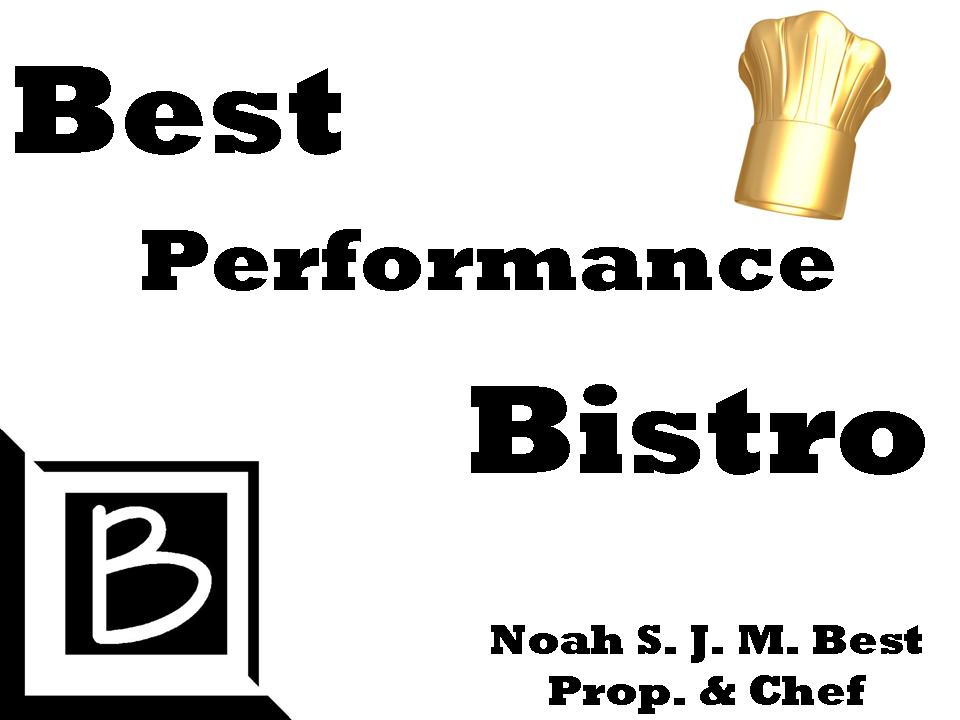
At the age of five, Noah wanted to be a chef and run his own business: Best Performance Bistro. He talked about it all the time to everyone - his grandparents, his kindergarten teacher, us. I made a sign for his dream business; it hangs to this day on the wall of my office:


Last year, Noah and his friend Frankie spent a Saturday afternoon on a video game company business plan, with Frankie as the CEO and Noah as his second-banana. Noah did not want to be Frankie's second-banana.

As Noah experienced school rules (particularly when a few of his buddies did not follow the rules), I reinforced the learning with an HR geek's eye to the future. "It so important to learn how to follow the rules in school. Because if children don't learn how to follow the rules in school, I usually end up firing them as adults," I hammered home, as Noah listened, wide-eyed.

Noah's career and business vision continues to evolve. He experiments with "Let's Play" videos, which in turn have strengthened his presentation skills to the point where his elementary school principal suggested that Noah consider a career in broadcasting. It's all good fodder for learning marketing on-the-job. Noah is also developing a video game and composing the accompanying soundtrack music, for separate potential sale on Steam. We love his energy, ingenuity, and of course, him. His current goal is:
  • Go to a 2-year SUNY college and take computer science, business and culinary arts courses;
  • Finish his degree at a 4-year SUNY college (or at the Culinary Institute of America, if he gets a scholarship);
  • Work for someone else first before a) starting his own successful video game software company and b) then, once he makes his fortune, opening his own gourmet pastry shop.
Noah is working on a new business plan where he is the CEO of his own video game software company, and his pals Charlie and Tim are part of his leadership team. I'm tentatively slated as the Chief Administrative Officer, grateful to achieve one of my goals to be part of the leadership bench plan of a start-up company. Per his request, I've also shared the business plan for The Best Framing Company, which his father and I worked on together 7 years before Noah was born.

As his parents, Joel and I do our best to also give Noah the gift of authenticity: to see us as fellow creative humans as well as his parents and mentors, taking risks and experiencing, like Edison, the occasional creative failures almost always in stride. For to do otherwise would stifle the music that streams from within each of us that must be expressed / shared. I can't wait to see what Noah cooks up as he approaches adulthood. I'm honored to witness his journey, as we Bests continue to mentor each other.


Sunday, June 17, 2012

To the Men Who Have Mentored Me: Thank You.

I have been privileged as a professional woman to have been both mentored and sponsored by a number of men with a wide variety of talents and backgrounds. Some of them have earned by blood relation my best wishes on this Father's Day; the others are members of my extended professional and entrepreneurial tribe who by the happenstance of our work together, used their discretionary power to formally and informally recognize and subsequently nurture my talents and mentor and/or sponsor me on how to best leverage them: my best wishes to them as well. My list of luminaries is by no means inclusive, and I'm pleased to report, rather long in reality.

Some of them are on my Board of Directors, and some of them were the guru in the path at the exact moment this student was ready to learn her next lesson. In no particular order:
  • My dad, who brought me to his office when I was 4 years old, years before Take Our Children to Work Day, inspiring me to want to get a job on the spot, and who later in my life taught me how to cold-call, find great jobs and who as a life-long commission-only salesman, refused to ever let me give up;
  • My granddaddy of blessed memory, who taught me how to change the flat tire which blew out in front of his house instead of changing it himself, and who explained how important investing for the future was while inspiring me with his incredible drive and work ethic. Years later, paying it forward, I taught my dad, the city boy, how to change a flat tire;
  • My high-school teacher Dave of blessed memory, who invited me to debate daily in Social Studies to keep the class lively for all of us, and sadly, who died before I graduated college;
  • To my high-school friend Tooch, who encouraged my writing and musical creativity by writing down the music of the only song I have ever written (As a "learning-disabled" alto, I cannot read or write music), and then featured it as part of an Under Pressure Band performance during our senior year in high school;
  • My home Assemblyman Bob of blessed memory, who during my senior-semester internship taught me to leverage data and research to navigate political twists and turns; to spot hawks on the NYS Thruway; that utility trucks (long before the advent of GPS) were the best source of directions when you were lost; who gave me my first career job, post-internship / post-graduation; and who abhorred wearing ties and related professional artifice;
  • My entrepreneur "big-brother" John, who three years ago took me out to breakfast and asked me why I wasn't working for myself;
  • My friend Allen, welcoming me as the newcomer who asked to join the church Personnel Committee and then sponsoring me for several tenures in lay leadership;
  • My brothers Rob and James, who put up with years of dopey end-user support and hardware questions from me, until I had both absorbed enough of their teachings and, (which I'm sure was a great relief to them) finally learned enough to start utilizing my girlfriend Google instead of calling them first;
  • Bob, my former boss who "saw" me and what I had to offer his organization, creating both a job and wonderful career experience for me as a result of a courtesy networking meeting;
  • My former boss Bill, who tirelessly coached me on a daily basis because he believed in me and my talent;
  • My friend John, who's insight as a therapist and healer as well as his treasured friendship during the last 25 years has been an invaluable touchstone;
  • My friend and colleague Dale, who taught me everything he knew about loss prevention, retail and corporate life;
  • My friend and colleague Barry, who taught me distribution operations and to shake off setbacks;
  • My friend and colleague "Coach" Don, who took the time to teach me change management and share his career best-practices, codifying my recent and past experiences thereof;
  • My friend and colleague Peter, who continues to teach me that mediation is the answer, and who's vocational commitment and leadership is second to none;
  • My friends and colleagues George and Andy, who continue to inspire me with the success of how they so skillfully execute the strategic plan of their burgeoning business;
  • My colleague and new friend Al, who with gusto has invited me to jump into the entrepreneurial waters with him, stretch my arms and enjoy the swim;
  • My friend, mentee and colleague Ryan, who returns the gifts I have given ten-fold;
  • My friend and colleague / partner Ron, who has journeyed with me through the ebbs and flows of the economy in support of our mutual success;
  • My husband and my son, who continue to sustain me with the unwavering faith and belief in my talents and capabilities as we journey this path together.
My tribal brothers, thank you: you truly put the men in mentor. A wonderful Father's Day to you and yours.

 
Cohoes Falls, Cohoes, NY: Sacred Site for the Mohawk Nation.

Sunday, June 10, 2012

We May Leave Our Managers, But We Stay for Our Peer Mentors (Friends) at Work

I bonded with Dale as soon I met him after my fait accompli interview process with the rest of the Executive Team. Dale was the last interview on the schedule. All of the prior interviews frankly did not meet the threshold for an employment interview. Instead, they were meet-and-greet chats, e.g.: "So the CEO has hired you for the HR team; nice to meet you;" or "I understand the CEO is very impressed with your background;" or "Let me give you some advice about how to best work with the CEO."

My soon-to-be new company did not have a Head of HR at the time I was interviewed / hired, and hadn't had one for more than two years. I was recruited by the CEO as a Senior HR Manager to help bring their HR Department to the next level and to work with the CEO to recruit a new Head of HR. While I knew that I would do a great job for my new company and I was honored to be hired directly by the CEO, I wanted the same due diligence performed for my candidacy as I performed as a Recruiter for the candidates I hired. I wanted my strong skills, abilities and experience to be reviewed, validated and documented thoroughly so we could all start off in our work together on a high note.

As the Vice President of Loss Prevention, Dale did not disappoint. "So," Dale began, opening up his folder to my rèsumé, liberally highlighted and marked with his notes and questions, "What is union avoidance, and how would it benefit our company?" I exhaled with relief and smiled at him. "Thank you for interviewing me," I replied. "Please ask me all of your questions. If you have the time; I certainly do. I want you and the CEO to get all of the information you need to feel completely comfortable with me in my role." Dale smiled back. "Don't worry, that's my plan."

Being in a compliance role in any organization, especially a new organization, is not the Miss Popularity job, to put it mildly. So to have Dale as a colleague, peer mentor and eventual friend who was also in a key compliance role for the organization was a critical touchstone that absolutely contributed to my career and developmental success. Dale broadened my business understanding and acumen tremendously as we accomplished our work together: mergers, acquisitions, rolling out new programs like pre-employment drug testing, you name it. Small but significant things, such as upon arrival for a site visit, to visit the bathroom first. The tidiness - or chaos - of the bathroom more often than not indicated how well the site manager was doing their job. Dale was also intensely curious about my area of subject-matter expertise, and it was my privilege and pleasure to share my HR / Recruiting / Change Management experience, strength and hope in return. It was a peer mentoring relationship that benefited both of us equally: the type of work relationship flow that is pure business and career development gold. Dale was a significant factor in the length of my tenure with the company. It's the type of retention that CEOs with any smarts strive for.

Dale was subsequently promoted to an operations executive role; and currently, runs his own successful business. All expected and well-deserved. I had my first inkling of Dale's abilities beyond his compliance role about a month into my tenure at the company's national District Managers' conference. When Dale got up to speak on his topic, Loss Prevention, the entire group jumped to their feet spontaneously and gave Dale a standing ovation. Part of it was in recognition for the company's great shrink performance; but really, it was all for Dale: they saw him truly as their business partner and leader, not just the head compliance guy enforcing the rules.

Me, too.

Lennon's Irish Shop

Sunday, June 3, 2012

Innovation and Growth in Work and Business Love a Vacuum (Breakdown)

My husband Joel's business, The Best Framing Company, celebrates its 18-year anniversary this month.

The Best Framing Company was conceived early in 1994 when the owner (Joel's boss at the time) of the local Deck-the-Walls franchise decided not to renew his 10-year franchise. Before he closed the store down, the franchise owner offered Joel and me the opportunity to renew the franchise for $350,000, at a 6% interest rate. The franchise owner offered to hold the 10-year note, and we would make the astronomical and discouraging monthly payments to him, with little hope of making any profit. No, thank you. Joel had had enough of mall working life. And we had just purchased our first home, so our savings account was a bit thin and our bills were much more substantial. Joel and his boss proceeded to make arrangements to close the store by April 1994, and Joel commenced his job search, a bit discouraged at the thought of working for one of the competitors.  

That offer from Joel's boss sparked an idea. Why not open our own store, in a small strip mall, and Joel could make his own hours? As a skilled custom picture-framer, Joel had a healthy client list of happy customers. Armed with that unique selling proposition and our respective skill sets and smarts, Joel and I proceeded to complete the four months of research and legwork to build a business plan to obtain a Small Business Administration (SBA) loan to open The Best Framing Company's bricks-and-mortar storefront.

By the time Joel was laid off, we completed the business plan. Joel continued his job search and fixed up our new 1944 house while I shopped our 40-plus-page business plan around to SBA loan providers.

One of the local nonprofits at the time ran an SBA loan program: I sent the business plan to the nonprofit, and the 21 year-old pisher loan coordinator said that 1) our business plan was great; and 2) we were a shoe-in to get our loan. The Pisher assured us we would be on the May 1994 loan review committee agenda. Armed with that information, I made arrangements to lease a store space effective June 1, 1994 and order the materials Joel would need to open the store, using a $6,000 credit union line-of-credit.

The day before the loan review meeting, I called the Pisher to ask when we would appear. "Oh," he said, rightfully embarrassed. "I forgot to put your loan review on the agenda. He heard me choke. "But don't worry," he hurriedly said, hoping to avoid my expected outburst. "We can get you on the July agenda. I was deadly and sadly, calm. "You've just put my husband and me into financial jeopardy," I carefully said. "What are you going to do to fix this?" The Pisher did not man up. "I'm sorry, there's nothing we can do," he said. "But let me give you the phone number of Manny Choi at Fleet Bank, who is on our loan committee. He may be able to help you." I hung up the phone and cursed loudly, dropping F-bombs for 15 minutes straight. When I was done, and calm again, I called Manny Choi.

 He agreed to meet me the next morning. I did not sleep at all that night. And while I'm not normally a crier, I cried bitter tears all night long. Joel tried to console me, but I was inconsolable. "Who the hell do I think I am," I wailed to Joel. "What business do I have thinking that I can put together a business plan?" Now I've pushed us deeper into debt. $6,000 will not cover all of the initial carrying costs. I'm so sorry I've gotten us into this!"

Joel knew better. "It's a great plan, and we'll get a loan somewhere else, I know we will," he said, 110% solid in his belief in my abilities, and his own. "We can definitely do this." I took a much-need break from the tears, sniffling. "You're just saying that because you love me," I said, whimpering a bit around the edges - also unlike me. Joel hugged me. "No, I'm not," he said, firmly. "I would tell you if I thought we should quit. We haven't explored all of our options yet."

The next morning, calm from lack of sleep and all cried out, I donned my best blue navy suit and met with Manny Choi. I watched him for nearly 45 minutes as he read all 40 pages of our business plan, occasionally nodding. He closed the plan, and looked up at me. "What do you think?" I asked him. He smiled. "I think we can get you a loan. I'll just need current résumés for you and Joel. You have a good plan here." I exhaled. Joel was right. We got the loan.

As I learn and grow incrementally wiser from these wonderful adventures, I'm quicker to remember my Daddy's advice: if you make 30 calls and you get one sale, you're doing well. In order to start The Best Framing Company, we only needed to make two calls before we got the sale. Or as my friend Barb Wisnom would say: just try and collect 20 "no's." We were only able to collect one "no" before we got the "yes!"

Good hunting for your "yes's" this week, and every week. And savor the creativity and growth that you will produce when faced with the vacuum of a breakdown. For that - and you - are the gift and the breakthrough in the face of every breakdown.

 Happy Anniversary, hon!  

Sunday, May 27, 2012

How Email Address Typos Cost You Jobs and Business

At the beginning of my HR career back in the early '90s (which seems much more recent than 20 years ago), I had just received my WARN layoff notice from GE Aerospace (which no longer exists, sold off in pieces to its rivals General Dynamics and Lockheed Martin), giving me 60 days before my last day at GE Aerospace to find another job, inside or outside of GE.

There were two GE jobs available locally at my level and function, both at GE Plastics (which no longer exists either; sold off in pieces to SABIC and Momentive, respectively); one at the Selkirk location; and the other at the Waterford location. My site HR Manager and mentor, Tom, ensured that I was a candidate for both jobs.

I interviewed at Selkirk first. I liked the team and the work they were doing. When I returned to my office at GE Aerospace from the interview that day, I wanted to send each of them a thank-you note. Since I had introduced using PROFS email to distribute a now-crude electronic version of the weekly employee newsletter at my site (a precursor to Microsoft Outlook, which my dying business could not afford to purchase), I wanted to walk the talk of my innovation. So I sent each member of the interview team a thank-you note via PROFS, which was unheard of back then. Interview etiquette firmly dictated hand-written snail-mail thank-you notes.

The site Recruiter responded within the hour, informing me that they had hired an internal candidate and thanked me for interviewing for the position. I was annoyed. Clearly, they had already made their hiring decision before my interview, and I was interviewed to merely fulfill their EEO requirements. I shared my frustration with my immediate supervisor, Chuck. "Those who live by the sword, die by the sword," he grinned. "That's the risk you take with email communication." While I was eventually hired by the Waterford site - less then one week before the end of my WARN period - Chuck's observation always stuck with me, even to present day.

Now, I have performed my English-major rant in prior posts about typos in emails, which invariably cost job candidates and vendors both potential jobs and new customers. Recently, however, the typos have achieved a new level of failure through imprecision.

In the last month, I have received 3 emails with typos in the email address itself. So when I referred back to an email and clicked on the email signature to send a fresh email in response, the recipient never received my return email due to the typos in their email address and I received a mail delivery failure message from their email system. I helped the first one out because the guy fired great on all of the rest of his cylinders; he had transposed letters in his own name in his email address. I gave up on the other two email address typos: basically, it was too much work and too annoying to compensate for someone else's lack of attention to detail. If their prospecting emails caused this much work and aggravation: how would it be to work with them every day?

Wondering why you may not have heard back from that job application or that new customer prospect? Proof your email address, please. And everything else you send out in the email, while you're at it. It can only help support your success.


Sunday, May 20, 2012

Giving Pays Large Dividends for All of Us at Work

If you have come here to help me, you are wasting your time.

But if you have come because your liberation is bound up with mine, then let us work together.
  

I've spent most of the day putting the finishing touches on this year's property tax appeal; my brain cells are squeezed dry. I am, as always, looking forward to a lively discussion on Tuesday, while Noah and Joel watch me channel my inner amateur lawyer.

Earlier today, our Senior Youth conducted their annual Bridging Service to send their dear comrades off to college. One of them quoted Lilla Watson during their presentation to us. Another youth, a former Coming-of-Age mentee, shared her love and appreciation for her older sister, headed off to start her college career. "I know my life would not have been the same without her in it; I will miss her terribly," she said.

Yesterday, my good friend Avon asked me to present a Career Workshop to up-and-coming young women served by The Northeast Parent & Child Society. I'm no fashion diva by any means; and my challenge was to coach these young women on how to make a great first impression.

In preparation, I reached back to my own early career experience, with a equivalent college loan debt of about $40,000, making only $8,000 a year during my first of many rides to the Recession Rodeo. What meant the most to me as I began interviewing for career jobs? The first thing that came to mind was how to look professional on a shoestring budget. So I put together an interview outfit accordingly:
  • Navy jacket:      $6
  • Navy pants:       $3
  • Peach blouse:   $3
  • Matching scarf: $1
  • Navy shoes:      $7
And made it part of my "show me, don't tell me" workshop presentation.

That day, I shared my experience, strength and hope with about 60 talented young women, as my mentors before me have so lovingly and generously done for me. I validated their great outfits, all decked out for the Career Fair. I recognized some of their talents on the spot, and told them. I gave advice on how to best manage and conceal tattoos. I gave them my daddy's advice: if you make 30 calls and you get one "yes," you're having a great day: for after all, you only need one job. My friend and co-presenter Barb Wisnom provided a new, more positive trope on that theme: try and collect 20 "no's" and make it a game. Can you? I'm going to try it out. Because one of the hardest lessons when you're marketing yourself to potential employers (customers) to learn is that it's business, not personal. "How can your feelings not get hurt," one of the students asked. "Practice, repetition and time," I replied, with full knowledge and serenity.

Saturday was a day of vocational giving, and I received nothing in return except an unexpected and delicious sandwich from Ambition. And from my experience, the dividends that always come thereafter are: priceless.

Sunday, May 6, 2012

Share the Success of Your Discretionary Power on LinkedIn

The 8th and 9th-graders conducted their Coming-of-Age Service today. They did a wonderful job sharing their musical, artistic, and writing talents with the rest of us in the congregation, including their credos - the culmination of a year of study and self-reflection. One of the Coming-of-Age youth, in sharing her credo with us, shared also her belief that if we all did our small parts in small ways to help others, then together we could actually make things better overall.

At the end of the service, their adult mentors (one of whom was my husband Joel) stood behind the Coming-of-Age youth and shared with the congregation one to three words about what was special about their respective mentees. The positive use of the discretionary power of our adult community's network in support of our young mentees was evident (and heart-warming) indeed.

I met a seasoned professional at a large networking function last week who's been out of work several months due to the elimination of their department at their last company. We chatted for a while and I offered my Recession Rodeo experience, strength and hope as well as a few tips and advice on how to reach out to potential decision-makers in their field. I also encouraged Seasoned Professional to connect with me on LinkedIn, which would expand their LinkedIn network view further for potential local companies to pursue. After I accepted Seasoned Professional's invitation, I reviewed their profile. They had no fewer than 13 recommendations from their last company, from direct supervisors, managers and customers alike.

So I used a bit of my own discretionary power, and forwarded Seasoned Professional's LinkedIn profile to one of my contacts on LinkedIn, with this note:

 [Dear Contact]! I hope this finds you and yours well. 
  
I met [Seasoned Professional] at a networking event this week; I can't personally vouch for them as a reference, however they seem like a good egg in case you're looking for a [seasoned professional] - they have 13 references on their LinkedIn profile including from their immediate managers; their department was eliminated earlier this year. 

Would love to catch up with for lunch; please let me know what your schedule looks like.  

Have a great weekend,  

Deb. 

Debra J. M. Best, SPHR

How will you leverage your discretionary LinkedIn power and support the mutual success of you and your network this week; and every week? Let us know how it turned it out for all of you, and I will, too.


Sunday, April 29, 2012

Your LinkedIn Headline is Your Calling Card for Success

I spent last Wednesday night with a great group of women from the Schenectady BPW, sharing my LinkedIn experience, strength and hope in support of our mutual success.

One of the first tips I shared was the importance of your LinkedIn headline: if your LinkedIn profile is your website (which I firmly believe), then the headline on your profile is your calling card, announcing that you're open to whatever opportunities you seek or hope to share. "I'm involved in several endeavors that speak to me vocationally and creatively," I shared with the group. "So I include them in my headline:

Change / Project Manager | HR / Recruiting Leader | Career Coach | Writer |
Small-Business Social Media Marketing SME."

"You include everything in your LinkedIn headline?" one of the workshop attendees asked. "Yes," I responded. "I subscribe wholeheartedly to Dr. Wayne Dyer's assertion that I will not die with the music still inside of me. So I include all of my 'music' in my LinkedIn headline and profile. When we say who we are and what we do, opportunities open up on LinkedIn and elsewhere." The attendee, a wonderful women full of "music" herself, decided to update her headline.

I received a LinkedIn message from her two days later:

Thanks, Deb! After working on my LinkedIn account [and headline] last night, I was invited to [a key business organization] event as a guest next week to network about [my project]. Who knew????

I did.

To our shared success on LinkedIn (and everywhere else)!

Sunday, April 22, 2012

Your Leadership Presentation for Every Audience at Work

Dress shabbily, they notice the dress. Dress impeccably, they notice the woman.
 
-Coco Chanel

First, a disclaimer: I'm not a professional stylist, or, by a long shot, the best-dressed professional I know. Nor would I compare myself to Coco Chanel. I learned the quote from one of my all-time favorite movies, Working Girl. I'm just another blue-collar girl from Queens who acts on her dreams using her smarts. Like most of us, I learned from experience to dress professionally enough for each situation to the extent where the focus was on my smarts and not on what I was wearing.

Which is why I loved working at the GE plant where the main manufacturing ingredient was a diluted acid running in pipes overhead. In that environment, the only practical uniform for men and women alike was safety glasses, metal-toed safety shoes, dirt-streaked jeans, polo shirts and hard hats with our last names on the front. I felt right at home; and my Granddaddy Nat, a skilled electrician who passed away before I graduated from college, would have been proud of me.

The Vice President of Human Resources for my GE business, not so much. I had been invited to attend a meeting for promotable women managers at Headquarters facilitated by the VP of HR. I did have enough sense at that point in my career to wear clean clothes (dress pants, no jeans), regular shoes and glasses sans my beloved hardhat. We were told that the dress code for the meeting was business casual. However, the Headquarters version of business casual was clearly a step up from our plant-level definition of business casual. They all wore blazers. I wore a sweater.

My beloved boss and mentor Bill coached me the very next day, displaying minimally the discomfort of a male-to-female dress-code coaching discussion. "The VP of HR liked you," Bill began. "Great!" I said, starting to leave. Bill waved me back into the chair. "However, he didn't know how smart you were until you opened your mouth." I was puzzled. "What do you mean?" I asked. Bill paused. "He liked you a lot, which is why he asked me to speak to you about your executive presentation, in the spirit of supporting your career path and ongoing success." I was still confused. "So he liked the way I talked but he has an issue with my executive presentation? I don't understand." Bill got to the point. "He had an issue with the way you looked." Great, here I am back in high school. I started to pick up my planner to leave. "Bill, if this is going to be a discussion about my weight or the fact that I'm no great beauty, let's please not go there." Bill was a bit taken aback. He down-shifted into Queens, my native vernacular. "Stop being a pain in the ass and sit down," he directed. I sat, subdued. He leaned over the desk. "When is the last time you wore a blazer to work?" he queried. Oh, I wasn't wearing the right uniform for that group - that was the issue. "When I interviewed for my job here," I replied sheepishly. Bill smiled. "Point taken," I continued. "I will take care of it immediately." Bill leaned back in his chair, relieved and proud. "Thank you, I knew you would." I hightailed it to the store right after work that day and bought four new suits. A bit much, but I needed to make up for lost leadership presentation / credibility.

How you dress at work demonstrates your vocational choice as well as your situational leadership: whether you dress so you'll be noticed for your talents or skills; or whether you dress like the executives because you aspire to be an executive; or whether you proudly wear your hardhat so the guys in the plant won't think you're a stuck-up elitist. Or Madonna.

Sunday, March 25, 2012

Walk the Success Talk on LinkedIn

I attended a wonderful event this past week with some great connections, old and new. As is my habit with new connections, I used LinkedIn invitations this weekend to add them to my network for future reference / connecting. Next to my favorite past-time of in-person networking, it's networking in virtual 3D for me: business cards, no matter how clever and artful, are too one-dimensional.

As I ran down the list, 7 of the 35 people I interacted with that night did not have LinkedIn profiles. All 7 are heavily engaged in some way with customers, existing and potential, so I'm puzzled at their absence on LinkedIn. Among other utilities, a free LinkedIn account bottom-line is free marketing for your organization, plain and simple. Even if you're modest and don't want to draw the LinkedIn attention to yourself, my LinkedIn profile until this year served as both an adjunct to my organization's website as well as my own personal website. In several roles I've had throughout my career as Chief Recruiting Officer (and consequently, one of the organization's key sales leaders), the organization's brand is also linked positively to my personal brand. It's a win-win all around.

Now, as a new beta user of LinkedIn over 7 years ago (when, like Google+, it was invitation-only), did I cringe a bit as LinkedIn sucked up all of my Outlook contacts? Yes. Has it ever created a privacy issue? No, especially since you can lock down part or all of your LinkedIn profile if you choose to do so. Not to make the LinkedIn luddites even more paranoid; but if you don't lock down your LinkedIn profile privacy, news organizations have gotten into the habit of hyperlinking the name of people they mention and/or quote in articles to their LinkedIn profiles. So if you plan on or have engaged in felonious activity, let the LinkedIn buyer beware.

Being a free and then a business member of LinkedIn has been all upside. I've sourced great candidates, made strong connections and even attracted new business prospects for both me and my network thanks to LinkedIn. The ongoing evolution of LinkedIn functionality over the years has only enhanced the platform as a key business tool for me. Now, if you're reading this post from LinkedIn, I know I'm preaching to the choir. But if you were at that event last week with me and you know one of the 7 people currently not on LinkedIn, wouldn't you agree that:
  • It's a great name-sourcer, whether you're in Sales, Marketing or Recruiting;
  • For Recruiters and HR folks: it gives you a running start on reference checks;
  • It's so much better than just plain Outlook contacts, that many CRM platforms now integrate with LinkedIn;
  • The "Open to" choices on the bottom of your respective profiles allow you to customize your audience on LinkedIn, e.g. that if you're not open to Career Opportunities, you simply uncheck the box;
  • How nimble the update tools are for LinkedIn profiles (and, BTW, you can turn the functionality off so every time you update something on your LinkedIn profile, it doesn't appear on your news feed);
  • If you're meeting someone in person for the first time, you know what they look like thanks to their LinkedIn profile;
  • If you've met someone at an event and forgotten what they look like, their LinkedIn photo will thankfully remind you;
  • If you care about one of those 7 folks' success, you'll invite them to join LinkedIn today and show them how to get their LinkedIn success path started.
Bottom-line: if your goal is career or entrepreneurial success (or both): be found on LinkedIn.

View Debra J.M. Best, SPHR's profile on LinkedIn
     

Sunday, March 18, 2012

Effectively Managing the Ebbs & Flows in Business & At Work

I had a 3-hour breakfast meeting with my mentor John yesterday. Our mentoring relationship cuts both ways: from a business / career standpoint, John is my big brother, e.g. I want to be like him when I grow up; and I am a Human Resources SME resource to him. We mentor each other from our respective SME places, and it works well.

Our mentoring kicked off 3 years ago when John invited me to breakfast and asked me if I had ever thought about working for myself. A fellow GE alum who took the entrepreneurial plunge 20 years ago himself during an economic ebb (Or as I like to call it, a ride to the Recession Rodeo), he saw the same potential in me, for which I am eternally grateful. When a mentor appears in your path and reflects back what's in your heart and mind, unsolicited: well, that's the gift that keeps on giving.

My query for John this week was how he managed the ebbs and flows of his work and business. Our GE training especially geared us not to accept ebbs at all. My Energizer-Bunny belief system heretofore was all flow. John improvised a wave to emphasize his point to me. "It ebbs and flows all the time, it goes up and down all the time," he said. I scowled. "I don't like the ebbs at all," I replied. He grinned at me. "Get over it and move forward," he coached. "That's what my board of advisers always tells me; and you have to accept the ebbs, too. Shake it off and move on." So that's my vocational meditative focus this week: accepting the ebbs and not letting them define my strategic path and goals. His advice works for both entrepreneurs and career employees:
  • Ebbs, in business and in work, are a fact of life to be accepted / embraced;
  • Build up a great cash reserve (2 years or more is optimum) during the flow times (e.g. live and manage your business below your means, want what you have, etc.);
  • An advisory board is an essential anchor for both the ebb and flow times;
  • Be grateful and accept the gift of the flow times;
  • Always have prospective clients and new products in pipeline during both the ebb and flow times;
  • Don't take the ebbs personally;
  • Use the ebb times as an opportunity to reflect, recalibrate your strategy; re-charge professionally and personally (e.g. Sharpening the Saw, a la Stephen Covey); refresh your marketing and business plans. (My friend and colleague Lisa Jordan seconded this emotion, too.)
Gratitude today for my fellow travelers along the River of Dreams: thank you for your presence in both the ebbs and flows, as we journey together and support each other's success.

Sunday, March 4, 2012

How We Inspire and Teach Each Other at Work

My 10 year-old son Noah woke up at 3 AM Saturday morning with only the second earache of his life and recurring bouts of nausea that really need no further detail.  What a blessing.  I fully attribute it to being hooked up to a breast pump machine like Elsie the cow for the first two months of his life during my maternity leave 11 years ago.  If two months of short-term aggravation have given Noah sterling immunity, it was a great gift all around.  Another blessing, in contrast to my childhood, were the emergency weekend hours at Noah's pediatrician's office.  He was dosed up with antibiotics by noon on Saturday.

As we caught up on our sleep yesterday and today, confined along with Noah to the house, I decided to tackle building my first WordPress website.  I had purchased the very cheap hosting and even cheaper themes at least a month ago, and the timing seemed opportune.  I previously built free Google websites for my husband Joel and my friend John, and this was my next personal challenge.  Some people hike higher and higher mountains; I geek-hike this way.  Viva la difference.  Given our earache quarantine, it was more stimulating than tackling our taxes:  next weekend's project.

As I wrestled the plugins, widgets, themes and other WordPress quirkiness, I thought of the chain of events that brought me to this WordPress weekend:

  • My friend Deb recruited me to take her place as the Director of Publications at a lobbying firm, so she could start her own business.  Thanks to Deb, I learned how to use both an Apple computer and Adobe PageMaker.
  • I proceeded to do freelance copy-writing work for Deb on my own time, introducing me to contract / consulting work.  I purchased my first fax machine 20 years ago, as Deb and I worked collaboratively via fax and floppy disk. That fax machine (which burns the images on paper) still works, and we just moth-balled it last month due to the purchase of our HP wireless all-in-one printer. 
  • Thanks in part to my PageMaker knowledge, I got my first job at GE in Human Resources / Employee Communications, where one of my responsibilities was writing and developing the weekly plant newsletter  (Graphic layout, BTW, is not my strong suit.  Dammit Jim, I'm a writer, not a graphic designer). We had PROFS email back then, which was an IBM green-screen email client.   We were only permitted to email each other internally, and we were able to send TXT extension files as attachments.  The fax machine was still the main communications channel.  I loved email, and started sending shorter version of the plant newsletter via PROFS email.
  •  My brother Rob got a job with Prodigy and kept handing me down his outdated computer equipment. He suggested that Joel and I join America Online (AOL).  We did.  Thanks to Rob, I was able to research and write the business plan for The Best Framing Company (Joel's custom picture-framing business) using AOL in 4 months without stepping foot once in the library.  That business plan got Joel the unsecured SBA loan to start the business.
  • I suggested to Deb and Professional Women's Network, the group that Deb invited me to join, that we all get America Online accounts so that we could email each other rather than fax each other, as a time-saver.  Not well-received.  Too radical-geek.   However, they did all eventually get AOL accounts, and soon thereafter, work email took over.  I love how attached they all are to their smart phones today, remembering the AOL uproar all those years ago.
  • On the weekends, I would design simple postcards in PageMaker to market The Best Framing Company. It helped grow Joel's business and reinforce his reputation as a great custom picture-framer.
  • When I worked with my friend Ron, Palm Pilots were all the rage at work:  all the cool kids (e.g., Ron) had the color Palm Pilots.  For a number of years, before the advent of smart phones, my purse was weighted down by both my Palm Pilot and my cell phone.  No stinkin' planners for me.
  • A few years ago, I started attending Social Media Breakfast Tech Valley.  As a LinkedIn geek, it caught my interest, particularly the panel on blogging.  I hadn't written anything for myself since I was a senior in college.  I put a pin in the blogging presentation for later use, maybe.
  •  My friend and fellow writer Katie (we're both members of FUSS) kept talking about how she wanted to be paid to be a writer.  For 4 months, I joined Katie's husband and noodged her to set up a blog for free and start writing; I had just seen Julie & Julia and I was freshly inspired.  From my FUSS work with her, I knew that Katie was a talented writer, and frankly, I wanted to watch her swim in the blogging pool first before I gave it a try. She finally relented and started writing her WordPress blog, Capital District Fun.  Katie, by the way, is now a paid writer.  I watched Katie blog for 4 months, and then created my own blog, Deb Best Practices, when tweeting only 140 characters was no longer sufficient expression for me.  It's a Google Blogger blog, as my girlfriend Google is my BFF.
  • My friend Keith is the Webmaster on our project, and because of the nature of the work we're currently doing, he needed to teach me how to use Interwoven to update our website in a pinch.  A frustrating and quirky program.  WordPress,  in comparison, is a dream.  However, thanks to my experience with Google Blogger and building Google websites, I'm able to stumble my way through Interwoven successfully.  Keith is building our new website in Joomla, and I'm looking forward to learning Joomla as well, as Keith tells me it's a lot like WordPress.
  • My friend Linda, who I met when we were both PWN members, asked me to teach the opening course, Strategic Thinking and Leadership, at her organization's Leadership Institute.  This year will be my 6th year teaching the course, tweaking the presentation I developed in MS PowerPoint.  A few years ago, there was a student in the class;  a brilliant, young and up-and-coming lawyer:  my friend George.  The break-out exercise that I ask the students to do each year is the secret sauce that always sparks them to a new level in their professional development, even if it's just a small step.  In George's case, it was spontaneous combustion.   He manifested and later implemented his vision:  his growing firm, LaMarche Safranko Law.  He's still on fire, and it's great to see.  George has a great WordPress website.
Just a few of the wonderful family members, friends and colleagues who inspired my WordPress weekend; and really, so much more.