Showing posts with label responsibility. Show all posts

Sunday, October 14, 2012

Change and Persevere in Business and in Work

My friend Lisa recently told me the story of how her husband, Brian, became a Mechanical Engineer. Right around the time they got married 15 years ago, Brian got tired of working at his low-paying, swing-shift factory job, an irrelevant path resulting from earlier youthful struggles. He wanted to go to college, but he was concerned that he wouldn't succeed. He was 28 years old.

Lisa, who at the time was a college admissions counselor, gave him some practical advice. "I advised him to take an English course at the local community college," she recalled. "And depending on what grade he received, that would give him a sense of his chances of getting a college degree." Brian got an A in that English course. Still in need of proof, Brian then took a math course at the community college. He got another A. Which led to his Associate's in Science degree in Engineering Science. Which then led to his admission to Syracuse University, where he received his Bachelor's of Science degree in Mechanical Engineering. He was almost 33 years old, a quintessential late-bloomer.

When Brian died almost 12 years later this past August suddenly and unexpectedly from cardiac arrhythmia, he was the lead Mechanical Design Engineer at his company. In the online memorial guest book, one of his managers wrote: Engineer: Extremely smart, analytical mind with common sense.

At Brian's memorial service yesterday, his best friend Wally, an Engineering professor himself and Brian's biofuel co-producer / co-conspirator, summed it up neatly. "Brian changed, and persevered. He was an example to us all." Indeed.

Sunday, October 7, 2012

Do You Have a $5.3 Million Budget for Sexual Harassment Claims?

Thanks to our state's Freedom of Information Law (also known as FOIL), lately the local press has been peeling back the layers of the cost to settle sexual harassment claims made against state workers over a four-year period to the tune of $5.3 million. In no particular order, these settled claims totaling $5.3 million include allegations of:
  • Inappropriate touching / groping
  • Inappropriate comments and actions
  • Requests for dates
  • Repeated retaliation against those who filed sexual harassment complaints.
The state worker targets of these settled claims come from all organizational levels and backgrounds, including but not limited to elected officials, legislature staffers, managers and prison guards. No matter how large the organization is, $5.3 million is a hefty chunk of change in unplanned expenditures to pay out. And the salt in the financial wound is not only that the $5.3 million is funded by taxpayers, but is also FOILable, e.g. discoverable to the general public. Not the reputational / financial data that any organization wants blasted in the news.

If you don't have $5.3 million budgeted for sexual harassment claims (as well as the additional funds that would be needed to manage the negative publicity should the claims become public and featured in the press), do you follow the advice of the U.S. Equal Employment Opportunity Commission to employers to best prevent sexual harassment? "Prevention is the best tool to eliminate sexual harassment in the workplace. Employers are encouraged to take steps necessary to prevent sexual harassment from occurring.
  • They should clearly communicate to employees that sexual harassment will not be tolerated.
  • They can do so by providing sexual harassment training to their employees; and
  • By establishing an effective complaint or grievance process, and;
  • Taking immediate and appropriate action when an employee complains."
The cost (payroll, subject-matter expertise, etc.) to train your employees, managers and executives as well as to set up the proper expectations, policies, due-process complaint and investigative infrastructure in your organization to prevent sexual harassment can be as little as .0005% of a potential $5.3 million budget for sexual harassment settlement claims. Sounds like a cost-savings home-run to the bottom line to me.

Sunday, September 23, 2012

Let Go of Resentment to Move Forward Successfully in Business and at Work

Resentment is like drinking poison and then hoping it will kill your enemies.
- Nelson Mandela

As these days of awe draw to a close this Wednesday, I'm reminded of a transformational termination of an employee. How can a termination be transformational? Because the employee took responsibility for terminating himself.

In the vast majority of terminations I have adjudicated as a Human Resources practitioner, the employees have terminated themselves: they exhausted the progressive discipline process (usually, the issue was a fundamental inability to get their butts to the building and work their prescribed schedules). Many organizations require employees to work prescribed schedules to meet / exceed customer needs. For example: like getting your paycheck on payday? It helps when the folks in Payroll are reliable so you in turn can rely on receiving your paycheck.

After many years of conducting termination conversations, I don't expect the terminated employee to be happy about losing their job. Of course, they're almost always upset. On the surface, they're upset with me and their manager, but really, they're upset with themselves and don't have the emotional intelligence to take responsibility for their own actions. If they had that level of emotional intelligence, they in all likelihood wouldn't have terminated themselves in the first place. At the beginning of my career, I alternated between incredulity and indignation at the lack of responsibility for terminating themselves. As time went on and my experience grew, I considered myself a termination doula, with the goal of making the experience of transitioning from their job as dignified and professional as the terminated employee will allow.

Attendance was this particular employee's problem as well. He clearly did not care about getting to work on time, and his manager had given him more than enough chances to work his scheduled hours. I was waiting in the conference room for the employee and his manager. They entered the room and sat down. "You know why we're here?" I asked the employee. His manager, inexperienced with terminations, took a deep breath. Employee looked at Manager, and then looked at me. "I did it to myself," Employee stated calmly. I could feel my eyebrow rise in surprise. Manager finally exhaled. Employee turned to him. "Manager, don't feel bad. You gave me more than enough leeway to clean up my act, and I didn't take you up on it. This is my fault." Manager was touched by Employee's candor. "Employee, you're a smart guy and I really enjoyed working with you. But-" Employee finished Manager's sentence. "But I just couldn't get my ass to work. I know." Manager nodded, and looked at me. I nodded too. "Okay, sounds like we're all set. Manager, please get Employee's coat from his desk so we can finish this up." Manager, relieved, left the room.

I opened up the folder with the two copies of the termination paperwork, and passed them across the table to Employee with a pen. "Please sign both copies and keep one," I requested. "Sure, no problem," Employee replied, and scribbled his signature on both documents. He slid one of the documents back to me, and folded his hands as if he had just bought a house. I was intrigued. "I want to commend you for how professionally you've handled this conversation," I began. "Not the way this conversation usually goes." Employee shrugged. "Why burn a bridge?" he replied. "You've all treated me well, it's the least I can do given the situation." Employee's authenticity invited me to transform my role in the conversation. "Manager tells me that while you're smart, you hated the clerical work you were doing. What is it that you'd really like to do?" It was Employee's turn to be surprised. "No one's ever asked me that before," he replied. "I have 15 credits left to finish my Associate's degree in Graphic Arts - I want to be a Graphic Artist." There was the answer. Bad job fit. I leaned across the table, finding myself, surprisingly, in mentoring mode. "Do yourself a favor," I replied. "Finish your degree, and get a job doing what you love to do. Clearly, you've learned what happens when you take a job hating what you do." He laughed. "Clearly!" The door opened, and Manager entered the conference room with Employee's coat. I stood up, and extended my hand. Employee shook my hand. "Thank you," he said. "No, thank you," I replied. "Best of luck to you." Manager shook his hand too. "Take care," Manager said. "You too," Employee replied. "Thank you." Employee left the conference room. Manager looked at me. "Well, that was different," he said. "Yes," I replied. "He was a good guy in the wrong job. Hopefully, he'll go for the right job the next time."

How will you let go of resentment, take responsibility and move forward to succeed in business and at work this week, and in the new year?


Sunday, August 26, 2012

Managing Death at Work

I'm in a bit of a surreal state right now: Brian, the beloved husband of my dear friend Lisa, passed away in his sleep Saturday morning from an unexpected and shocking heart attack at the too-young age of 44, a day after Lisa and Brian's 15th wedding anniversary. My son Noah is buds with their sons Charlie and Timmy. I'm not quite grasping that he's gone. I spent yesterday and today calling Lisa's extended circles of friends and colleagues to share this very sad news, the minimum mitzvah I can offer at the moment, aside from urging you to love the ones you're with, every day, like Brian and Lisa did.


Brian totally rocked. In additional to being a wonderful husband and father (we all attend the same church, which is how we met), he was a Senior / LEED Mechanical Engineer with a great professional reputation, reinforced by his calm, direct and almost Buddha-like presence. Which served him and our church well as a member of our Trust Committee. He also reminded me of my Grandaddy Nat of beloved memory: Brian could do all of his own electrical, plumbing and carpentry work. He knew how to run natural gas lines, which allowed him to completely renovate their kitchen and bathroom. Brian also cooked up biofuel to use in the family diesel cars. He had been spending the summer putting new siding on the family house. He has just taken Charlie and Tim on our church camp-out in Cooperstown, and then journeyed with them to use their season tickets at Six Flags in New Jersey. Lisa had given him a brand new toilet last Christmas, in anticipation of his next project to renovate the second-floor attic space. Our collective handyfolk are discussing how they will complete Brian's projects for him.

One of the few beacons during this tragic weekend was the response from Brian's manager to the news of Brian's unexpected death. The manager, extremely emotional himself, told Lisa on Saturday that Brian was highly respected at their company, and that their customers specifically asked to work with Brian. A heartfelt, authentic and welcome message for Lisa in the midst of her grief, demonstrating how as Brian's manager, that he truly saw him and his gifts, and lifted them up. Well done.


Sunday, July 29, 2012

Embrace the Fear and Take The Risk Anyway in Business and at Work

For a salesman who worked on 100% commission most of his career, my dad injected more of his own fear rather than encouragement of taking risk in the face of my own budding vocational interests. Given generational and gender factors (I was a girl, wife and mother-material, not career-material in his assessment), years later, I understand the limits of my father's assessment context. On top of those factors, Dad had always been an employee, albeit one paid on 100% commission. And the icing on the fear was that fact that his own dad had died when he was only 17 years old.

When I was twelve years old, I signed up with my mother's permission to sell household products from some long-forgotten mail-order company, while Dad was away on a business trip. I showed early indications of Dad's sales DNA and actually made 4 sales on our block in my first few days. When Dad came home from the business trip later that week, I proudly showed him my sales slips. He reviewed them like an IRS auditor, frowning. "You calculated the sales tax wrong," he said, pointing to the columns on one sales slip. "You're too young to do this. You need to return this money and send the sales kit back." I was surprised. "Why?" I replied. "I can just go back to each customer and fix the sales slip." Dad went into his Marine-sergeant mode. "No! This is not a discussion. I will not have you embarrassing me with your mistakes." I went back to my new customers, apologized for bothering them, and sent the kit back as I was told.

When I was 15 years old, I took a job for the summer as a counselor at a reputable sleep-away camp 15 miles from our house. In order to get the campers to bed at a reasonable hour, the camp did not observe daylight-savings time. I made the mistake of calling home at 10 PM one night from the camp director's office, as for us at camp it was only 9 PM. Dad was upset and concerned. "Why are you still up, working so late?" He demanded. I explained the artifice of not observing daylight-savings time. Dad did not buy it. "I'm coming to pick you up and take you home now," Dad decreed over the phone. I did not take his supervision this time. "No Dad, I'm staying here. I like it and they're not over-working me. Please don't embarrass me." My father paused, and I looked over at the camp director. "Could you please explain to my dad how we handle daylight-savings time?" The camp director smiled. "Of course," he said. He took the phone and spoke to my father for a few minutes (they had met when my parents dropped me off at camp earlier in the week), repeating the daylight-savings time explanation. The camp director handed the phone back to me. "You can stay," my father decreed, grudgingly.

When I graduated from the University at Albany, I did not return to the New York City / metropolitan area to look for a job. Instead, I took a part-time job with my senior-semester internship boss Bob, my home Assemblyman, and a part-time job at Macy's. "I don't understand why you just don't come home and get a real job in the city," my father groused on the phone. "Because I want a job as a writer, and it's cheaper to live in Albany than it is to live in New York City," I replied. "Don't worry Dad, I'll be fine." And I was. It took about 10 years, but Dad finally realized that we have real jobs up here in Albany, too.

In both my career and in my business, the risks I continue to take while embracing (and sometimes wrestling with) the natural / nurtured fear is the lotus I harvest from the mud of fear time after time -- it is a drive that I cannot deny. It continues to get better as time goes on and the more I practice and see the undeniable proof of the great results I produce. As my good friend and colleague Lisa Jordan maintains, when we come from a place of fear, the expression of our gifts and talents are limited, and no one benefits. But when we come from a place where fear takes a back seat to the wonderful creative potential of risk, even in the face of potential failure or embarrassment: that's where the potential of success is limitless.

This week, and going forward: I celebrate our collective courage (e.g.: taking action in the face of fear) and joy in the risks we take in both business and at work, in support of our mutual success.

Sunday, July 1, 2012

Declare Your Independence in Business and at Work

I must admit, I'm a bit sentimental about the Fourth of July holiday, e.g. patriotic. It annoys my husband Joel ever so slightly, sometimes reminding him of more rigid, intolerant and oppressive flag-waver types, and for that reason questions the authenticity of wearing red, white and blue as an expression of freedom given the occasional abuse of power.

However, I'm not that type of flag-waver. My patriotism - and pursuit of happiness and autonomy, in my career and in my business - is grounded more in gratitude. Gratitude for those generations who came before me, making my life so much better today than it clearly was for them. Grateful for my great-great-grandmother Katie Markowitz of blessed memory, married at 15 years old and a mother at 16 years old. Who, according to the 1900 census, emigrated to Manhattan from Moscow, Russia with her two oldest children in steerage for what was definitely not a luxury cruise for nearly 3 weeks in 1896, following her husband Davis of blessed memory who had emigrated before her almost 2 years earlier, arriving with little more than a few clothes and no job or business. My own private refuse of foreign shores. Who proceeded to have four more children, including my grandfather Joseph of blessed memory, also known as Markie, who died years before I was born at the age of 51. When Katie died, and of what, we don't know; however, I suspect she died young from a hard life of poverty and childbirth / child-rearing thereof.

Gratitude for my great-grandmother Rose of blessed memory, who's husband Abe, my great-grandfather of blessed memory, died in the 1918 influenza epidemic just a little less than 15 years after they both emigrated here from Austria as young teenagers, also with very little in the way of personal belongings and no jobs: but in search of a better quality of life and more personal freedom.


I found out only eight years ago that Rose, a master needle-worker, subsequently opened her own notions store on the Lower East Side after Abe's death, to support her two sons, Nat and Eddie. My granddaddy Nat of blessed memory was my son Noah's age, 11 years old, at the time of his father's death, and he quit school to get a job to help support the family. In the tradition of my tribe, Noah is named for Nat.


My ancestors of blessed memory came to the United States to find a better life for themselves, their children and their grandchildren, leaving everything and everyone they knew, taking the risk and arriving with nothing but their smarts and their stamina. In the process, they learned and worked hard at their trades; to build careers; to run their businesses; with the hope that their children and their grandchildren would find even more blessings. We did. Thank you for bringing our families here to live and thrive.

As one of their children, I have been blessed with great opportunities and a wonderful career that has forged the strengths of the person I am today. In honor of the 2012 Fourth of July holiday, I am proud to follow the path of my ancestors with the blessing of enough client work to step full-time into my consulting business, Deb Best Practices - in the arch of my combined family history, one of the mildest of risks to date, indeed.

For my colleagues, friends and family: I wish for you the authentic prosperity of your own independence and autonomy, born of those who came before us to bring us to this moment: to express the vocational music within you, whether you are in a career job or your own business, or both. As my friend Barry would say: "Nike! Just do it!"

 Happy Independence Day!

Sunday, June 24, 2012

Teach Your Children Well in Business and at Work


I like to tell my son Noah, who turns eleven years old next month, that he attended business meetings with me long before he was born. A bit more jaded now that he's experienced the Family Health unit at the end of his 5th grade career (and on the brink of adolescence: sniggering like Beavis and Butthead over even mild / unintended innuendos), he just asked me recently to tell him the story again. "You had the hiccups constantly, that's when I knew you were awake," I recalled. "I would start giggling a bit in the middle of a meeting, because your hiccups were both powerful and distracting." Although Noah grimaced, I knew he loved the story.

Adolescence aside, Noah's formative years have definitely been different from those of his parents.

Just like Joel's and my formative years were different from our parents. My dad made the happy mistake of taking me to the office at the age of four one Saturday morning to give my pregnant mother a break. That visit - and the subsequent breakfast together at a diner, full of other working stiffs - sealed the deal. So that's where the money came from to buy the Good Humor ice cream, I concluded as I watched Dad pay the bill for our breakfast with dollar bills instead of the Good Humor dimes I usually handled. I wanted a job from that day forward. Fifteen years later, on a hot and aggravating journey north to start my freshman year at SUNY Albany with the initial goal of a double Pre-Med / English major, my father, ignorant of how he had contributed to my journey fifteen years earlier, clearly thought I was wasting my time and my student loan money with a line straight out of Mad Men, repeating the script my mother, his freshly-ex-wife, had followed. "Why aren't you staying home, getting a job, getting married and having kids?" Without missing a beat and a bit taken aback, I replied: "That would involve a date, which I haven't had yet. I'll keep you posted."

As I journey with Noah through his childhood, I marvel at how different his path is from mine and wonder how the mixed influence of witnessing both the career and entrepreneurial adventures of his parents will influence his own career and business decisions.

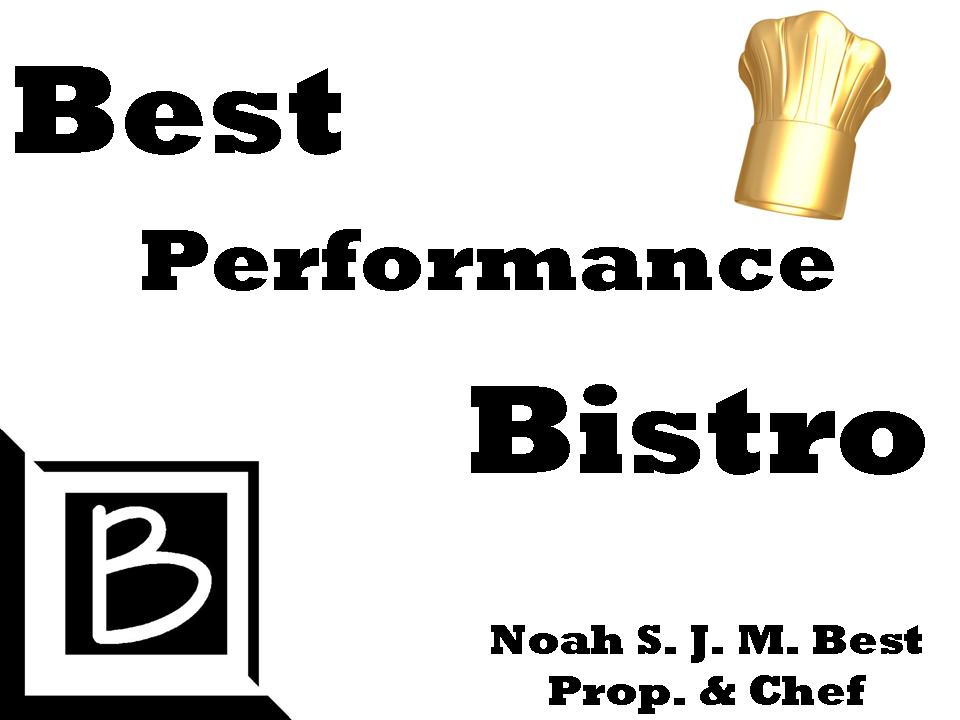
At the age of five, Noah wanted to be a chef and run his own business: Best Performance Bistro. He talked about it all the time to everyone - his grandparents, his kindergarten teacher, us. I made a sign for his dream business; it hangs to this day on the wall of my office:


Last year, Noah and his friend Frankie spent a Saturday afternoon on a video game company business plan, with Frankie as the CEO and Noah as his second-banana. Noah did not want to be Frankie's second-banana.

As Noah experienced school rules (particularly when a few of his buddies did not follow the rules), I reinforced the learning with an HR geek's eye to the future. "It so important to learn how to follow the rules in school. Because if children don't learn how to follow the rules in school, I usually end up firing them as adults," I hammered home, as Noah listened, wide-eyed.

Noah's career and business vision continues to evolve. He experiments with "Let's Play" videos, which in turn have strengthened his presentation skills to the point where his elementary school principal suggested that Noah consider a career in broadcasting. It's all good fodder for learning marketing on-the-job. Noah is also developing a video game and composing the accompanying soundtrack music, for separate potential sale on Steam. We love his energy, ingenuity, and of course, him. His current goal is:
  • Go to a 2-year SUNY college and take computer science, business and culinary arts courses;
  • Finish his degree at a 4-year SUNY college (or at the Culinary Institute of America, if he gets a scholarship);
  • Work for someone else first before a) starting his own successful video game software company and b) then, once he makes his fortune, opening his own gourmet pastry shop.
Noah is working on a new business plan where he is the CEO of his own video game software company, and his pals Charlie and Tim are part of his leadership team. I'm tentatively slated as the Chief Administrative Officer, grateful to achieve one of my goals to be part of the leadership bench plan of a start-up company. Per his request, I've also shared the business plan for The Best Framing Company, which his father and I worked on together 7 years before Noah was born.

As his parents, Joel and I do our best to also give Noah the gift of authenticity: to see us as fellow creative humans as well as his parents and mentors, taking risks and experiencing, like Edison, the occasional creative failures almost always in stride. For to do otherwise would stifle the music that streams from within each of us that must be expressed / shared. I can't wait to see what Noah cooks up as he approaches adulthood. I'm honored to witness his journey, as we Bests continue to mentor each other.


Sunday, April 22, 2012

Your Leadership Presentation for Every Audience at Work

Dress shabbily, they notice the dress. Dress impeccably, they notice the woman.
 
-Coco Chanel

First, a disclaimer: I'm not a professional stylist, or, by a long shot, the best-dressed professional I know. Nor would I compare myself to Coco Chanel. I learned the quote from one of my all-time favorite movies, Working Girl. I'm just another blue-collar girl from Queens who acts on her dreams using her smarts. Like most of us, I learned from experience to dress professionally enough for each situation to the extent where the focus was on my smarts and not on what I was wearing.

Which is why I loved working at the GE plant where the main manufacturing ingredient was a diluted acid running in pipes overhead. In that environment, the only practical uniform for men and women alike was safety glasses, metal-toed safety shoes, dirt-streaked jeans, polo shirts and hard hats with our last names on the front. I felt right at home; and my Granddaddy Nat, a skilled electrician who passed away before I graduated from college, would have been proud of me.

The Vice President of Human Resources for my GE business, not so much. I had been invited to attend a meeting for promotable women managers at Headquarters facilitated by the VP of HR. I did have enough sense at that point in my career to wear clean clothes (dress pants, no jeans), regular shoes and glasses sans my beloved hardhat. We were told that the dress code for the meeting was business casual. However, the Headquarters version of business casual was clearly a step up from our plant-level definition of business casual. They all wore blazers. I wore a sweater.

My beloved boss and mentor Bill coached me the very next day, displaying minimally the discomfort of a male-to-female dress-code coaching discussion. "The VP of HR liked you," Bill began. "Great!" I said, starting to leave. Bill waved me back into the chair. "However, he didn't know how smart you were until you opened your mouth." I was puzzled. "What do you mean?" I asked. Bill paused. "He liked you a lot, which is why he asked me to speak to you about your executive presentation, in the spirit of supporting your career path and ongoing success." I was still confused. "So he liked the way I talked but he has an issue with my executive presentation? I don't understand." Bill got to the point. "He had an issue with the way you looked." Great, here I am back in high school. I started to pick up my planner to leave. "Bill, if this is going to be a discussion about my weight or the fact that I'm no great beauty, let's please not go there." Bill was a bit taken aback. He down-shifted into Queens, my native vernacular. "Stop being a pain in the ass and sit down," he directed. I sat, subdued. He leaned over the desk. "When is the last time you wore a blazer to work?" he queried. Oh, I wasn't wearing the right uniform for that group - that was the issue. "When I interviewed for my job here," I replied sheepishly. Bill smiled. "Point taken," I continued. "I will take care of it immediately." Bill leaned back in his chair, relieved and proud. "Thank you, I knew you would." I hightailed it to the store right after work that day and bought four new suits. A bit much, but I needed to make up for lost leadership presentation / credibility.

How you dress at work demonstrates your vocational choice as well as your situational leadership: whether you dress so you'll be noticed for your talents or skills; or whether you dress like the executives because you aspire to be an executive; or whether you proudly wear your hardhat so the guys in the plant won't think you're a stuck-up elitist. Or Madonna.

Sunday, April 15, 2012

Good Boundaries Make Good Hires


And he likes having thought of it so well
He says again, "Good fences make good neighbors."

                                                 -An excerpt from Robert Frost's poem Mending Wall


Nothing is more frustrating when you need to hire 100 seasonal warehouse employees in 3 weeks than to have the post-offer, pre-employment drug test come back positive. Cost-per-hire time and money down the toilet (no pun intended), including but not limited to the wasted cost of the drug test, which could run about $35 - $50 a pop.

Now, you may not agree with the concept of drug-testing in the workplace at all: let's agree to disagree. In my experience in manufacturing and warehouse environments rife with automated conveyors, heavy forklift and cherry-picker lift-truck traffic, you want everyone to be clean, sober and constantly on the alert. A 5-story fall from a cherry-picker at the top of your typical warehouse to its cement floor is certain death. A human / forklift collision is at minimum a loss of physical capability and at maximum, life-changing paralysis or even death as well. You get what side of the fence I'm on.

Early in my warehouse hiring career, we had about 10 drug-test failures in one week. A $500 bite in one week out of my already thin Recruiting budget. The Operations, Loss Prevention (LP) and Human Resources teams got together and brainstormed. Here are some of the solutions we developed and implemented:
  • We inserted messages into our employment application and ads that we were a Drug-Free employer;
  • We posted signs with the same messaging in our interview areas;
  • We developed a fact sheet for applicants to read during the offer process that not only spelled out we were a Drug-Free Employer, but also that we also required a post-offer, pre-employment drug test.
These hiring boundaries had an immediate impact, and we saw a drop in our pre-employment drug test failures. But we still had one or two each week, which continued to be a frustrating waste of time and money. I reached out to our testing vendor and asked what drug was the most common reason for failing our pre-employment drug test. It was marijuana, hands-down. We gathered the teams together again. "It's easy to grow and readily available, that's why it's an issue," one LP team member observed. "True," I responded. "It's not considered a 'hard' drug," a member of the HR team added. "So maybe applicants don't think we're testing for it." Great point. "Okay," I summarized. "Let's add that we test for marijuana to the fact sheet and see what happens."

I hit the jackpot later that week. Two well-dressed and professional young women attending college locally came in during the 2nd shift open-interviews; they were friends and I interviewed them together. As I prepared their offer letters and pre-employment drug testing paperwork, I gave them the revised fact sheet to read that spelled out marijuana as an illegal drug included in the drug test. "Ma'am?" one of them queried politely. I looked up. Disappointed, they handed back all of the new hire paperwork to me. "We can't work here," the young woman continued. Her friend nodded. "We smoke weed every day," she added. "We don't want to waste your time. Thank you for the opportunity." I nodded my understanding. "Thank you for letting me know," I said, genuinely grateful. "I wish you both the best of luck." I appreciated their candor, but wondered how many opportunities they had to pass up because of that personal choice.

Are you clearly and constructively communicating your workplace cultural and compliance boundaries as part of the hiring process? If not, consider the opportunity to lower your overhead costs -- your cost-per-hire / cost-of-turnover -- by proactively and positively sharing your workplace running rules with your lead candidates.

Good boundaries make good hires.   


Sunday, April 8, 2012

Who’s Watching Your Cash Register at Work?

I love cash registers. I remember like it was yesterday when my dad worked at a stationery store in Queens; I was 3 years old. Mom and I stopped by for a visit, and the store owner let me push the buttons on the mechanical cash register at the front counter. I was hooked. At the age of 4, I subsequently destroyed an electronic adding machine in Dad's office during a Saturday morning visit by pressing all the keys I could reach simultaneously. It whined, smoked and shorted out as part of its death throes. Today, I treat my electronics with a great deal more respect and thankfully, they last longer. Just to be safe, Joel asked me to not interact with our cash register when The Best Framing Company had a physical storefront.

Cash registers are on my mind tonight because I've read too many stories in the last year, in all sectors, of employees who have been caught with their hands in the till, so to speak. In other words, abusing their positions of trust as bookkeepers, office managers, accountants, controllers and CFOs by stealing money from their employers.

A common thread in all of these stories is that each organization did not have in place a system of financial / accounting controls to minimize the chances of one person using their organization's funds as illegal incremental income.

Another thread is the reliance on relationships alone to ensure financial controls. These stories always start out with the heartbreaking "I trusted him / her for years." Trust is critical in the workplace; however, it cannot be the only source of financial controls. It's a setup for failure for the entire organization.

So who's watching your cash register at work? And what's your system to keep the wrong hands out of the till?

Sunday, March 18, 2012

Effectively Managing the Ebbs & Flows in Business & At Work

I had a 3-hour breakfast meeting with my mentor John yesterday. Our mentoring relationship cuts both ways: from a business / career standpoint, John is my big brother, e.g. I want to be like him when I grow up; and I am a Human Resources SME resource to him. We mentor each other from our respective SME places, and it works well.

Our mentoring kicked off 3 years ago when John invited me to breakfast and asked me if I had ever thought about working for myself. A fellow GE alum who took the entrepreneurial plunge 20 years ago himself during an economic ebb (Or as I like to call it, a ride to the Recession Rodeo), he saw the same potential in me, for which I am eternally grateful. When a mentor appears in your path and reflects back what's in your heart and mind, unsolicited: well, that's the gift that keeps on giving.

My query for John this week was how he managed the ebbs and flows of his work and business. Our GE training especially geared us not to accept ebbs at all. My Energizer-Bunny belief system heretofore was all flow. John improvised a wave to emphasize his point to me. "It ebbs and flows all the time, it goes up and down all the time," he said. I scowled. "I don't like the ebbs at all," I replied. He grinned at me. "Get over it and move forward," he coached. "That's what my board of advisers always tells me; and you have to accept the ebbs, too. Shake it off and move on." So that's my vocational meditative focus this week: accepting the ebbs and not letting them define my strategic path and goals. His advice works for both entrepreneurs and career employees:
  • Ebbs, in business and in work, are a fact of life to be accepted / embraced;
  • Build up a great cash reserve (2 years or more is optimum) during the flow times (e.g. live and manage your business below your means, want what you have, etc.);
  • An advisory board is an essential anchor for both the ebb and flow times;
  • Be grateful and accept the gift of the flow times;
  • Always have prospective clients and new products in pipeline during both the ebb and flow times;
  • Don't take the ebbs personally;
  • Use the ebb times as an opportunity to reflect, recalibrate your strategy; re-charge professionally and personally (e.g. Sharpening the Saw, a la Stephen Covey); refresh your marketing and business plans. (My friend and colleague Lisa Jordan seconded this emotion, too.)
Gratitude today for my fellow travelers along the River of Dreams: thank you for your presence in both the ebbs and flows, as we journey together and support each other's success.

Sunday, March 11, 2012

Love is the Answer at Work

"Love is the answer, and you know that for sure; Love is a flower, you've got to let it grow."
- John Lennon


I was trained as a Diversity Facilitator at General Electric.  Back then, the focus was just on gender and race diversity and inclusion, which continue to be large opportunity areas at work and in the larger society to this day.

One of the most important concepts I learned during that training was the concept of transforming the reaction as marginalized individuals to ignorance, bigotry and discrimination from anger and retribution to compassion and education.  "When you come from a place of compassion,  instead of anger," our instructor Carol Brantley taught us.  "Then you can create an opening, a conversation:  where you can potentially engage the less-informed as students, teaching compassion because you're modeling it.  And in it that opening, you have the opportunity to teach inclusion, too."

After church today, I observed and participated in a panel discussion supporting The Trevor Project, the leading national organization providing crisis intervention and suicide prevention services to lesbian, gay, bisexual, transgender, and questioning youth.  Today's discussion focused on preventing and intervening on bullying in our schools:  the leading driver of crisis and suicide for our youth today. The wonderful panel members - advocates, students, teachers and members of my own FUSS congregation (FYI, we are a Welcoming Congregation, proud supporters of the recently enacted Marriage Equality Act in New York state), also echoed that earlier training of approaching the issue of bullying through compassion, education, and in the case at Mohanasen High School, Peer Mediation.  What a wonderful new tool:  healing bullying through peace:  the source of all human conflict are needs met and unmet.  As a mediator myself, I was heartened.

I was further encouraged by the impending July 1, 2012 enactment of the NYS Dignity for All Students Act (DASA) which states:

...that NO student shall be subjected to harassment or discrimination by employees or students on school property or at a school function based on their actual or perceived race, color, weight, national origin, ethnic group, religion, religious practice, disability, sexual orientation, gender, or sex.

Frankly, for as I have explained to my son Noah:  if students don't learn how to treat each other respectfully at home and at school during their childhood and teenage years (and in their adult relationships with friends, relatives and spouses):  they will be much less successful as adults at work.  I've witnessed it my entire career:  disrespectful, bullying, demeaning and/or dominating / controlling behavior does not win friends or influence people in the long term.  No matter how talented or smart you are:  if you cannot consistently and authentically demonstrate mutual respect and inclusion at work (to peers, subordinates, and even more puzzling, managers and customers), it will eventually bite you and your career squarely on the ass. Your timing and mileage may vary, but what comes around does indeed go around.  Your attempts to marginalize others, intended or unconscious, to give yourself status, attention and power will in fact and eventually marginalize you.

And if you must suffer those losses in order to learn this lesson:  be the student and embrace this lesson of failure as the gift it truly is. Ask for feedback and coaching.  Take a searching and fearless inventory of yourself.  Take responsibility. Forgive yourself and the adults who misinformed and neglected you, placing you on this erroneous path. Learn, especially compassion for yourself and those around you. Grow. Transform. Model and teach what you've learned:  encouraging the growth and standing on the side of:  love at work.

Sunday, January 15, 2012

The Spinach in the Teeth of Your LinkedIn Profile

A true friend will tell you expediently and directly when you have spinach in your teeth.  These valuable human mirrors are here to preserve your credibility, for the simple reason that in most social and business settings, spinach, lipstick or other foreign objects in your teeth send a negative message, which may or may not be true:  that you have poor grooming habits, that you don't pay attention, etc.  Perception is indeed reality if the spinach in your teeth remains unchecked.  For that reason, I very much appreciate when friends perform this service for me. 

Dear colleagues, I've written a few posts on proofing and pumping up your LinkedIn profiles.  Although LinkedIn emulates some of the more informal social media channels like Facebook, it continues to be the social media channel for professionals and for businesses.  Our LinkedIn profiles are essentially our eCommerce websites.  Our customers -- potential clients and employers alike -- source and preview our services and our reputations on LinkedIn.  Yet, there's still spinach in the teeth of some of your LinkedIn profiles:
  • One recent profile update included a wonderful new head shot photo; yet, the headline on their profile has been misspelled for over 2 years.  And attention to detail, like in most professions, is a critical trait that their internal and external clients require;
  • While we're on the subject of pictures:  I am no great beauty, and I hate getting my picture taken.  Yes, I confess:  I used a badge photo (e.g., the photo from my work badge) on LinkedIn for a while, because it was one of the few head shots taken of me where I don't look like Frodo's little sister.  My dear friend Anne pointed out the spinach in the teeth of my LinkedIn badge photo and referred me to a nice photographer for my current head shot;
  • Still on the subject of photos:  please don't use head shots of you wearing sunglasses.  Banking institutions ask you not to wear sunglasses into their establishments:  potential customers on LinkedIn would like to make eye contact with you in the same way, lest they suspect you of felonious intentions;
  • One more photo comment: those of us who have met you in person can tell that you're using your decades-old Bar / Bat Mitzvah / Confirmation / Coming-of-Age head shot.  Either embrace your vintage or invest in a talented colorist, please; 
  • I just did a search for "manger" (the common misspelling of "manager" on most LinkedIn profiles and sadly a lot of job applications) on LinkedIn:  the search produced 205,274 results (By the way, my first-level LinkedIn contacts come up first in this search:  dear colleagues, please review your profiles!!).
Pump up your LinkedIn power:  ask a friend to review your page to ensure that you have no spinach in the teeth of your LinkedIn profile.  It can only help your reputation, and your earning potential.

Sunday, November 20, 2011

What We Have Here is an Opportunity to Communicate at Work

My friend and colleague Lisa gave a seminar on the Enneagram last night:  in some ways, I find it a deeper dive on the Myers-Briggs assessment. Lisa uses it in her practice, The Right Fit Coaching.  

Whether you're using the DISC, Myers-Briggs, Enneagram or other instrument to determine communications styles, I have found that such instruments can turn personality conflict issues into more objective discussions of individual style and consequently how to most effectively navigate and communicate through our respective differences, especially in the workplace.

Early in my HR career, my HR teammates Steve and George appeared solemnly at my office door threshold.  They filed in, shut the door and each took a seat in front of my desk.  "What's up, guys?" I queried.  This was an unexpected visit.  George began.  "Deb, we like you and we think you're very smart."  Steve nodded in agreement.  "Because we like you, we're here to give you some advice to support your success,"  George continued. 

I leaned forward in my chair.  I respected George and Steve as well, and I was learning a lot from them.  "Okay, I'm all ears,"  I replied.  Steve shifted uncomfortably in his chair and looked at George.  George smiled at me.  "Bluntly, you're a show-off and a career-climber."  I was a bit taken aback and not quite comprehending the feedback.  George, Steve and I were all wearing safety glasses, metal-toed safety shoes, dirt-streaked jeans, polo shirts and hard hats.  Somehow, I envisioned a more glamorous environment (a la Katherine Hepburn in Adam's Rib) with accompanying wardrobe accoutrements for dialogue like this.  "What do you mean?"  I sputtered.  "I don't understand."

Steve spoke up.  "At every staff meeting, you have to talk about your latest HR challenge,"  he clarified.  "We work on the same issues and you don't see us talking about our work."  I was still confused.  "I talk about my HR challenges because I'm looking for your feedback and coaching:  that's how I learn,"  I explained.  "I'm sorry if you think I'm showing off.  I'm sharing with the purpose of learning from each other."  Both George and Steve looking at my face, then at each other.  "I believe what you're saying," George continued.  "But we both find it irritating.  Can you at least not talk as much?" 

"Sure,"  I replied, still puzzled about the formal chat.  "I enjoy working with both you."  George rose to leave, and Steve followed suit.  "Great!"  George said.  "Thanks for the time."  I was still processing the conversation.  "Wait, before you go:  could we talk to Bill (our boss) about this?"  George and Steve looked at each other.  "In the spirit of supporting our work together."  I continued.  George smiled, and nodded.  "Yes, that's a good idea,"  he replied.  They both left.  I rose from my desk and went to Bill's office.

"What am I doing wrong?"  I asked Bill after I shared my recent visit from George and Steve.  Bill thought for a moment.  "Have you ever taken the Myer-Briggs assessment?" Bill asked.  "Yes, a couple of years ago,"  I replied.  "I'm an ENTJ."  Bill smiled.  "Don't worry, I'll take care of it,"  he replied.

And Bill did take care of it, in short order.  He arranged for a Myers-Briggs team building session for our HR team with an outside consultant who was certified to administer the Myers-Briggs assessment.  Turns out I was the only Extrovert (E) on my team (Myers-Briggs E's think and talk at the same time) while the rest of the team, including George and Steve, were Myers-Briggs Introverts (Is) who think and then talk:  sometimes, not until the next day.  And that my type, the ENTJ, represented only 3% of the entire population; and only 1% of all women were ENTJs.  And the success profile at my organization was ISTJ.  And finally:  that ENTJ was not a typical Myers-Briggs profile for HR professionals.  For example, Steve Jobs was an ENTJ.  "So," our Myers-Briggs consultant explained, "Deb is a contrast when compared to the rest of the team, where Introverts are the norm.  Now that you all know that, you can focus on the facts, rather than the personalities."

The Monday morning after the HR team-building, George and Steve appeared at my office threshold again, and sat down, definitely with a different tone.  Steve spoke first this time.  "We wanted to apologize for accusing you of being a climber," Steve said.  "We know now that it's the way you're wired, and that's not your intention," George added.  I smiled back at both of them.  "Thank you, I really appreciate that," I replied.  "However, I'm also now aware that I'm the equivalent of fingernails on a chalkboard for both of you, based on our profiles.  It's also my responsibility to manage myself with both of you, and modulate accordingly."

And in typical Myers-Briggs Introvert style, they both smiled, nodded, said nothing, and got on with their day.  And so did I.

Sunday, October 23, 2011

HALT Manic Mondays at Work


80% of success is showing up.

                                                                                                         - Woody Allen


I've been an HR practitioner twice as long as my tenure as Noah's mother.  So yes, I'm often guilty of front-loading my parenting to ensure Noah's success in whatever career (Chef / Restauranteur or Video Game Mogul at the moment) that he chooses.

With Noah, the basic blocking-and-tackling of teaching him the commitment of showing up is fairly easy.  On school nights, especially Sunday nights, his bedtime is a hard-stop of 9:30 PM, no matter how well he makes his case to the contrary.  On Monday mornings, if he's not already awake, he must extricate himself from bed by 6:30 AM to be ready at the bus stop by 7:30 AM.  (And yes:  he's wide awake by 6 AM on weekend mornings on his own. Sigh.)  

On those occasionally difficult mornings when he resists and growls at us like a rabid squirrel and hides under blankets all over the house, Joel and I consistently move Noah along, instruct him to cease and desist the PITA behavior and reinforce his responsibility to stick to his schedule, whether it's getting himself ready for the bus stop, practicing his violin or completing his homework.  His future employer (or, if he goes into business for himself, his future employees) will thank us one day.

Noah's newest challenge linked to the milestone of turning 10 years of age is to start managing these tasks himself so Joel and I can eventually be relieved of our nagging duties.  (Well, you know I'm an eternal optimist.) 

It is my parenting experience that is gradually eroding my already minimal tolerance for adults less able than my 10 year-old son to manage themselves similarly in preparation for the work week / work day.  I'm not your attendance mother, and now, more than ever, I don't want to be your attendance hall monitor.

Calling in sick and/or being late consistently on Mondays is a worn-out workplace cliche'.  At minimum, you're in danger of violating your workplace attendance policy and eventually getting fired. Or suspected of having too much fun over the weekend to drag yourself responsibly into work.  Most importantly, it damages your reputation in that you're eventually labeled as unreliable and therefore expendable.   Which is not the type of workplace attention you seek. 

So do us all a favor:  keep your HALT (Hungry, Angry, Lonely, Tired) needs front and center on your radar the night before a work day.  Think of them as base Maslow's hierarchy of success needs that are well within your control to manage.

Some tips on consistently showing up physically to the workplace are obvious but often ignored:
  • Get enough sleep so you can wake up on time (or at all);
  • Cut off your alcohol consumption to ensure at least 10 alcohol-free hours before work, if not more (Sober and chipper does start a Monday off right);
  • Strive to eat well and exercise;
  • If you're angry and/or lonely, get support from your friends, family or a professional or two.  Not in your workplace.  Don't Mess Your Nest.

Now, let's talk about those of you who do drag yourselves to work in spite of a raging case of HALT.   Especially on Monday mornings, operating on 3 hours of sleep, an unresolved fight with your spouse / ex-spouse, a raging hangover and a queasy, empty stomach:  do us all and yourself another favor:  don't inflict it on us.  While you may be present physically, you are entirely absent mentally, emotionally and spiritually. And that is most certainly not a recipe for career success.  The best thing you can do for your reputation and out of respect for the rest of your workplace team when you cannot or will not manage your HALT is to keep a low profile and keep your mouth shut.  No one deserves the detritus of your mismanaged HALT, including you.

Sweet dreams for a successful week!


    Sunday, October 9, 2011

    Plan for Success

    As I prepare to teach the opening workshop,  Leadership and Strategic Thinking, at the Rensselaer County Regional Chamber of Commerce Leadership Institute this week, I look forward to the breakthroughs that I invariably will witness from the students.

    I've been teaching versions of this workshop for a number of years. And I don't just teach and facilitate strategic planning:  I believe in it and I practice it myself.  Every goal that I've written down, shared and on my own, from personal goals (e.g., giving birth to my son Noah) to career and business goals, I've achieved.

    Not that the act of planning makes the path any easier:  there are always struggles and setbacks.  At times, the plan's timing is out of your control, and/or you may be paralyzed by fear, self-doubt, or worse.  However, with plan in hand, I see the rockiness of the path as a series of tests of my commitment to my created path. Particularly where no path exists, and I bush-whack through the wilderness, living the journey as Frost articulated:  it has made all the difference in my well-lived life and career.  And then I begin to understand why some of the most successful businesses of the 20th century started with just such an idea during the Great Depression.

    Even more satisfying is watching the students (up-and-coming promotable leaders:  managers in larger organizations and well as entrepreneurs / business owners) solidify their plans, dreams and goals by writing them down and then mustering the courage to walk through their deceptive fear of failure to share those plans with their classmates and hopefully those key individuals outside the class who can become part of the team to implement those plans.  The act of manifesting (writing down) your goals and plans, and then sharing those goals and plans with trusted colleagues and advisors, is a powerful act indeed.

    Don't underestimate the creative power of this planning process.  Once the wheels are set in motion, amazing things can and will happen to you.  Some examples from my past students are:
    • Becoming a judge;
    • Promotion to your dream job (FYI:  most of the time, you just need to present your proposal and ask);
    • Starting your own successful business;
    • Defining your own work / life balance rather than expecting your employer to do it for you;
    • Getting the education / degree you've always dreamed of, but never shared with anyone.
    Create your plan and write it down:  start with at least one goal.  Share it with your own Board of Directors.  Build your commitment; never, never, never, never give in.  Implement your plan.  And don't be surprised:  expect success.

    Fall Path in the Woods

    Sunday, September 25, 2011

    Termination is a Dish Best Prepared and Served Cold

    While it might be borderline entertainment to watch Donald Trump in the reality-t.v. show The Apprentice spontaneously combust fire his victims contestants on the spot:


    Real-life terminations of employment, when handled in this fashion, ruin reputations of both the organization as well as the respective executive / leadership team:  to say nothing about the devastating impact on both employee and customer recruitment, retention and engagement.

    How you treat people as you exit them from your organization is just as important (if not more important) as how you on-board them as new employees and treat them during the tenure with your organization, impacting the level of your employees' and your customers' engagement.

    Engaged employees are productive employees, and productive employees give great customer service, which in turn drives customer recruitment / retention.  Check my girlfriend Google, The Thank-You Economy and other sources, like The Society of Human Resources Management, if you're at all skeptical about those key inter-relationships.

    Which makes off-the-cuff and spontaneously combustive real-life terminations, such as the phone termination of former NPR Correspondent Juan Williams or the phone termination of Yahoo CEO Carol Bartz frankly puzzling, given the reputation-bruising both organizations received from the resultant negative publicity. 

    When Yahoo then put itself on the market for purchase right after Bartz's firing, engagement was clearly not the focus, financial survival was.   Which explains the leadership vacuum on several levels, as exemplified by Bartz's parting email sent to all Yahoo employees:

    To all,” Bartz wrote, “I am very sad to tell you that I’ve just been fired over the phone by Yahoo’s Chairman of the Board. It has been my pleasure to work with all of you and I wish you only the best going forward.”

    This lack of professionalism telegraphs that both terminations were not planned and occurred as a result of an emotional reaction, rather than a factual response.

    Which brings the leadership of the organization into question:  if a termination decision is made and handled in this manner, how is the leadership team handling other business / mission-critical decisions?

    And that's what I mean when I say that termination is a dish best prepared and served cold.  When an executive or similar decision-maker comes to me as the HR subject-matter expert totally pissed off and ready to fire the target of their ire on the spot, I gently apply the brakes on the situation, with some simple steps and questions designed to minimize / prevent organizational exposure and protect the reputations of all involved.
    • What policies / procedures has the target violated?
    • Is there any documentation or prior warnings in their file?
    • What danger / exposure exists if the target is not fired on the spot? (One of the few on-the-spot terminations I've performed occurred after weapons were discovered and thankfully confiscated in the employee's workstation.)
    • If there is a lack of facts / evidence on the first 3 points above, is the decision-maker comfortable with the legal and public relations risks?  That is:  is the decision-maker (and the organization's leadership team) comfortable with reading about how the decision-maker potentially mishandled the target's termination in the local newspaper?
    • Is there a plan to minimize company exposure? 
    • Is there a plan at all, e.g. how to communicate the target's departure, managing company security, etc.?
    If the answer is no to any of the above points, time must be taken to develop and implement the plan factually and rationally.  

    The first step of the plan is for the decision-maker to cool off and shelve their emotions so the facts can drive strategic termination planning and implementation.

    If not:  the decision-maker may find themselves in the same boat as Trump's hapless contestants; or their former employees.

    Sunday, September 18, 2011

    Job Descriptions are Money in the Bank for Your Business

    I know:  talking about job descriptions is like watching paint dry; and reading job descriptions may well be the cure for insomnia.

    However, it's when your business or nonprofit organization lacks job descriptions that the excitement can begin.  And I'm not talking fun excitement.  I'm talking about a body blow to your bottom line.

    Submitted for your disgust:  the audit conducted by the New York State Comptroller of the Charlton Fire District, located here in the SmAlbany, NY area, entitled Internal Controls Over Treasurer's Activities:  Mismanagement Allows Theft, which describes in detail the multi-year financial field day (a.k.a. theft) the Fire District's Treasurer (who is married to the Fire Chief, by the way) had with the District's finances, spending and paying herself to the tune of $500,000.

    Aside from the complete lack of leadership oversight and commonly accepted financial controls, what caught my eye was how the Treasurer paid herself an additional hourly rate in addition to her Board-approved salary for "work in addition to regular duties."  As the Comptroller's Office noted, this is an unusual arrangement for someone who is already paid a regular salary.

    What really set the stage for the theft of wages by the Treasurer to occur was the absence of a written job description prepared by the Fire District Board, as well as the lack of a written list of "work in addition to regular duties" approved by the same Board.  Nothing was documented by the Board.

    That wage theft amounted to nearly $325,000.  I don't know any business or nonprofit organization that can justify or absorb a bottom-line hit like that.

    So if the cautionary job description tale of the Charlton Fire District isn't enough to scare you straight about the financial importance of having current and compliant job descriptions on file for your business or nonprofit organization, here are a few additional financial parting gifts to seal the job description deal for you:
    • Audit by the Department of Labor:  if DOL pays you an unannounced visit and you don't have current / compliant job descriptions, how will you prove which of your jobs are exempt from overtime and which are nonexempt?  In these tight government budget times, DOL's fines to businesses and other organizations are a key funding stream, not to mention the multi-year back-wage repayment requirements if DOL discovers Wage & Hour violations at your workplace.
    • Worker's Compensation Injury / Liability:  If your employee sustains an injury at work and there is no job description, how will you prove to your Worker's Comp carrier that you've done your diligence in informing your employees about what safe conduct is in your workplace? Can any business or nonprofit organization afford a big increase in your Worker's Comp insurance coverage?
    • Unemployment Insurance and Discrimination Claims:  If you don't have job descriptions, you have no ability to provide acceptable documentary proof of employee performance issues, because you never set the minimum standards of performance via current and compliant job descriptions.  Can your business or nonprofit organization afford an unplanned hike in Unemployment Insurance premiums, or worse:  an unplanned discrimination lawsuit settlement totaling thousands of dollars?
    Job descriptions on the surface may be great sleep aids, but in this HR geek's reckoning, compliant and current job descriptions are money in the bank.  And that should help any business leader sleep well at night.

    Sunday, September 11, 2011

    The Floods of Irene Bring Out the Best in This Team (Tribe) of Employees

    I saw my friend and Entrepreneur Mentor at church today.  He had called me the Tuesday night after the 500-year flood of the Mohawk River retreated back to its banks from its historic trek to Erie Boulevard in downtown Schenectady and the building where his company of 20+ years is located.  He was facing possible relocation to drier temporary quarters (and potential suspension of business operations), as he did not yet know how extensive the damage was to the building where his company leased space.  He was concerned about his employees, and he called me for a reality check.


    Dear Mentor had good news to report today as well as best-practice tidings of how his Employee Team rallied to support him and the business that supported all of their families. 

    When it became clear that Hurricane / Tropical Storm Irene was going to cause epic flooding in downtown Schenectady, Dear Mentor called all of his employees after the storm subsided to ask their assistance in moving company-critical assets to safer ground before the Mohawk River reached and exceeded its flood stage.  It was Sunday, and it had not been a great day off at home for anyone, thanks to the effects of Irene.

    Every member of Dear Mentor's Employee Team showed up that Sunday to help move the business assets, and they brought reinforcements:  some of them brought their adult children and friends to help as well.  They all worked until midnight that Sunday.  At midnight, his team wished him luck.  At that juncture, no one knew if Dear Mentor's business would be there after the flood.

    After the State of Emergency was lifted in downtown Schenectady, Dear Mentor and his team were allowed back into their building to assess the damage.   The good news was that they didn't have to move the business out of the building; the challenging news was that the business space was full of mud and without power.

    The next day, the Employee Team again demonstrated their resiliency and engagement under the adversity presented by mud and a lack of electricity:  they voluntarily brought their personal generators and power washers from their respective homes, and they got to work.  Dear Mentor was not only grateful for their generosity, but inspired by the joyful collaboration.  "It's not very often I get to witness these men enjoy the opportunity to let their inner boys come out and play as they used the power washers to get the mud out of the building," Dear Mentor remarked, his eyes sparkling through noticeable fatigue. 

    As Dear Mentor shared his story, I knew it was his leadership and commitment that created the space for his Employee Team to rally and give of themselves to preserve their shared livelihood:  this in turn allowed the entire Employee Team to demonstrate the leadership stuff they are truly made of when faced with extreme adversity.

    You can't get nuggets like this from an employee engagement survey.

    More importantly (and thankfully), it was not a familial vibe:  Dear Mentor is not their dad, but their Chief.  Dear Mentor and his Employee Team are an interdependent tribe of business warriors, and they demonstrated their commitment, prowess, flexibility, personal investment and generosity in one of the worst situations a CEO (or a tribal leader) can face.

    Now that's a tribe where I'd be honored to be counted as one of their warriors.

    Sunday, July 31, 2011

    When You're an Employee, You Only Have One Customer

    Ever since my father took me to the office one Saturday morning at the age of 4, I wanted a job.  It dawned on me:  so that's where the quarters and dollars Daddy doled out to me came from.  Cool.  Sadly, I was not invited back, as my fascination / love of technology with buttons also began with that visit:  I destroyed a large electronic adding machine by pressing too many buttons at once.  It was exciting, especially when it started smoking and whining.  I gained the reputation from that toddler experience with the male members of my family of being unreliable around machinery, which was totally unfounded and unfair.  Ask my husband Joel:  I am End-User Support for our house and can resurrect even the most hopeless computer fiascoes, most of the time.

    So while most of my contemporaries in high school were wringing their hands next to the phone waiting for a boy to call for a date (or not), I engaged in the exact same ritual with a potential employer.

    I asked my father for advice, as he was (and still is) a whiz at getting jobs.   It's always the same advice, it just took several decades to sink in:  "If you make 30 calls, and you get one sale, you're doing great,"  he'd dictate.  "What does that mean, Dad?"  I asked, confused.  "I'm not selling anything, I'm not a salesman."  Dad smiled.  "Yes, you are:  you're selling yourself.  And you know how to do it, because you're my daughter. You're just not concentrating."  I still didn't get it, clearly befuddled.  Dad spelled it out for me.  "Don't focus on one company:  apply to as many companies as you can.  That way, you increase your chances of getting a job, and you don't drive yourself crazy waiting for one guy to call you back and hire you.  Don't put all of your eggs in one basket."

    Communication gap bridged, I got it.  It involved a lot more work applying and interviewing at many other companies, but it sure beat the soul- and energy-sucking anxiety of sitting next to the phone waiting for a call from just one potential employer.

    Recently, as I was in the middle of a career coaching session with a good colleague, I took my father's advice one step further.  The presenting challenge was how to best frame a proposal to their manager (Read:  Customer) on their next career step up the organizational ladder, with the accompanying increase in compensation.  I coached Good Colleague that the proposal should meet both their needs as well as the profitability needs of their organization.  "What if my manager rejects my proposal?"  Good Colleague asked.  "Well, then maybe you've outgrown the organization, and it's time to look outside the organization,"  I replied.  Good Colleague was dismayed.  "But I don't want to leave the organization, I love it there," they said.  Good Colleague, like Dad, is in Sales / Business Development.

    I thought for a moment.  "If that's the case, then you only have one Customer.  And from a business development standpoint, we all know how dangerous it is to bank your success on one Customer."  Good Colleague nodded.  "You don't have to necessarily leave the organization right now:  but there's nothing wrong with reaching out to colleagues in your industry, to ask their advice and grow new and existing relationships,"  I continued.  "At minimum, you'll make some great connections and build your reputation if your current manager ends up accepting your proposal, and at maximum, you'll be prospecting for new potential Customers.  It might be a job; it might be a project; or it might be a business that you'll start and grow.  The Customer potential is only limited by your willingness to try."

    How many Customers do you have?  And are you keeping those Customer relationships warm and mutually rewarding by meeting everyone's profitability and success needs?