Showing posts with label goals. Show all posts

Sunday, September 2, 2012

From Talent to Mastery to Success in Business and at Work

My esteemed friend and colleague Ernie mused during his sermon today as our worship associate for this Labor Day Sunday about the transition our work / business paradigm needs to make from TOP, as illustrated by Good to Great Author Jim Collins:
  • Talent
  • Opportunity
  • Passion
Collins suggests that you ask yourself the following three questions in order to find work you love: A. What are you deeply passionate about? B. What are you genetically encoded for — what activities do you feel just “made to do?" C. What makes economic sense — what can you make a living at? Find or create work that allows you to do the things that are located at the intersection of the three circles (the sweet spot), and you’ll have the basis for a great work life.
  
 To Drive Author Daniel Pink's:
  • Mastery
  • Autonomy
  • Purpose
Pink's Self-Described COCKTAIL PARTY SUMMARY  
When it comes to motivation, there’s a gap between what science knows and what business does. Our current business operating system–which is built around external, carrot-and-stick motivators–doesn’t work and often does harm. We need an upgrade. And the science shows the way. This new approach has three essential elements: 1. Autonomy – the desire to direct our own lives. 2. Mastery — the urge to get better and better at something that matters. 3. Purpose — the yearning to do what we do in the service of something larger than ourselves.

Ernie reiterated Pink's assertion that MAP is not only the realm of the Millennials, but is essential for all of us who find purpose in our work, in order for us as individual practitioners and for business as a whole to keep moving to the next level, authentically. To continue Ernie's conversation a bit longer:
  • I have several Talents, singing is one of them, and it is a source of immense pleasure for me; however, in Pink's paradigm, I have not Mastered singing yet, which is why I willingly continue to sing in choir under Gary's watchful ear and eye;
  • In Collins' Opportunities, I must rely on others to hire me to sing; in Pink's paradigm, I record myself singing and upload myself on YouTube, removing the middle man and creating my own Autonomy (and the operative, wonderful word here is creative);
  • In Collins' Passion, I sing because I love to sing; in Pink's paradigm, I sing in choir as part of a greater Purpose to connect the spiritual and core value dots as part of a larger, interconnected web.
While I have always enjoyed Collins' Venn Diagram appetizer, I must admit I prefer Pink's cocktail party summary more. Here's a review of my vocational and business purpose:

It is literally true
that you can succeed best and quickest
by helping others to succeed.

I look forward to learning more about your Purpose as well as Your Mastery and Autonomy, as we continue this wonderful journey to support each other's success in business and at work.

Sunday, August 12, 2012

Planning Breeds Creativity in Business and at Work

In the course of my client work this week, I've had the opportunity to talk to business owners and professionals whose comfort zone is the creative / R&D. Strategic or business planning for them, at first blush, seems to be the anti-creative. One colleague actually cringed when I suggested that they pull together a one-page business plan. In the spirit of doing what I say, I then showed them the one-page business plan that lives in my planner:


I feel your pain. Putting together a business, strategic or career plan used to evoke the same reaction for me as getting ready to do our personal and business income taxes. Remember the days before doing your taxes via computer? I'd do all of the work in pencil first. For weeks. Ugh, now that gives me the willies.

Business, strategic or career planning, however, is the marvelous act of creativity. The act of writing your business plan down is absolutely the act of creation. Financial forecasting, break-even and all.

It was that work of business / strategic plan development that created my husband Joel's business, The Best Framing Company, and my business, Deb Best Practices. Revenue-producing businesses that did not exist until we conceived the idea for each business (focusing on our respective strengths and marketability), and created the respective business plan first before proceeding with implementation.

We update each plan at least annually as our businesses grow and our markets and clients change. Everything we do in our businesses flows from those plans.

As a highly creative professional artist, writer and picture-framer, Joel's advice is always to measure twice and cut once. Pretty planful for a creative guy.

What's your plan to measure twice, which will in turn shore up your successful business and/or career implementation?

Sunday, July 29, 2012

Embrace the Fear and Take The Risk Anyway in Business and at Work

For a salesman who worked on 100% commission most of his career, my dad injected more of his own fear rather than encouragement of taking risk in the face of my own budding vocational interests. Given generational and gender factors (I was a girl, wife and mother-material, not career-material in his assessment), years later, I understand the limits of my father's assessment context. On top of those factors, Dad had always been an employee, albeit one paid on 100% commission. And the icing on the fear was that fact that his own dad had died when he was only 17 years old.

When I was twelve years old, I signed up with my mother's permission to sell household products from some long-forgotten mail-order company, while Dad was away on a business trip. I showed early indications of Dad's sales DNA and actually made 4 sales on our block in my first few days. When Dad came home from the business trip later that week, I proudly showed him my sales slips. He reviewed them like an IRS auditor, frowning. "You calculated the sales tax wrong," he said, pointing to the columns on one sales slip. "You're too young to do this. You need to return this money and send the sales kit back." I was surprised. "Why?" I replied. "I can just go back to each customer and fix the sales slip." Dad went into his Marine-sergeant mode. "No! This is not a discussion. I will not have you embarrassing me with your mistakes." I went back to my new customers, apologized for bothering them, and sent the kit back as I was told.

When I was 15 years old, I took a job for the summer as a counselor at a reputable sleep-away camp 15 miles from our house. In order to get the campers to bed at a reasonable hour, the camp did not observe daylight-savings time. I made the mistake of calling home at 10 PM one night from the camp director's office, as for us at camp it was only 9 PM. Dad was upset and concerned. "Why are you still up, working so late?" He demanded. I explained the artifice of not observing daylight-savings time. Dad did not buy it. "I'm coming to pick you up and take you home now," Dad decreed over the phone. I did not take his supervision this time. "No Dad, I'm staying here. I like it and they're not over-working me. Please don't embarrass me." My father paused, and I looked over at the camp director. "Could you please explain to my dad how we handle daylight-savings time?" The camp director smiled. "Of course," he said. He took the phone and spoke to my father for a few minutes (they had met when my parents dropped me off at camp earlier in the week), repeating the daylight-savings time explanation. The camp director handed the phone back to me. "You can stay," my father decreed, grudgingly.

When I graduated from the University at Albany, I did not return to the New York City / metropolitan area to look for a job. Instead, I took a part-time job with my senior-semester internship boss Bob, my home Assemblyman, and a part-time job at Macy's. "I don't understand why you just don't come home and get a real job in the city," my father groused on the phone. "Because I want a job as a writer, and it's cheaper to live in Albany than it is to live in New York City," I replied. "Don't worry Dad, I'll be fine." And I was. It took about 10 years, but Dad finally realized that we have real jobs up here in Albany, too.

In both my career and in my business, the risks I continue to take while embracing (and sometimes wrestling with) the natural / nurtured fear is the lotus I harvest from the mud of fear time after time -- it is a drive that I cannot deny. It continues to get better as time goes on and the more I practice and see the undeniable proof of the great results I produce. As my good friend and colleague Lisa Jordan maintains, when we come from a place of fear, the expression of our gifts and talents are limited, and no one benefits. But when we come from a place where fear takes a back seat to the wonderful creative potential of risk, even in the face of potential failure or embarrassment: that's where the potential of success is limitless.

This week, and going forward: I celebrate our collective courage (e.g.: taking action in the face of fear) and joy in the risks we take in both business and at work, in support of our mutual success.

Sunday, July 15, 2012

Joyful Recruiting Makes Happy Customers

Since my experience as a customer long precedes my experience as a Human Resources / Recruiting / Organizational Effectiveness Subject-Matter Expert (Yes, I remember my mother taking me for all-Saturday shopping sprees in my stroller, complete with a detachable pink strap harness equipped with a leash to give my mother the illusion of preventing me from making a break for it), it's my great experiences as a customer with exceptional employees that tell me which businesses are probably great places to work:
  • The nurse anesthesiologist who sang The Beatles They Say It's Your Birthday to me as my son Noah was born via emergency c-section while keeping me well-numbed;
  • The dining hall staff who kept us well-fed and well-served at Ferry Beach, Maine camp -- it was more like spa food than camp food;
  • The consistently great service I receive from the staff of the Rensselaer County Regional Chamber of Commerce, who continue to build their success by in turn authentically supporting the success of my business and those of my fellow Chamber members.
This week's Washington Post article on how Zappo's workplace culture directly translates into their best-practice customer experience is yet another key data point that happy / engaged employees absolutely make happy customers.

Conversely, it has been my consistent experience that employees with a bad attitude provide me with bad customer service (customer service is one of those key business areas where you can't fake it until you make it), indicating either a bad hiring decision or even worse, that the employee is a microcosm of a bad workplace culture, which acts as a powerful disincentive to bring my repeat business to their company. Social media on smartphones make these type of experiences painfully contemporaneous on the interwebs and embarrassingly public, such as the tweets I read from a colleague who real-time was experiencing poor customer service at a local grocery store, complete with the sour-puss employee complaining about their corporate management team.

Which is why a great Recruiter -- joyful, full of energy, authentically conveying how happy they are to work for their employer -- is a critical customer service and reputational representative for any company striving for best-practice customer service. As the Executive Recruiter for my company at the time, for example: my extreme satisfaction in my own job was often the decision-point attracting candidates to join my company. Candidates heard the joy in my voice during phone-screens, and wanted some of it for themselves. My company was a great product to present, and I derive a great deal of professional joy to this day vocationally matchmaking great candidates to great companies.

If your Recruiter exposes your candidates / new hires to a negative customer service experience, such as:
  • Lack of skill / experience, e.g. slow response times or rudeness to candidates;
  • Subjecting your candidates to bureaucratic hoops and transactions;
  • Conducting phone-screens and interviews like a grand-jury investigation;
  • And worst of all: when the recruiter conveys their own dissatisfaction with their job or the company;
You may be not only conveying a negative impression of your company and your workplace via the key channel of your Recruiter(s), but also hemorrhaging dollars in lost customers, candidates and turnover (e.g., the average cost of entry-level employee turnover is currently running about $6,000 a pop).

Or: if your joyful Recruiter takes leave of your company for happier workplaces because your company has become too negative, and therefore too difficult, to present authentically as a great place for great employees to consider, it may be time to take a step back and reassess your workplace / human capital strategy and branding as it dovetails with your company / customer service branding.

Which is why joyful recruiting is critical for happy customers.

How authentically joyful is your Recruiter about your company branding, your workplace culture and their job? And, in turn: how happy are your customers?

Sunday, July 1, 2012

Declare Your Independence in Business and at Work

I must admit, I'm a bit sentimental about the Fourth of July holiday, e.g. patriotic. It annoys my husband Joel ever so slightly, sometimes reminding him of more rigid, intolerant and oppressive flag-waver types, and for that reason questions the authenticity of wearing red, white and blue as an expression of freedom given the occasional abuse of power.

However, I'm not that type of flag-waver. My patriotism - and pursuit of happiness and autonomy, in my career and in my business - is grounded more in gratitude. Gratitude for those generations who came before me, making my life so much better today than it clearly was for them. Grateful for my great-great-grandmother Katie Markowitz of blessed memory, married at 15 years old and a mother at 16 years old. Who, according to the 1900 census, emigrated to Manhattan from Moscow, Russia with her two oldest children in steerage for what was definitely not a luxury cruise for nearly 3 weeks in 1896, following her husband Davis of blessed memory who had emigrated before her almost 2 years earlier, arriving with little more than a few clothes and no job or business. My own private refuse of foreign shores. Who proceeded to have four more children, including my grandfather Joseph of blessed memory, also known as Markie, who died years before I was born at the age of 51. When Katie died, and of what, we don't know; however, I suspect she died young from a hard life of poverty and childbirth / child-rearing thereof.

Gratitude for my great-grandmother Rose of blessed memory, who's husband Abe, my great-grandfather of blessed memory, died in the 1918 influenza epidemic just a little less than 15 years after they both emigrated here from Austria as young teenagers, also with very little in the way of personal belongings and no jobs: but in search of a better quality of life and more personal freedom.


I found out only eight years ago that Rose, a master needle-worker, subsequently opened her own notions store on the Lower East Side after Abe's death, to support her two sons, Nat and Eddie. My granddaddy Nat of blessed memory was my son Noah's age, 11 years old, at the time of his father's death, and he quit school to get a job to help support the family. In the tradition of my tribe, Noah is named for Nat.


My ancestors of blessed memory came to the United States to find a better life for themselves, their children and their grandchildren, leaving everything and everyone they knew, taking the risk and arriving with nothing but their smarts and their stamina. In the process, they learned and worked hard at their trades; to build careers; to run their businesses; with the hope that their children and their grandchildren would find even more blessings. We did. Thank you for bringing our families here to live and thrive.

As one of their children, I have been blessed with great opportunities and a wonderful career that has forged the strengths of the person I am today. In honor of the 2012 Fourth of July holiday, I am proud to follow the path of my ancestors with the blessing of enough client work to step full-time into my consulting business, Deb Best Practices - in the arch of my combined family history, one of the mildest of risks to date, indeed.

For my colleagues, friends and family: I wish for you the authentic prosperity of your own independence and autonomy, born of those who came before us to bring us to this moment: to express the vocational music within you, whether you are in a career job or your own business, or both. As my friend Barry would say: "Nike! Just do it!"

 Happy Independence Day!

Sunday, June 24, 2012

Teach Your Children Well in Business and at Work


I like to tell my son Noah, who turns eleven years old next month, that he attended business meetings with me long before he was born. A bit more jaded now that he's experienced the Family Health unit at the end of his 5th grade career (and on the brink of adolescence: sniggering like Beavis and Butthead over even mild / unintended innuendos), he just asked me recently to tell him the story again. "You had the hiccups constantly, that's when I knew you were awake," I recalled. "I would start giggling a bit in the middle of a meeting, because your hiccups were both powerful and distracting." Although Noah grimaced, I knew he loved the story.

Adolescence aside, Noah's formative years have definitely been different from those of his parents.

Just like Joel's and my formative years were different from our parents. My dad made the happy mistake of taking me to the office at the age of four one Saturday morning to give my pregnant mother a break. That visit - and the subsequent breakfast together at a diner, full of other working stiffs - sealed the deal. So that's where the money came from to buy the Good Humor ice cream, I concluded as I watched Dad pay the bill for our breakfast with dollar bills instead of the Good Humor dimes I usually handled. I wanted a job from that day forward. Fifteen years later, on a hot and aggravating journey north to start my freshman year at SUNY Albany with the initial goal of a double Pre-Med / English major, my father, ignorant of how he had contributed to my journey fifteen years earlier, clearly thought I was wasting my time and my student loan money with a line straight out of Mad Men, repeating the script my mother, his freshly-ex-wife, had followed. "Why aren't you staying home, getting a job, getting married and having kids?" Without missing a beat and a bit taken aback, I replied: "That would involve a date, which I haven't had yet. I'll keep you posted."

As I journey with Noah through his childhood, I marvel at how different his path is from mine and wonder how the mixed influence of witnessing both the career and entrepreneurial adventures of his parents will influence his own career and business decisions.

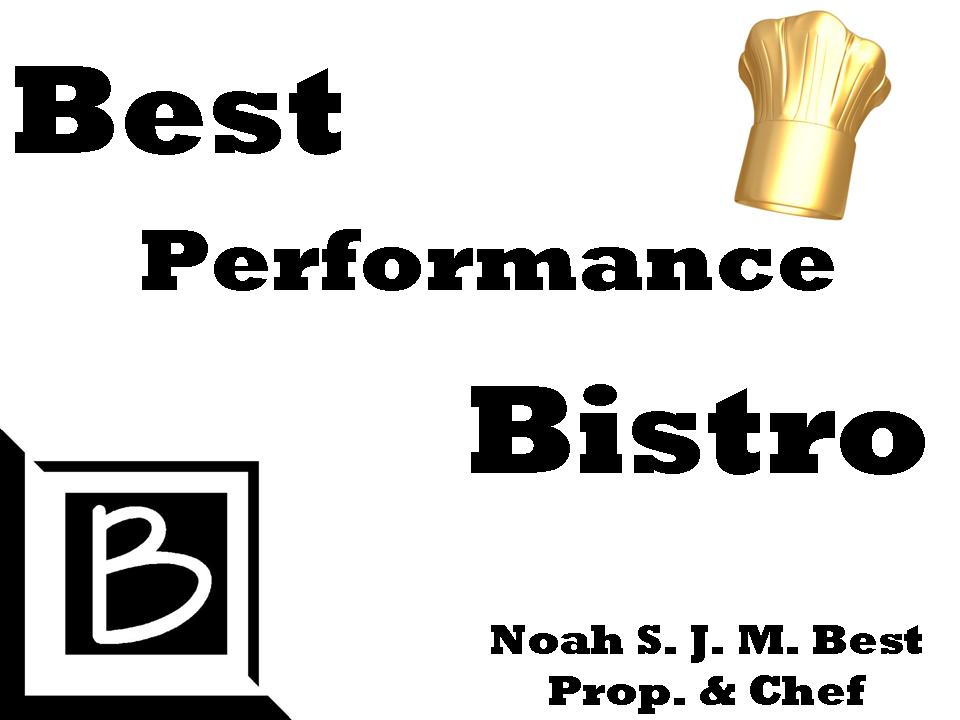
At the age of five, Noah wanted to be a chef and run his own business: Best Performance Bistro. He talked about it all the time to everyone - his grandparents, his kindergarten teacher, us. I made a sign for his dream business; it hangs to this day on the wall of my office:


Last year, Noah and his friend Frankie spent a Saturday afternoon on a video game company business plan, with Frankie as the CEO and Noah as his second-banana. Noah did not want to be Frankie's second-banana.

As Noah experienced school rules (particularly when a few of his buddies did not follow the rules), I reinforced the learning with an HR geek's eye to the future. "It so important to learn how to follow the rules in school. Because if children don't learn how to follow the rules in school, I usually end up firing them as adults," I hammered home, as Noah listened, wide-eyed.

Noah's career and business vision continues to evolve. He experiments with "Let's Play" videos, which in turn have strengthened his presentation skills to the point where his elementary school principal suggested that Noah consider a career in broadcasting. It's all good fodder for learning marketing on-the-job. Noah is also developing a video game and composing the accompanying soundtrack music, for separate potential sale on Steam. We love his energy, ingenuity, and of course, him. His current goal is:
  • Go to a 2-year SUNY college and take computer science, business and culinary arts courses;
  • Finish his degree at a 4-year SUNY college (or at the Culinary Institute of America, if he gets a scholarship);
  • Work for someone else first before a) starting his own successful video game software company and b) then, once he makes his fortune, opening his own gourmet pastry shop.
Noah is working on a new business plan where he is the CEO of his own video game software company, and his pals Charlie and Tim are part of his leadership team. I'm tentatively slated as the Chief Administrative Officer, grateful to achieve one of my goals to be part of the leadership bench plan of a start-up company. Per his request, I've also shared the business plan for The Best Framing Company, which his father and I worked on together 7 years before Noah was born.

As his parents, Joel and I do our best to also give Noah the gift of authenticity: to see us as fellow creative humans as well as his parents and mentors, taking risks and experiencing, like Edison, the occasional creative failures almost always in stride. For to do otherwise would stifle the music that streams from within each of us that must be expressed / shared. I can't wait to see what Noah cooks up as he approaches adulthood. I'm honored to witness his journey, as we Bests continue to mentor each other.



Sunday, June 17, 2012

To the Men Who Have Mentored Me: Thank You.

I have been privileged as a professional woman to have been both mentored and sponsored by a number of men with a wide variety of talents and backgrounds. Some of them have earned by blood relation my best wishes on this Father's Day; the others are members of my extended professional and entrepreneurial tribe who by the happenstance of our work together, used their discretionary power to formally and informally recognize and subsequently nurture my talents and mentor and/or sponsor me on how to best leverage them: my best wishes to them as well. My list of luminaries is by no means inclusive, and I'm pleased to report, rather long in reality.

Some of them are on my Board of Directors, and some of them were the guru in the path at the exact moment this student was ready to learn her next lesson. In no particular order:
  • My dad, who brought me to his office when I was 4 years old, years before Take Our Children to Work Day, inspiring me to want to get a job on the spot, and who later in my life taught me how to cold-call, find great jobs and who as a life-long commission-only salesman, refused to ever let me give up;
  • My granddaddy of blessed memory, who taught me how to change the flat tire which blew out in front of his house instead of changing it himself, and who explained how important investing for the future was while inspiring me with his incredible drive and work ethic. Years later, paying it forward, I taught my dad, the city boy, how to change a flat tire;
  • My high-school teacher Dave of blessed memory, who invited me to debate daily in Social Studies to keep the class lively for all of us, and sadly, who died before I graduated college;
  • To my high-school friend Tooch, who encouraged my writing and musical creativity by writing down the music of the only song I have ever written (As a "learning-disabled" alto, I cannot read or write music), and then featured it as part of an Under Pressure Band performance during our senior year in high school;
  • My home Assemblyman Bob of blessed memory, who during my senior-semester internship taught me to leverage data and research to navigate political twists and turns; to spot hawks on the NYS Thruway; that utility trucks (long before the advent of GPS) were the best source of directions when you were lost; who gave me my first career job, post-internship / post-graduation; and who abhorred wearing ties and related professional artifice;
  • My entrepreneur "big-brother" John, who three years ago took me out to breakfast and asked me why I wasn't working for myself;
  • My friend Allen, welcoming me as the newcomer who asked to join the church Personnel Committee and then sponsoring me for several tenures in lay leadership;
  • My brothers Rob and James, who put up with years of dopey end-user support and hardware questions from me, until I had both absorbed enough of their teachings and, (which I'm sure was a great relief to them) finally learned enough to start utilizing my girlfriend Google instead of calling them first;
  • Bob, my former boss who "saw" me and what I had to offer his organization, creating both a job and wonderful career experience for me as a result of a courtesy networking meeting;
  • My former boss Bill, who tirelessly coached me on a daily basis because he believed in me and my talent;
  • My friend John, who's insight as a therapist and healer as well as his treasured friendship during the last 25 years has been an invaluable touchstone;
  • My friend and colleague Dale, who taught me everything he knew about loss prevention, retail and corporate life;
  • My friend and colleague Barry, who taught me distribution operations and to shake off setbacks;
  • My friend and colleague "Coach" Don, who took the time to teach me change management and share his career best-practices, codifying my recent and past experiences thereof;
  • My friend and colleague Peter, who continues to teach me that mediation is the answer, and who's vocational commitment and leadership is second to none;
  • My friends and colleagues George and Andy, who continue to inspire me with the success of how they so skillfully execute the strategic plan of their burgeoning business;
  • My colleague and new friend Al, who with gusto has invited me to jump into the entrepreneurial waters with him, stretch my arms and enjoy the swim;
  • My friend, mentee and colleague Ryan, who returns the gifts I have given ten-fold;
  • My friend and colleague / partner Ron, who has journeyed with me through the ebbs and flows of the economy in support of our mutual success;
  • My husband and my son, who continue to sustain me with the unwavering faith and belief in my talents and capabilities as we journey this path together.
My tribal brothers, thank you: you truly put the men in mentor. A wonderful Father's Day to you and yours.

 
Cohoes Falls, Cohoes, NY: Sacred Site for the Mohawk Nation.

Sunday, May 27, 2012

How Email Address Typos Cost You Jobs and Business

At the beginning of my HR career back in the early '90s (which seems much more recent than 20 years ago), I had just received my WARN layoff notice from GE Aerospace (which no longer exists, sold off in pieces to its rivals General Dynamics and Lockheed Martin), giving me 60 days before my last day at GE Aerospace to find another job, inside or outside of GE.

There were two GE jobs available locally at my level and function, both at GE Plastics (which no longer exists either; sold off in pieces to SABIC and Momentive, respectively); one at the Selkirk location; and the other at the Waterford location. My site HR Manager and mentor, Tom, ensured that I was a candidate for both jobs.

I interviewed at Selkirk first. I liked the team and the work they were doing. When I returned to my office at GE Aerospace from the interview that day, I wanted to send each of them a thank-you note. Since I had introduced using PROFS email to distribute a now-crude electronic version of the weekly employee newsletter at my site (a precursor to Microsoft Outlook, which my dying business could not afford to purchase), I wanted to walk the talk of my innovation. So I sent each member of the interview team a thank-you note via PROFS, which was unheard of back then. Interview etiquette firmly dictated hand-written snail-mail thank-you notes.

The site Recruiter responded within the hour, informing me that they had hired an internal candidate and thanked me for interviewing for the position. I was annoyed. Clearly, they had already made their hiring decision before my interview, and I was interviewed to merely fulfill their EEO requirements. I shared my frustration with my immediate supervisor, Chuck. "Those who live by the sword, die by the sword," he grinned. "That's the risk you take with email communication." While I was eventually hired by the Waterford site - less then one week before the end of my WARN period - Chuck's observation always stuck with me, even to present day.

Now, I have performed my English-major rant in prior posts about typos in emails, which invariably cost job candidates and vendors both potential jobs and new customers. Recently, however, the typos have achieved a new level of failure through imprecision.

In the last month, I have received 3 emails with typos in the email address itself. So when I referred back to an email and clicked on the email signature to send a fresh email in response, the recipient never received my return email due to the typos in their email address and I received a mail delivery failure message from their email system. I helped the first one out because the guy fired great on all of the rest of his cylinders; he had transposed letters in his own name in his email address. I gave up on the other two email address typos: basically, it was too much work and too annoying to compensate for someone else's lack of attention to detail. If their prospecting emails caused this much work and aggravation: how would it be to work with them every day?

Wondering why you may not have heard back from that job application or that new customer prospect? Proof your email address, please. And everything else you send out in the email, while you're at it. It can only help support your success.


Sunday, May 20, 2012

Giving Pays Large Dividends for All of Us at Work

If you have come here to help me, you are wasting your time.

But if you have come because your liberation is bound up with mine, then let us work together.
  

I've spent most of the day putting the finishing touches on this year's property tax appeal; my brain cells are squeezed dry. I am, as always, looking forward to a lively discussion on Tuesday, while Noah and Joel watch me channel my inner amateur lawyer.

Earlier today, our Senior Youth conducted their annual Bridging Service to send their dear comrades off to college. One of them quoted Lilla Watson during their presentation to us. Another youth, a former Coming-of-Age mentee, shared her love and appreciation for her older sister, headed off to start her college career. "I know my life would not have been the same without her in it; I will miss her terribly," she said.

Yesterday, my good friend Avon asked me to present a Career Workshop to up-and-coming young women served by The Northeast Parent & Child Society. I'm no fashion diva by any means; and my challenge was to coach these young women on how to make a great first impression.

In preparation, I reached back to my own early career experience, with a equivalent college loan debt of about $40,000, making only $8,000 a year during my first of many rides to the Recession Rodeo. What meant the most to me as I began interviewing for career jobs? The first thing that came to mind was how to look professional on a shoestring budget. So I put together an interview outfit accordingly:
  • Navy jacket:      $6
  • Navy pants:       $3
  • Peach blouse:   $3
  • Matching scarf: $1
  • Navy shoes:      $7
And made it part of my "show me, don't tell me" workshop presentation.

That day, I shared my experience, strength and hope with about 60 talented young women, as my mentors before me have so lovingly and generously done for me. I validated their great outfits, all decked out for the Career Fair. I recognized some of their talents on the spot, and told them. I gave advice on how to best manage and conceal tattoos. I gave them my daddy's advice: if you make 30 calls and you get one "yes," you're having a great day: for after all, you only need one job. My friend and co-presenter Barb Wisnom provided a new, more positive trope on that theme: try and collect 20 "no's" and make it a game. Can you? I'm going to try it out. Because one of the hardest lessons when you're marketing yourself to potential employers (customers) to learn is that it's business, not personal. "How can your feelings not get hurt," one of the students asked. "Practice, repetition and time," I replied, with full knowledge and serenity.

Saturday was a day of vocational giving, and I received nothing in return except an unexpected and delicious sandwich from Ambition. And from my experience, the dividends that always come thereafter are: priceless.

Sunday, April 29, 2012

Your LinkedIn Headline is Your Calling Card for Success

I spent last Wednesday night with a great group of women from the Schenectady BPW, sharing my LinkedIn experience, strength and hope in support of our mutual success.

One of the first tips I shared was the importance of your LinkedIn headline: if your LinkedIn profile is your website (which I firmly believe), then the headline on your profile is your calling card, announcing that you're open to whatever opportunities you seek or hope to share. "I'm involved in several endeavors that speak to me vocationally and creatively," I shared with the group. "So I include them in my headline:

Change / Project Manager | HR / Recruiting Leader | Career Coach | Writer |
Small-Business Social Media Marketing SME."

"You include everything in your LinkedIn headline?" one of the workshop attendees asked. "Yes," I responded. "I subscribe wholeheartedly to Dr. Wayne Dyer's assertion that I will not die with the music still inside of me. So I include all of my 'music' in my LinkedIn headline and profile. When we say who we are and what we do, opportunities open up on LinkedIn and elsewhere." The attendee, a wonderful women full of "music" herself, decided to update her headline.

I received a LinkedIn message from her two days later:

Thanks, Deb! After working on my LinkedIn account [and headline] last night, I was invited to [a key business organization] event as a guest next week to network about [my project]. Who knew????

I did.

To our shared success on LinkedIn (and everywhere else)!

Sunday, April 22, 2012

Your Leadership Presentation for Every Audience at Work

Dress shabbily, they notice the dress. Dress impeccably, they notice the woman.
 
-Coco Chanel

First, a disclaimer: I'm not a professional stylist, or, by a long shot, the best-dressed professional I know. Nor would I compare myself to Coco Chanel. I learned the quote from one of my all-time favorite movies, Working Girl. I'm just another blue-collar girl from Queens who acts on her dreams using her smarts. Like most of us, I learned from experience to dress professionally enough for each situation to the extent where the focus was on my smarts and not on what I was wearing.

Which is why I loved working at the GE plant where the main manufacturing ingredient was a diluted acid running in pipes overhead. In that environment, the only practical uniform for men and women alike was safety glasses, metal-toed safety shoes, dirt-streaked jeans, polo shirts and hard hats with our last names on the front. I felt right at home; and my Granddaddy Nat, a skilled electrician who passed away before I graduated from college, would have been proud of me.

The Vice President of Human Resources for my GE business, not so much. I had been invited to attend a meeting for promotable women managers at Headquarters facilitated by the VP of HR. I did have enough sense at that point in my career to wear clean clothes (dress pants, no jeans), regular shoes and glasses sans my beloved hardhat. We were told that the dress code for the meeting was business casual. However, the Headquarters version of business casual was clearly a step up from our plant-level definition of business casual. They all wore blazers. I wore a sweater.

My beloved boss and mentor Bill coached me the very next day, displaying minimally the discomfort of a male-to-female dress-code coaching discussion. "The VP of HR liked you," Bill began. "Great!" I said, starting to leave. Bill waved me back into the chair. "However, he didn't know how smart you were until you opened your mouth." I was puzzled. "What do you mean?" I asked. Bill paused. "He liked you a lot, which is why he asked me to speak to you about your executive presentation, in the spirit of supporting your career path and ongoing success." I was still confused. "So he liked the way I talked but he has an issue with my executive presentation? I don't understand." Bill got to the point. "He had an issue with the way you looked." Great, here I am back in high school. I started to pick up my planner to leave. "Bill, if this is going to be a discussion about my weight or the fact that I'm no great beauty, let's please not go there." Bill was a bit taken aback. He down-shifted into Queens, my native vernacular. "Stop being a pain in the ass and sit down," he directed. I sat, subdued. He leaned over the desk. "When is the last time you wore a blazer to work?" he queried. Oh, I wasn't wearing the right uniform for that group - that was the issue. "When I interviewed for my job here," I replied sheepishly. Bill smiled. "Point taken," I continued. "I will take care of it immediately." Bill leaned back in his chair, relieved and proud. "Thank you, I knew you would." I hightailed it to the store right after work that day and bought four new suits. A bit much, but I needed to make up for lost leadership presentation / credibility.

How you dress at work demonstrates your vocational choice as well as your situational leadership: whether you dress so you'll be noticed for your talents or skills; or whether you dress like the executives because you aspire to be an executive; or whether you proudly wear your hardhat so the guys in the plant won't think you're a stuck-up elitist. Or Madonna.

Sunday, March 18, 2012

Effectively Managing the Ebbs & Flows in Business & At Work

I had a 3-hour breakfast meeting with my mentor John yesterday. Our mentoring relationship cuts both ways: from a business / career standpoint, John is my big brother, e.g. I want to be like him when I grow up; and I am a Human Resources SME resource to him. We mentor each other from our respective SME places, and it works well.

Our mentoring kicked off 3 years ago when John invited me to breakfast and asked me if I had ever thought about working for myself. A fellow GE alum who took the entrepreneurial plunge 20 years ago himself during an economic ebb (Or as I like to call it, a ride to the Recession Rodeo), he saw the same potential in me, for which I am eternally grateful. When a mentor appears in your path and reflects back what's in your heart and mind, unsolicited: well, that's the gift that keeps on giving.

My query for John this week was how he managed the ebbs and flows of his work and business. Our GE training especially geared us not to accept ebbs at all. My Energizer-Bunny belief system heretofore was all flow. John improvised a wave to emphasize his point to me. "It ebbs and flows all the time, it goes up and down all the time," he said. I scowled. "I don't like the ebbs at all," I replied. He grinned at me. "Get over it and move forward," he coached. "That's what my board of advisers always tells me; and you have to accept the ebbs, too. Shake it off and move on." So that's my vocational meditative focus this week: accepting the ebbs and not letting them define my strategic path and goals. His advice works for both entrepreneurs and career employees:
  • Ebbs, in business and in work, are a fact of life to be accepted / embraced;
  • Build up a great cash reserve (2 years or more is optimum) during the flow times (e.g. live and manage your business below your means, want what you have, etc.);
  • An advisory board is an essential anchor for both the ebb and flow times;
  • Be grateful and accept the gift of the flow times;
  • Always have prospective clients and new products in pipeline during both the ebb and flow times;
  • Don't take the ebbs personally;
  • Use the ebb times as an opportunity to reflect, recalibrate your strategy; re-charge professionally and personally (e.g. Sharpening the Saw, a la Stephen Covey); refresh your marketing and business plans. (My friend and colleague Lisa Jordan seconded this emotion, too.)
Gratitude today for my fellow travelers along the River of Dreams: thank you for your presence in both the ebbs and flows, as we journey together and support each other's success.

Sunday, January 22, 2012

The Power of Small Mastermind Groups in Business and at Work

I had the honor and privilege to witness the power of 3 small local mastermind groups engaging together for a great cause this past Friday night:  the Siena College Pink Zone Reception and Game honoring breast cancer warriors and benefiting Capital Region Action Against Breast Cancer (CRAAB!), a wonderful local nonprofit organization that empowers people impacted by breast cancer.

The high-energy and hands-on CRAAB! Board of Directors was front and center at the event, giving speeches, selling raffle tickets and merchandise; and some of them proudly walked the pink line of Siena basketball players to be honored for their status as warriors living and thriving despite experiencing breast cancer. Those CRAAB! women are a force to be reckoned with; they literally glowed.  The power of their group is their connection and commitment to each other, to the community and to their clients, both from a fund-raising and a service standpoint.  Their reputation is sterling, and deservedly so.

CRAAB! honored a member of another mastermind group, a local chapter of the national Women Presidents' Organization (WPO). As Marri (clearly moved by the energy of the moment) received her "Power Up the Pink" award, her WPO colleagues, her fellow Presidents / CEOs, were there in force to cheer her on.  Their camaraderie and connection were crystal-clear:  they stood up for each other's success and had a great time together in the process.

There were PWN (Professional Women's Network) members there as well:  my own home mastermind group.  A few of the WPO members are also PWN members.  That synergy has been wonderful for both groups.  I have written before about PWN, and how the group has supported and accelerated my own success, as well as the success of my fellow members as each other's Board of Directors.  The PWN women (current and past) who have contributed to my life and work, and vice versa:  these are vocational and reputational pearls whose value is truly priceless.

The success of all three mastermind groups lies in their smaller size (no more than 15 - 20 members each), intimacy and focus.  All three groups are clear about their commitment to each other, as well as their group and individual goals.  They stand up for each other's success, as well as the success of their respective groups as a whole.

And while all three groups focus on the female gender, their power is universal to both genders.  On an intuitive level, the paradigm is a lot like what George Bailey discovers at the end of It's a Wonderful Life:  he focused on building the success of the people of his beloved community of Bedford Falls; and in turn, those same people reflected not only George's personal success, but also put their money where their reflective support was.

In this new year, I wish you the success, prosperity and joy of your own mastermind group:  whether you join an existing mastermind group, or even more innovative: create a new one.

Click Here to Donate to CRAAB!

Sunday, November 27, 2011

What's Your One Sentence (Purpose) at Work?

I just finished Daniel Pink's Drive, recommended by a friend / fellow GEer from my congregation.  A great read, many wonderful nuggets to explore and contemplate.  The three-legged stool of autonomy, mastery and purpose is especially relevant.

The one that sticks with me right now is Pink's reference to Claire Boothe Luce and her advice to John F. Kennedy, resonant with Kawasaki's seminal Positioning Statement in his own book, Enchantment:

In 1962, Clare Boothe Luce, one of the first women to serve in the U.S. Congress, offered some advice to President John F. Kennedy. “A great man,” she told him, “is one sentence.” Abraham Lincoln’s sentence was: “He preserved the union and freed the slaves.” Franklin Roosevelt’s was: “He lifted us out of a great depression and helped us win a world war.” Luce feared that Kennedy’s attention was so splintered among different priorities that his sentence risked becoming a muddled paragraph.

You don’t have to be a president—of the United States or of your local gardening club—to learn from this tale. One way to orient your life toward greater purpose is to think about your sentence. Maybe it’s: “He raised four kids who became happy and healthy adults.” Or “She invented a device that made people’s lives easier.” Or “He cared for every person who walked into his office regardless of whether that person could pay.” Or "She taught two generations of children how to read.”

As you contemplate your purpose, begin with the big question: What’s your sentence?

My own sentence sounds something like the quote on the banner I bought at Peaceful Inspirations a few weeks ago:

It is literally true
that you can succeed best and quickest
by helping others to succeed.

What is your one sentence (purpose) at work, vocationally or both? Share it so we can all know it and uplift it, too.


Sunday, October 30, 2011

The Meritocracy is Dead: Long Live the Value Proposition!

I spent a good part of the day on Saturday in a mini-retreat with my Mastermind group, Professional Women's Network.  A mixture of business owners and executives, our discussion turned to the well-worn and tiresome workplace variation on the Just World Theory:

If I work really hard, and do a great job, I'll get:
a)  The job of my dreams
b)  The promotion
c)  A larger raise than anyone else
d)  More clients / customers than I can handle
e)  All of the above
f)   Fill in the blank.

We had a lively discussion about how misleading a belief system this is from both a career and an entrepreneurial perspective.  "I've had to ask for every promotion I've ever gotten," one member remarked, and the rest of us agreed.  In my case, I have always put together a short presentation for the decision-maker on the value (money saved, money earned, etc.) that I had accomplished for the organization in the last year and would accomplish in the upcoming year, thanks to my father's sales mentoring early in my career.  Depending on the size of the metrics, I invariably get a larger raise, a promotion, or both.  The key is to ask the decision-maker for the order with the facts and figures that have and will meet / exceed the decision-maker's needs.

The If I work really hard, and do a great job, I'll get: belief system is academic in origin and even becoming outdated in that paradigm.  Instead of just teaching our 10 year-old son Noah to work hard and get good grades, he is also learning that those efforts can't happen just for their own sake or in the narrow vacuum of the student's magical thinking.  Noah is witnessing through the work of his parents (Joel and I), that the hard work and great results must first happen in the context of always meeting / exceeding customer needs:  whether the customer is one employer or the many customers of his family's business.

When there is that context - when there is clear customer agreement on exactly what hard / great work and precise, metric-based results will receive rewards / renumeration, it will be then that the workplace will truly become a marketplace (or propel us into the larger marketplace as evolving entrepreneurs) for us all to profit from the valuable products, both tangible and SME-based, that we all have to offer.

In my book, that beats getting the highest grade on a test, hands-down.

Saturday, October 15, 2011

Leadership Start-Up Lessons from 5th Grade Entrepreneurs

My son Noah and his friend Frankie played at our house all afternoon on Saturday.  But it wasn't all play, as they disclosed at the end of the day.  For a good 3 hours, they hunkered over Noah's laptop and formulated the business plan for their new video game software company, to be named later.   Here's the first page of the plan, a mixture of website structure, branding (which is protected under the auspices of Deb Best Practices, in defense of our young moguls), governance structure and company values:


Frankie founded the Company-to-Be-Named-Later, so he felt that he should be the final word on all the decisions. "I started the company, why do I have to listen to Noah, or anyone else?" Frankie asked.  "I'm the boss, I make all of the decisions."  Frankie's father then coached him that collaborative leadership and decision-making was the best way to start and run a business from a values standpoint. "Or else you'll just cheese everyone off," Noah added.  Sometime during the second hour, Frankie fired Noah for not agreeing with Frankie's decisions.     Noah called Frankie on it, saying it wasn't fair.  Frankie listened to Noah's case, and hired him back.  Then they worked together on the Human Capital plan, below:

Although Noah was born 4 years after I left GE (where I started my HR career), this Human Capital grid looked eerily similar to a form that we used to prepare the Annual Human Resources review, rating the promotability and values of each employee.  Or perhaps we humans just like to sort things in 4 quadrants, and it's wired into our shared racial intelligence?

I particularly love the "Anger Issues" and "Stubborn" ratings:  ain't it the workplace truth?

Noah was rated GWT (Good With Tech), so he's been slotted into 3 jobs:  Tech Team, Video Game Development and Video Game Musical Theme Development.  "I'm getting paid half-pay for each job, because I have 2 jobs," Noah explained to me.  "Actually, I have 3 jobs, but I'm doing the music job for free."  I tried to correct him.  "But if you have 3 jobs, you should make more, not less," I explained.  Noah shook his head. "That would upset the rest of the team if I made more money than them.  I also don't want to cheese Frankie off by making more money than him, since he's the boss."  I chuckled.  At this juncture, the influence of UU Religious Education is stronger than Noah's exposure to his capitalist mother.  "Isn't rule number one at work 'Don't Cheese Off the Boss?" Noah queried.  "Not in this case," I answered.

Frankie and Noah made their presentation to the parents.  We were impressed, and made some suggestions.  "It might be interesting for the two of you to visit Vicarious Visions:  it's a local video game company started by two brothers who went to the same college as your dad, Frankie,"  I recommended.  "Yes, " Frankie's dad chimed in, "then you can sell the business and get a million dollars."  "And buy all of the parents houses in Vermont,"  I added, with a smile.  The boys looked at each and went back into Noah's room.  Noah the arbitrator came back out.  "This is a kids' company, and we don't want adults meddling," Noah informed us.  We respectfully backed down.

Apparently though, I'm part of their nascent marketing plan, as Noah is actually happy he's featured this week, and is instructing me to Tweet and Facebook this post as I'm finalizing it.

We hope they'll review their policies on excluding adults at some point, and consider hiring us.  Or at least give us stock options for giving birth to them.

Sunday, October 9, 2011

Plan for Success

As I prepare to teach the opening workshop,  Leadership and Strategic Thinking, at the Rensselaer County Regional Chamber of Commerce Leadership Institute this week, I look forward to the breakthroughs that I invariably will witness from the students.

I've been teaching versions of this workshop for a number of years. And I don't just teach and facilitate strategic planning:  I believe in it and I practice it myself.  Every goal that I've written down, shared and on my own, from personal goals (e.g., giving birth to my son Noah) to career and business goals, I've achieved.

Not that the act of planning makes the path any easier:  there are always struggles and setbacks.  At times, the plan's timing is out of your control, and/or you may be paralyzed by fear, self-doubt, or worse.  However, with plan in hand, I see the rockiness of the path as a series of tests of my commitment to my created path. Particularly where no path exists, and I bush-whack through the wilderness, living the journey as Frost articulated:  it has made all the difference in my well-lived life and career.  And then I begin to understand why some of the most successful businesses of the 20th century started with just such an idea during the Great Depression.

Even more satisfying is watching the students (up-and-coming promotable leaders:  managers in larger organizations and well as entrepreneurs / business owners) solidify their plans, dreams and goals by writing them down and then mustering the courage to walk through their deceptive fear of failure to share those plans with their classmates and hopefully those key individuals outside the class who can become part of the team to implement those plans.  The act of manifesting (writing down) your goals and plans, and then sharing those goals and plans with trusted colleagues and advisors, is a powerful act indeed.

Don't underestimate the creative power of this planning process.  Once the wheels are set in motion, amazing things can and will happen to you.  Some examples from my past students are:
  • Becoming a judge;
  • Promotion to your dream job (FYI:  most of the time, you just need to present your proposal and ask);
  • Starting your own successful business;
  • Defining your own work / life balance rather than expecting your employer to do it for you;
  • Getting the education / degree you've always dreamed of, but never shared with anyone.
Create your plan and write it down:  start with at least one goal.  Share it with your own Board of Directors.  Build your commitment; never, never, never, never give in.  Implement your plan.  And don't be surprised:  expect success.

Fall Path in the Woods