Showing posts with label networking. Show all posts

Sunday, August 5, 2012

Happy Employees Make Happy Customers at the Blue Ribbon Restaurant

My good friend and colleague Dale and I decided to have our meeting over dinner at the Blue Ribbon Restaurant this past week. It was crowded as usual, and we were happy to score one of the last remaining booths near the counter.

Our server Jenny was Juanita-on-the-spot with menus and ice water, without prompting from us. She kept checking on us, taking our orders quickly and following up to see if we had enjoyed our dinners. She even encouraged me to try one of the Blue Ribbon's great sugar-free desserts. Jenny smiled, bounced and beamed as she multi-tasked taking care of all of the customers in her section, including us.

Intensely committed to providing great service to my customers, whether they have been internal to my organization or external customers, I love when I experience great customer service myself. Jenny's diamond demeanor was infectious, and she energized me even at the end of a long and very busy day of business meetings.

When Dale and I worked together at the same company, we'd have our business cards poised to recruit talent like Jenny to work in our stores; it was a no-brainer.

I had no job for Jenny that night, but I had a question. "Hi, I'm Deb," I said, introducing myself as Jenny brought us both take-out containers and bags to carry them in without a second request (Great service, I told you!). "You do a great job, what's your name?" "Jenny," she replied, beaming even more if that were possible. "Thank you." I asked her another question. "Jenny, you seem really happy. What makes you happy to work here?" Jenny answered without missing a beat. "The family who owns this restaurant treats me so well. They're respectful, they care about me, and they trust me. At past jobs, I've been yelled at and micro-managed. Not here." I loved Jenny's answer. "How long have you worked here?" I asked, my last question. "Two years," Jenny replied. "And I love it here." That was crystal-clear.

As Dale paid the bill at the cash register, I couldn't resist. "Are you one of the owners?" I asked the young man at the register. "I'm the son and nephew of the owners," he replied, smiling slightly. "You might say I'm an owner-in-training." I smiled back. "I just wanted to let you know that our server, Jenny, is great." He smiled wider, glancing at her bustling around the customers in her coverage area, and without missing a beat as he handed Dale his change, replied: "Yes, she is great. We're lucky to have Jenny."

We were all lucky that night, because at the Blue Ribbon Restaurant, they clearly know that happy employees make happy customers.


Sunday, July 29, 2012

Embrace the Fear and Take The Risk Anyway in Business and at Work

For a salesman who worked on 100% commission most of his career, my dad injected more of his own fear rather than encouragement of taking risk in the face of my own budding vocational interests. Given generational and gender factors (I was a girl, wife and mother-material, not career-material in his assessment), years later, I understand the limits of my father's assessment context. On top of those factors, Dad had always been an employee, albeit one paid on 100% commission. And the icing on the fear was that fact that his own dad had died when he was only 17 years old.

When I was twelve years old, I signed up with my mother's permission to sell household products from some long-forgotten mail-order company, while Dad was away on a business trip. I showed early indications of Dad's sales DNA and actually made 4 sales on our block in my first few days. When Dad came home from the business trip later that week, I proudly showed him my sales slips. He reviewed them like an IRS auditor, frowning. "You calculated the sales tax wrong," he said, pointing to the columns on one sales slip. "You're too young to do this. You need to return this money and send the sales kit back." I was surprised. "Why?" I replied. "I can just go back to each customer and fix the sales slip." Dad went into his Marine-sergeant mode. "No! This is not a discussion. I will not have you embarrassing me with your mistakes." I went back to my new customers, apologized for bothering them, and sent the kit back as I was told.

When I was 15 years old, I took a job for the summer as a counselor at a reputable sleep-away camp 15 miles from our house. In order to get the campers to bed at a reasonable hour, the camp did not observe daylight-savings time. I made the mistake of calling home at 10 PM one night from the camp director's office, as for us at camp it was only 9 PM. Dad was upset and concerned. "Why are you still up, working so late?" He demanded. I explained the artifice of not observing daylight-savings time. Dad did not buy it. "I'm coming to pick you up and take you home now," Dad decreed over the phone. I did not take his supervision this time. "No Dad, I'm staying here. I like it and they're not over-working me. Please don't embarrass me." My father paused, and I looked over at the camp director. "Could you please explain to my dad how we handle daylight-savings time?" The camp director smiled. "Of course," he said. He took the phone and spoke to my father for a few minutes (they had met when my parents dropped me off at camp earlier in the week), repeating the daylight-savings time explanation. The camp director handed the phone back to me. "You can stay," my father decreed, grudgingly.

When I graduated from the University at Albany, I did not return to the New York City / metropolitan area to look for a job. Instead, I took a part-time job with my senior-semester internship boss Bob, my home Assemblyman, and a part-time job at Macy's. "I don't understand why you just don't come home and get a real job in the city," my father groused on the phone. "Because I want a job as a writer, and it's cheaper to live in Albany than it is to live in New York City," I replied. "Don't worry Dad, I'll be fine." And I was. It took about 10 years, but Dad finally realized that we have real jobs up here in Albany, too.

In both my career and in my business, the risks I continue to take while embracing (and sometimes wrestling with) the natural / nurtured fear is the lotus I harvest from the mud of fear time after time -- it is a drive that I cannot deny. It continues to get better as time goes on and the more I practice and see the undeniable proof of the great results I produce. As my good friend and colleague Lisa Jordan maintains, when we come from a place of fear, the expression of our gifts and talents are limited, and no one benefits. But when we come from a place where fear takes a back seat to the wonderful creative potential of risk, even in the face of potential failure or embarrassment: that's where the potential of success is limitless.

This week, and going forward: I celebrate our collective courage (e.g.: taking action in the face of fear) and joy in the risks we take in both business and at work, in support of our mutual success.

Sunday, July 22, 2012

Good Things Come to Those Who Network Well

My 11 year-old son Noah and I spent some quality time together today at The Great Escape in Lake George, New York, thanks to the free admission tickets, parking and lunch door prize I won from The Hudson River Community Credit Union, as a result of networking at the Rensselaer County Regional Chamber of Commerce Annual Dinner Vendor Fair. Aside from the great door prize, one of the reasons I love the Rensselaer Chamber is the fact that it's a connection hothouse for small businesses like mine on the growth curve.

As we finished our lunch under The Great Escape North Grove Pavilion (declared "delicious" by Mr. Best the Younger) while sharing dining space with the Credit Union's employees and customers, Noah held up his hand in appreciation. "High-five on your power networking, Mom," he said, clearly pleased and proud of how my business networking had benefited him. We also stopped at The Hudson River Community Credit Union's booth at the Pavilion and thanked the Marketing Team for the door prize, and they rewarded us further by taking Noah's picture for their website.

Our Great Escape trip is a great metaphor for the rewards of networking well and how the success can cascade and ripple out like a stone skipped on the water of our SmAlbany economy to benefit many. Great networking:
  • Creates new opportunities, experiences, connections, and customers for all involved in the networking contact;
  • Is an ongoing, symbiotic process - it must be a two-way street to ensure both authenticity and results;
  • Shines the reputations of all involved by the good will (in this case, the door prize) which invariably ignites success for all involved;
  • Allows us networking mavens to creatively connect the dots to create new and successful customer opportunities / transactions. Like the Melanie Griffith character Tess McGill in Working Girl who put together Trask Industries and a radio station acquisition from reading articles in both Forbes and The New York Post ("Trask, radio; Trask, radio.");
  • Can be long-cycle, short-cycle, direct or indirect: while we can't control where the act of networking will take us, the fact that we have taken action (and continue to take action) keeps our businesses, and therefore our economy, moving forward;
  • Is fun, rewarding and ultimately profitable for all involved in the networking contact (in that order).
I consider networking at any vendor fair the opportunity to meet new customers, vendors and partners. The act of introducing myself, handing my business card to the company representative / owner manning / womanning the vendor booth is an act of marketing, connection and economic good will, especially considering that these vendors usually pay for the privilege of participating in any vendor fair and the very least I can do is stop and say hello. The door prizes I win are a symbol of my perpetual-motion marketing work. The people / business connections are priceless.

 Eleven years ago, when I was 7 months pregnant with Noah, I won five door prizes at a CRHRA Vendor Fair using the same philosophy. At this year's Rensselaer County Regional Chamber of Commerce Vendor Fair, the door prize from The Hudson River Community Credit Union was one of four door prizes that I won. I'm grateful for the generosity of all of these good vendor fair participants, and that I'm 60 pounds lighter 11 years later.

Come on in and join the fun: walk the next Vendor Fair with me. We need to spread the door-prize wealth around and more importantly: ignite our mutual success by continuing to make these critical and long-reaching business connections.


Sunday, July 15, 2012

Joyful Recruiting Makes Happy Customers

Since my experience as a customer long precedes my experience as a Human Resources / Recruiting / Organizational Effectiveness Subject-Matter Expert (Yes, I remember my mother taking me for all-Saturday shopping sprees in my stroller, complete with a detachable pink strap harness equipped with a leash to give my mother the illusion of preventing me from making a break for it), it's my great experiences as a customer with exceptional employees that tell me which businesses are probably great places to work:
  • The nurse anesthesiologist who sang The Beatles They Say It's Your Birthday to me as my son Noah was born via emergency c-section while keeping me well-numbed;
  • The dining hall staff who kept us well-fed and well-served at Ferry Beach, Maine camp -- it was more like spa food than camp food;
  • The consistently great service I receive from the staff of the Rensselaer County Regional Chamber of Commerce, who continue to build their success by in turn authentically supporting the success of my business and those of my fellow Chamber members.
This week's Washington Post article on how Zappo's workplace culture directly translates into their best-practice customer experience is yet another key data point that happy / engaged employees absolutely make happy customers.

Conversely, it has been my consistent experience that employees with a bad attitude provide me with bad customer service (customer service is one of those key business areas where you can't fake it until you make it), indicating either a bad hiring decision or even worse, that the employee is a microcosm of a bad workplace culture, which acts as a powerful disincentive to bring my repeat business to their company. Social media on smartphones make these type of experiences painfully contemporaneous on the interwebs and embarrassingly public, such as the tweets I read from a colleague who real-time was experiencing poor customer service at a local grocery store, complete with the sour-puss employee complaining about their corporate management team.

Which is why a great Recruiter -- joyful, full of energy, authentically conveying how happy they are to work for their employer -- is a critical customer service and reputational representative for any company striving for best-practice customer service. As the Executive Recruiter for my company at the time, for example: my extreme satisfaction in my own job was often the decision-point attracting candidates to join my company. Candidates heard the joy in my voice during phone-screens, and wanted some of it for themselves. My company was a great product to present, and I derive a great deal of professional joy to this day vocationally matchmaking great candidates to great companies.

If your Recruiter exposes your candidates / new hires to a negative customer service experience, such as:
  • Lack of skill / experience, e.g. slow response times or rudeness to candidates;
  • Subjecting your candidates to bureaucratic hoops and transactions;
  • Conducting phone-screens and interviews like a grand-jury investigation;
  • And worst of all: when the recruiter conveys their own dissatisfaction with their job or the company;
You may be not only conveying a negative impression of your company and your workplace via the key channel of your Recruiter(s), but also hemorrhaging dollars in lost customers, candidates and turnover (e.g., the average cost of entry-level employee turnover is currently running about $6,000 a pop).

Or: if your joyful Recruiter takes leave of your company for happier workplaces because your company has become too negative, and therefore too difficult, to present authentically as a great place for great employees to consider, it may be time to take a step back and reassess your workplace / human capital strategy and branding as it dovetails with your company / customer service branding.

Which is why joyful recruiting is critical for happy customers.

How authentically joyful is your Recruiter about your company branding, your workplace culture and their job? And, in turn: how happy are your customers?

Sunday, July 1, 2012

Declare Your Independence in Business and at Work

I must admit, I'm a bit sentimental about the Fourth of July holiday, e.g. patriotic. It annoys my husband Joel ever so slightly, sometimes reminding him of more rigid, intolerant and oppressive flag-waver types, and for that reason questions the authenticity of wearing red, white and blue as an expression of freedom given the occasional abuse of power.

However, I'm not that type of flag-waver. My patriotism - and pursuit of happiness and autonomy, in my career and in my business - is grounded more in gratitude. Gratitude for those generations who came before me, making my life so much better today than it clearly was for them. Grateful for my great-great-grandmother Katie Markowitz of blessed memory, married at 15 years old and a mother at 16 years old. Who, according to the 1900 census, emigrated to Manhattan from Moscow, Russia with her two oldest children in steerage for what was definitely not a luxury cruise for nearly 3 weeks in 1896, following her husband Davis of blessed memory who had emigrated before her almost 2 years earlier, arriving with little more than a few clothes and no job or business. My own private refuse of foreign shores. Who proceeded to have four more children, including my grandfather Joseph of blessed memory, also known as Markie, who died years before I was born at the age of 51. When Katie died, and of what, we don't know; however, I suspect she died young from a hard life of poverty and childbirth / child-rearing thereof.

Gratitude for my great-grandmother Rose of blessed memory, who's husband Abe, my great-grandfather of blessed memory, died in the 1918 influenza epidemic just a little less than 15 years after they both emigrated here from Austria as young teenagers, also with very little in the way of personal belongings and no jobs: but in search of a better quality of life and more personal freedom.


I found out only eight years ago that Rose, a master needle-worker, subsequently opened her own notions store on the Lower East Side after Abe's death, to support her two sons, Nat and Eddie. My granddaddy Nat of blessed memory was my son Noah's age, 11 years old, at the time of his father's death, and he quit school to get a job to help support the family. In the tradition of my tribe, Noah is named for Nat.


My ancestors of blessed memory came to the United States to find a better life for themselves, their children and their grandchildren, leaving everything and everyone they knew, taking the risk and arriving with nothing but their smarts and their stamina. In the process, they learned and worked hard at their trades; to build careers; to run their businesses; with the hope that their children and their grandchildren would find even more blessings. We did. Thank you for bringing our families here to live and thrive.

As one of their children, I have been blessed with great opportunities and a wonderful career that has forged the strengths of the person I am today. In honor of the 2012 Fourth of July holiday, I am proud to follow the path of my ancestors with the blessing of enough client work to step full-time into my consulting business, Deb Best Practices - in the arch of my combined family history, one of the mildest of risks to date, indeed.

For my colleagues, friends and family: I wish for you the authentic prosperity of your own independence and autonomy, born of those who came before us to bring us to this moment: to express the vocational music within you, whether you are in a career job or your own business, or both. As my friend Barry would say: "Nike! Just do it!"

 Happy Independence Day!

Sunday, June 24, 2012

Teach Your Children Well in Business and at Work


I like to tell my son Noah, who turns eleven years old next month, that he attended business meetings with me long before he was born. A bit more jaded now that he's experienced the Family Health unit at the end of his 5th grade career (and on the brink of adolescence: sniggering like Beavis and Butthead over even mild / unintended innuendos), he just asked me recently to tell him the story again. "You had the hiccups constantly, that's when I knew you were awake," I recalled. "I would start giggling a bit in the middle of a meeting, because your hiccups were both powerful and distracting." Although Noah grimaced, I knew he loved the story.

Adolescence aside, Noah's formative years have definitely been different from those of his parents.

Just like Joel's and my formative years were different from our parents. My dad made the happy mistake of taking me to the office at the age of four one Saturday morning to give my pregnant mother a break. That visit - and the subsequent breakfast together at a diner, full of other working stiffs - sealed the deal. So that's where the money came from to buy the Good Humor ice cream, I concluded as I watched Dad pay the bill for our breakfast with dollar bills instead of the Good Humor dimes I usually handled. I wanted a job from that day forward. Fifteen years later, on a hot and aggravating journey north to start my freshman year at SUNY Albany with the initial goal of a double Pre-Med / English major, my father, ignorant of how he had contributed to my journey fifteen years earlier, clearly thought I was wasting my time and my student loan money with a line straight out of Mad Men, repeating the script my mother, his freshly-ex-wife, had followed. "Why aren't you staying home, getting a job, getting married and having kids?" Without missing a beat and a bit taken aback, I replied: "That would involve a date, which I haven't had yet. I'll keep you posted."

As I journey with Noah through his childhood, I marvel at how different his path is from mine and wonder how the mixed influence of witnessing both the career and entrepreneurial adventures of his parents will influence his own career and business decisions.

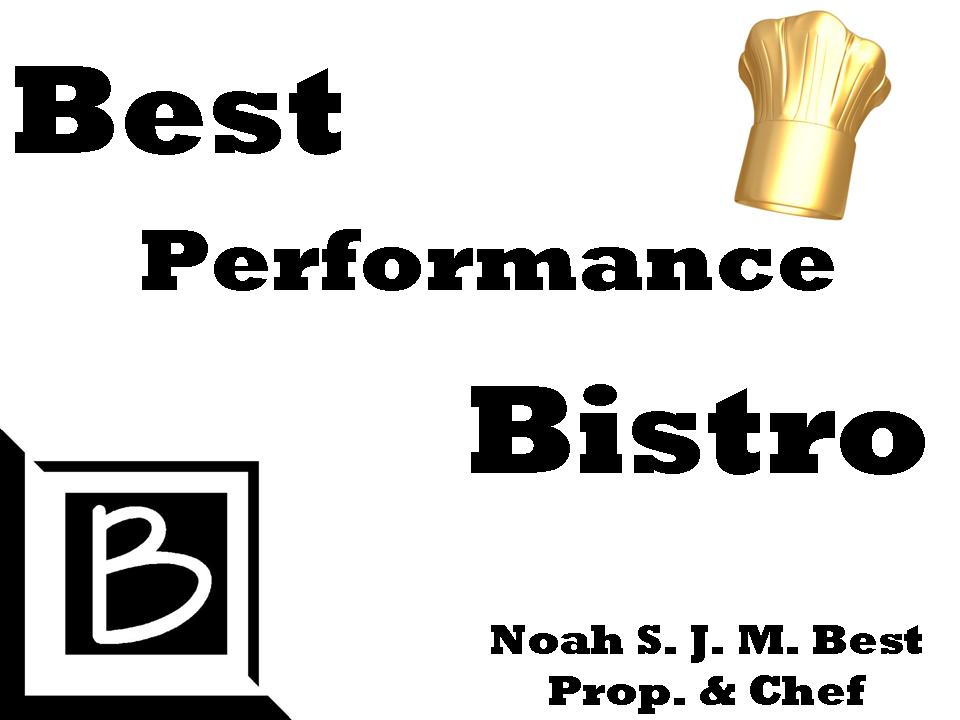
At the age of five, Noah wanted to be a chef and run his own business: Best Performance Bistro. He talked about it all the time to everyone - his grandparents, his kindergarten teacher, us. I made a sign for his dream business; it hangs to this day on the wall of my office:


Last year, Noah and his friend Frankie spent a Saturday afternoon on a video game company business plan, with Frankie as the CEO and Noah as his second-banana. Noah did not want to be Frankie's second-banana.

As Noah experienced school rules (particularly when a few of his buddies did not follow the rules), I reinforced the learning with an HR geek's eye to the future. "It so important to learn how to follow the rules in school. Because if children don't learn how to follow the rules in school, I usually end up firing them as adults," I hammered home, as Noah listened, wide-eyed.

Noah's career and business vision continues to evolve. He experiments with "Let's Play" videos, which in turn have strengthened his presentation skills to the point where his elementary school principal suggested that Noah consider a career in broadcasting. It's all good fodder for learning marketing on-the-job. Noah is also developing a video game and composing the accompanying soundtrack music, for separate potential sale on Steam. We love his energy, ingenuity, and of course, him. His current goal is:
  • Go to a 2-year SUNY college and take computer science, business and culinary arts courses;
  • Finish his degree at a 4-year SUNY college (or at the Culinary Institute of America, if he gets a scholarship);
  • Work for someone else first before a) starting his own successful video game software company and b) then, once he makes his fortune, opening his own gourmet pastry shop.
Noah is working on a new business plan where he is the CEO of his own video game software company, and his pals Charlie and Tim are part of his leadership team. I'm tentatively slated as the Chief Administrative Officer, grateful to achieve one of my goals to be part of the leadership bench plan of a start-up company. Per his request, I've also shared the business plan for The Best Framing Company, which his father and I worked on together 7 years before Noah was born.

As his parents, Joel and I do our best to also give Noah the gift of authenticity: to see us as fellow creative humans as well as his parents and mentors, taking risks and experiencing, like Edison, the occasional creative failures almost always in stride. For to do otherwise would stifle the music that streams from within each of us that must be expressed / shared. I can't wait to see what Noah cooks up as he approaches adulthood. I'm honored to witness his journey, as we Bests continue to mentor each other.


Sunday, June 17, 2012

To the Men Who Have Mentored Me: Thank You.

I have been privileged as a professional woman to have been both mentored and sponsored by a number of men with a wide variety of talents and backgrounds. Some of them have earned by blood relation my best wishes on this Father's Day; the others are members of my extended professional and entrepreneurial tribe who by the happenstance of our work together, used their discretionary power to formally and informally recognize and subsequently nurture my talents and mentor and/or sponsor me on how to best leverage them: my best wishes to them as well. My list of luminaries is by no means inclusive, and I'm pleased to report, rather long in reality.

Some of them are on my Board of Directors, and some of them were the guru in the path at the exact moment this student was ready to learn her next lesson. In no particular order:
  • My dad, who brought me to his office when I was 4 years old, years before Take Our Children to Work Day, inspiring me to want to get a job on the spot, and who later in my life taught me how to cold-call, find great jobs and who as a life-long commission-only salesman, refused to ever let me give up;
  • My granddaddy of blessed memory, who taught me how to change the flat tire which blew out in front of his house instead of changing it himself, and who explained how important investing for the future was while inspiring me with his incredible drive and work ethic. Years later, paying it forward, I taught my dad, the city boy, how to change a flat tire;
  • My high-school teacher Dave of blessed memory, who invited me to debate daily in Social Studies to keep the class lively for all of us, and sadly, who died before I graduated college;
  • To my high-school friend Tooch, who encouraged my writing and musical creativity by writing down the music of the only song I have ever written (As a "learning-disabled" alto, I cannot read or write music), and then featured it as part of an Under Pressure Band performance during our senior year in high school;
  • My home Assemblyman Bob of blessed memory, who during my senior-semester internship taught me to leverage data and research to navigate political twists and turns; to spot hawks on the NYS Thruway; that utility trucks (long before the advent of GPS) were the best source of directions when you were lost; who gave me my first career job, post-internship / post-graduation; and who abhorred wearing ties and related professional artifice;
  • My entrepreneur "big-brother" John, who three years ago took me out to breakfast and asked me why I wasn't working for myself;
  • My friend Allen, welcoming me as the newcomer who asked to join the church Personnel Committee and then sponsoring me for several tenures in lay leadership;
  • My brothers Rob and James, who put up with years of dopey end-user support and hardware questions from me, until I had both absorbed enough of their teachings and, (which I'm sure was a great relief to them) finally learned enough to start utilizing my girlfriend Google instead of calling them first;
  • Bob, my former boss who "saw" me and what I had to offer his organization, creating both a job and wonderful career experience for me as a result of a courtesy networking meeting;
  • My former boss Bill, who tirelessly coached me on a daily basis because he believed in me and my talent;
  • My friend John, who's insight as a therapist and healer as well as his treasured friendship during the last 25 years has been an invaluable touchstone;
  • My friend and colleague Dale, who taught me everything he knew about loss prevention, retail and corporate life;
  • My friend and colleague Barry, who taught me distribution operations and to shake off setbacks;
  • My friend and colleague "Coach" Don, who took the time to teach me change management and share his career best-practices, codifying my recent and past experiences thereof;
  • My friend and colleague Peter, who continues to teach me that mediation is the answer, and who's vocational commitment and leadership is second to none;
  • My friends and colleagues George and Andy, who continue to inspire me with the success of how they so skillfully execute the strategic plan of their burgeoning business;
  • My colleague and new friend Al, who with gusto has invited me to jump into the entrepreneurial waters with him, stretch my arms and enjoy the swim;
  • My friend, mentee and colleague Ryan, who returns the gifts I have given ten-fold;
  • My friend and colleague / partner Ron, who has journeyed with me through the ebbs and flows of the economy in support of our mutual success;
  • My husband and my son, who continue to sustain me with the unwavering faith and belief in my talents and capabilities as we journey this path together.
My tribal brothers, thank you: you truly put the men in mentor. A wonderful Father's Day to you and yours.

 
Cohoes Falls, Cohoes, NY: Sacred Site for the Mohawk Nation.

Sunday, June 3, 2012

Innovation and Growth in Work and Business Love a Vacuum (Breakdown)

My husband Joel's business, The Best Framing Company, celebrates its 18-year anniversary this month.

The Best Framing Company was conceived early in 1994 when the owner (Joel's boss at the time) of the local Deck-the-Walls franchise decided not to renew his 10-year franchise. Before he closed the store down, the franchise owner offered Joel and me the opportunity to renew the franchise for $350,000, at a 6% interest rate. The franchise owner offered to hold the 10-year note, and we would make the astronomical and discouraging monthly payments to him, with little hope of making any profit. No, thank you. Joel had had enough of mall working life. And we had just purchased our first home, so our savings account was a bit thin and our bills were much more substantial. Joel and his boss proceeded to make arrangements to close the store by April 1994, and Joel commenced his job search, a bit discouraged at the thought of working for one of the competitors.  

That offer from Joel's boss sparked an idea. Why not open our own store, in a small strip mall, and Joel could make his own hours? As a skilled custom picture-framer, Joel had a healthy client list of happy customers. Armed with that unique selling proposition and our respective skill sets and smarts, Joel and I proceeded to complete the four months of research and legwork to build a business plan to obtain a Small Business Administration (SBA) loan to open The Best Framing Company's bricks-and-mortar storefront.

By the time Joel was laid off, we completed the business plan. Joel continued his job search and fixed up our new 1944 house while I shopped our 40-plus-page business plan around to SBA loan providers.

One of the local nonprofits at the time ran an SBA loan program: I sent the business plan to the nonprofit, and the 21 year-old pisher loan coordinator said that 1) our business plan was great; and 2) we were a shoe-in to get our loan. The Pisher assured us we would be on the May 1994 loan review committee agenda. Armed with that information, I made arrangements to lease a store space effective June 1, 1994 and order the materials Joel would need to open the store, using a $6,000 credit union line-of-credit.

The day before the loan review meeting, I called the Pisher to ask when we would appear. "Oh," he said, rightfully embarrassed. "I forgot to put your loan review on the agenda. He heard me choke. "But don't worry," he hurriedly said, hoping to avoid my expected outburst. "We can get you on the July agenda. I was deadly and sadly, calm. "You've just put my husband and me into financial jeopardy," I carefully said. "What are you going to do to fix this?" The Pisher did not man up. "I'm sorry, there's nothing we can do," he said. "But let me give you the phone number of Manny Choi at Fleet Bank, who is on our loan committee. He may be able to help you." I hung up the phone and cursed loudly, dropping F-bombs for 15 minutes straight. When I was done, and calm again, I called Manny Choi.

 He agreed to meet me the next morning. I did not sleep at all that night. And while I'm not normally a crier, I cried bitter tears all night long. Joel tried to console me, but I was inconsolable. "Who the hell do I think I am," I wailed to Joel. "What business do I have thinking that I can put together a business plan?" Now I've pushed us deeper into debt. $6,000 will not cover all of the initial carrying costs. I'm so sorry I've gotten us into this!"

Joel knew better. "It's a great plan, and we'll get a loan somewhere else, I know we will," he said, 110% solid in his belief in my abilities, and his own. "We can definitely do this." I took a much-need break from the tears, sniffling. "You're just saying that because you love me," I said, whimpering a bit around the edges - also unlike me. Joel hugged me. "No, I'm not," he said, firmly. "I would tell you if I thought we should quit. We haven't explored all of our options yet."

The next morning, calm from lack of sleep and all cried out, I donned my best blue navy suit and met with Manny Choi. I watched him for nearly 45 minutes as he read all 40 pages of our business plan, occasionally nodding. He closed the plan, and looked up at me. "What do you think?" I asked him. He smiled. "I think we can get you a loan. I'll just need current résumés for you and Joel. You have a good plan here." I exhaled. Joel was right. We got the loan.

As I learn and grow incrementally wiser from these wonderful adventures, I'm quicker to remember my Daddy's advice: if you make 30 calls and you get one sale, you're doing well. In order to start The Best Framing Company, we only needed to make two calls before we got the sale. Or as my friend Barb Wisnom would say: just try and collect 20 "no's." We were only able to collect one "no" before we got the "yes!"

Good hunting for your "yes's" this week, and every week. And savor the creativity and growth that you will produce when faced with the vacuum of a breakdown. For that - and you - are the gift and the breakthrough in the face of every breakdown.

 Happy Anniversary, hon!  

Sunday, May 20, 2012

Giving Pays Large Dividends for All of Us at Work

If you have come here to help me, you are wasting your time.

But if you have come because your liberation is bound up with mine, then let us work together.
  

I've spent most of the day putting the finishing touches on this year's property tax appeal; my brain cells are squeezed dry. I am, as always, looking forward to a lively discussion on Tuesday, while Noah and Joel watch me channel my inner amateur lawyer.

Earlier today, our Senior Youth conducted their annual Bridging Service to send their dear comrades off to college. One of them quoted Lilla Watson during their presentation to us. Another youth, a former Coming-of-Age mentee, shared her love and appreciation for her older sister, headed off to start her college career. "I know my life would not have been the same without her in it; I will miss her terribly," she said.

Yesterday, my good friend Avon asked me to present a Career Workshop to up-and-coming young women served by The Northeast Parent & Child Society. I'm no fashion diva by any means; and my challenge was to coach these young women on how to make a great first impression.

In preparation, I reached back to my own early career experience, with a equivalent college loan debt of about $40,000, making only $8,000 a year during my first of many rides to the Recession Rodeo. What meant the most to me as I began interviewing for career jobs? The first thing that came to mind was how to look professional on a shoestring budget. So I put together an interview outfit accordingly:
  • Navy jacket:      $6
  • Navy pants:       $3
  • Peach blouse:   $3
  • Matching scarf: $1
  • Navy shoes:      $7
And made it part of my "show me, don't tell me" workshop presentation.

That day, I shared my experience, strength and hope with about 60 talented young women, as my mentors before me have so lovingly and generously done for me. I validated their great outfits, all decked out for the Career Fair. I recognized some of their talents on the spot, and told them. I gave advice on how to best manage and conceal tattoos. I gave them my daddy's advice: if you make 30 calls and you get one "yes," you're having a great day: for after all, you only need one job. My friend and co-presenter Barb Wisnom provided a new, more positive trope on that theme: try and collect 20 "no's" and make it a game. Can you? I'm going to try it out. Because one of the hardest lessons when you're marketing yourself to potential employers (customers) to learn is that it's business, not personal. "How can your feelings not get hurt," one of the students asked. "Practice, repetition and time," I replied, with full knowledge and serenity.

Saturday was a day of vocational giving, and I received nothing in return except an unexpected and delicious sandwich from Ambition. And from my experience, the dividends that always come thereafter are: priceless.

Sunday, May 13, 2012

Focus the Strengths of Your Own Team of Avengers at Work


Warning Before Reading: Spoiler Alert for the movie The Avengers.


Joel, Noah and I saw The Avengers this weekend. It was a great movie on a number of levels, the best movie we've seen as a family in a long time. Of course, what delighted me personally were the plot elements that addressed The Avengers often-exciting and frankly chaotic team-building process - it was more of a series of brawls than a process. Their storming phase included but was not limited to the triggering of weapons of mass destruction and destroying large swaths of New York City. No time or patience for an HR geek to facilitate the Avengers through the universal development phases that all teams experience. Movie or reality: chaos is definitely the more common state.  

When I attended and subsequently taught facilitation training at GE, one of the optional overnight homework assignments was to ask the class to watch 12 Angry Men: not only a great flick with a wonderful ensemble cast, but also a great "show me, don't tell me" way of absorbing the challenges and rewards of developing and working with high-performing teams.  

The Avengers is more complex and nuanced than 12 Angry Men, however. The plot thread of the marginalization and eventual integration of Dr. Bruce Banner / The Hulk as one of the Avengers is a team effectiveness nugget to note.

As we're re-introduced to Bruce Banner, he's banished himself from his life's work and from any stress triggers to keep The Hulk from making an appearance. He can't even off himself to escape his volatile burden: he and his alter-ego the Hulk are both indestructible. Bruce is self-deprecating and at times ashamed: the last time he was in New York City, he sheepishly admits that he "broke Harlem" and was not quite welcome back there.

Some of the Avengers keep their distance: Nastasha Romanov (The Black Widow) and Tony Stark (Iron Man) however immediately engage him as a respected colleague who they admire and want to get to know better.

Of course, The Hulk subsequently returns and wreaks havoc and destruction in his usual psychopathic way. The rest of The Avengers are similarly challenged, by both external and internal demons, not unlike what the Hulk experiences.

However, when the going got tough, the Avengers regrouped as a tough team and got going. Captain America marshaled The Avengers, doling out assignments; for example, Tony Stark was charged with repair and engineering work while fighting off alien enemies swarming like killer bees. When he got to Hulk's assignment, Cap directed him to "Hulk: Smash!" Hulk grinned and there was a sea change: Cap not only acknowledged Hulk as a team member and "saw him;" Cap also asked Hulk to take his strength and use it for the good mission of the team.

Hulk subsequently teamed with Thor and saved Tony Stark, and got his confidence back in the process: while the punch he gave Thor after they defeated their group of bad guys was not appropriate behavior for the workplace, for The Avengers' comic-book work environment and norms, it signaled that Bruce / Hulk had come in from the margins and regained his confidence in his abilities and his contribution. The team saw it and he saw it. When there work was done and one team member asked him how he kept his anger (and the Hulk) at bay, Bruce grinned confidently and declared that "he was always angry;" e.g., that the Hulk was always there, a part of him, and clearly he embraced that as a strength and a contribution.

Which made the last scene after the credits all the more delightful: The Avengers, sitting together in a destroyed NYC deli, have a quiet sandwich together.

You know you've made it as a team when you can share a quiet meal together without the need to chat.

How will you marshal the strengths of your own team of Avengers - inviting them in from the margins, self-imposed or otherwise - to support your mutual success at work and in your business?

Sunday, May 6, 2012

Share the Success of Your Discretionary Power on LinkedIn

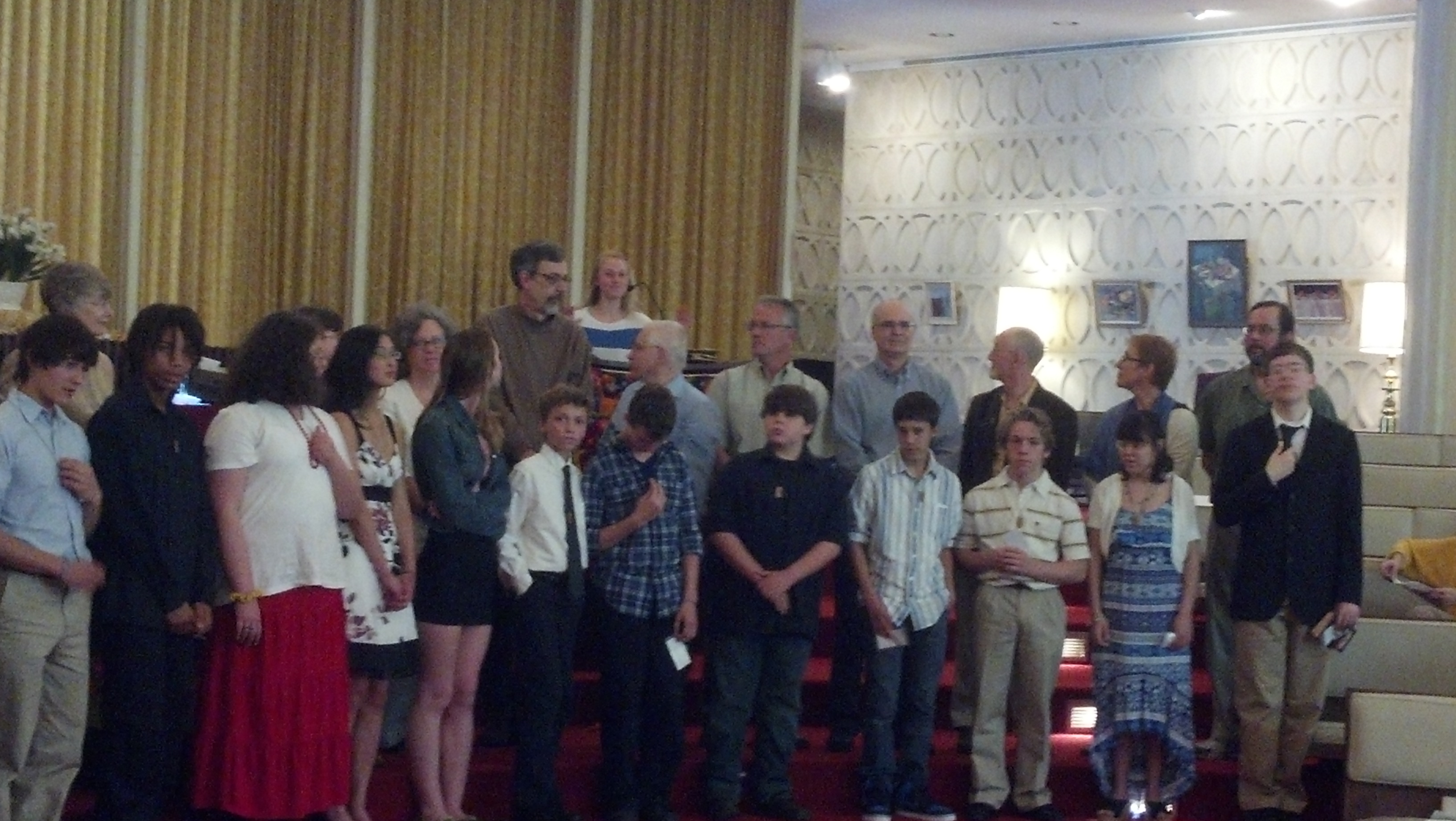
The 8th and 9th-graders conducted their Coming-of-Age Service today. They did a wonderful job sharing their musical, artistic, and writing talents with the rest of us in the congregation, including their credos - the culmination of a year of study and self-reflection. One of the Coming-of-Age youth, in sharing her credo with us, shared also her belief that if we all did our small parts in small ways to help others, then together we could actually make things better overall.

At the end of the service, their adult mentors (one of whom was my husband Joel) stood behind the Coming-of-Age youth and shared with the congregation one to three words about what was special about their respective mentees. The positive use of the discretionary power of our adult community's network in support of our young mentees was evident (and heart-warming) indeed.

I met a seasoned professional at a large networking function last week who's been out of work several months due to the elimination of their department at their last company. We chatted for a while and I offered my Recession Rodeo experience, strength and hope as well as a few tips and advice on how to reach out to potential decision-makers in their field. I also encouraged Seasoned Professional to connect with me on LinkedIn, which would expand their LinkedIn network view further for potential local companies to pursue. After I accepted Seasoned Professional's invitation, I reviewed their profile. They had no fewer than 13 recommendations from their last company, from direct supervisors, managers and customers alike.

So I used a bit of my own discretionary power, and forwarded Seasoned Professional's LinkedIn profile to one of my contacts on LinkedIn, with this note:

 [Dear Contact]! I hope this finds you and yours well. 
  
I met [Seasoned Professional] at a networking event this week; I can't personally vouch for them as a reference, however they seem like a good egg in case you're looking for a [seasoned professional] - they have 13 references on their LinkedIn profile including from their immediate managers; their department was eliminated earlier this year. 

Would love to catch up with for lunch; please let me know what your schedule looks like.  

Have a great weekend,  

Deb. 

Debra J. M. Best, SPHR

How will you leverage your discretionary LinkedIn power and support the mutual success of you and your network this week; and every week? Let us know how it turned it out for all of you, and I will, too.


Sunday, April 29, 2012

Your LinkedIn Headline is Your Calling Card for Success

I spent last Wednesday night with a great group of women from the Schenectady BPW, sharing my LinkedIn experience, strength and hope in support of our mutual success.

One of the first tips I shared was the importance of your LinkedIn headline: if your LinkedIn profile is your website (which I firmly believe), then the headline on your profile is your calling card, announcing that you're open to whatever opportunities you seek or hope to share. "I'm involved in several endeavors that speak to me vocationally and creatively," I shared with the group. "So I include them in my headline:

Change / Project Manager | HR / Recruiting Leader | Career Coach | Writer |
Small-Business Social Media Marketing SME."

"You include everything in your LinkedIn headline?" one of the workshop attendees asked. "Yes," I responded. "I subscribe wholeheartedly to Dr. Wayne Dyer's assertion that I will not die with the music still inside of me. So I include all of my 'music' in my LinkedIn headline and profile. When we say who we are and what we do, opportunities open up on LinkedIn and elsewhere." The attendee, a wonderful women full of "music" herself, decided to update her headline.

I received a LinkedIn message from her two days later:

Thanks, Deb! After working on my LinkedIn account [and headline] last night, I was invited to [a key business organization] event as a guest next week to network about [my project]. Who knew????

I did.

To our shared success on LinkedIn (and everywhere else)!

Sunday, March 25, 2012

Walk the Success Talk on LinkedIn

I attended a wonderful event this past week with some great connections, old and new. As is my habit with new connections, I used LinkedIn invitations this weekend to add them to my network for future reference / connecting. Next to my favorite past-time of in-person networking, it's networking in virtual 3D for me: business cards, no matter how clever and artful, are too one-dimensional.

As I ran down the list, 7 of the 35 people I interacted with that night did not have LinkedIn profiles. All 7 are heavily engaged in some way with customers, existing and potential, so I'm puzzled at their absence on LinkedIn. Among other utilities, a free LinkedIn account bottom-line is free marketing for your organization, plain and simple. Even if you're modest and don't want to draw the LinkedIn attention to yourself, my LinkedIn profile until this year served as both an adjunct to my organization's website as well as my own personal website. In several roles I've had throughout my career as Chief Recruiting Officer (and consequently, one of the organization's key sales leaders), the organization's brand is also linked positively to my personal brand. It's a win-win all around.

Now, as a new beta user of LinkedIn over 7 years ago (when, like Google+, it was invitation-only), did I cringe a bit as LinkedIn sucked up all of my Outlook contacts? Yes. Has it ever created a privacy issue? No, especially since you can lock down part or all of your LinkedIn profile if you choose to do so. Not to make the LinkedIn luddites even more paranoid; but if you don't lock down your LinkedIn profile privacy, news organizations have gotten into the habit of hyperlinking the name of people they mention and/or quote in articles to their LinkedIn profiles. So if you plan on or have engaged in felonious activity, let the LinkedIn buyer beware.

Being a free and then a business member of LinkedIn has been all upside. I've sourced great candidates, made strong connections and even attracted new business prospects for both me and my network thanks to LinkedIn. The ongoing evolution of LinkedIn functionality over the years has only enhanced the platform as a key business tool for me. Now, if you're reading this post from LinkedIn, I know I'm preaching to the choir. But if you were at that event last week with me and you know one of the 7 people currently not on LinkedIn, wouldn't you agree that:
  • It's a great name-sourcer, whether you're in Sales, Marketing or Recruiting;
  • For Recruiters and HR folks: it gives you a running start on reference checks;
  • It's so much better than just plain Outlook contacts, that many CRM platforms now integrate with LinkedIn;
  • The "Open to" choices on the bottom of your respective profiles allow you to customize your audience on LinkedIn, e.g. that if you're not open to Career Opportunities, you simply uncheck the box;
  • How nimble the update tools are for LinkedIn profiles (and, BTW, you can turn the functionality off so every time you update something on your LinkedIn profile, it doesn't appear on your news feed);
  • If you're meeting someone in person for the first time, you know what they look like thanks to their LinkedIn profile;
  • If you've met someone at an event and forgotten what they look like, their LinkedIn photo will thankfully remind you;
  • If you care about one of those 7 folks' success, you'll invite them to join LinkedIn today and show them how to get their LinkedIn success path started.
Bottom-line: if your goal is career or entrepreneurial success (or both): be found on LinkedIn.

View Debra J.M. Best, SPHR's profile on LinkedIn
     

Sunday, March 18, 2012

Effectively Managing the Ebbs & Flows in Business & At Work

I had a 3-hour breakfast meeting with my mentor John yesterday. Our mentoring relationship cuts both ways: from a business / career standpoint, John is my big brother, e.g. I want to be like him when I grow up; and I am a Human Resources SME resource to him. We mentor each other from our respective SME places, and it works well.

Our mentoring kicked off 3 years ago when John invited me to breakfast and asked me if I had ever thought about working for myself. A fellow GE alum who took the entrepreneurial plunge 20 years ago himself during an economic ebb (Or as I like to call it, a ride to the Recession Rodeo), he saw the same potential in me, for which I am eternally grateful. When a mentor appears in your path and reflects back what's in your heart and mind, unsolicited: well, that's the gift that keeps on giving.

My query for John this week was how he managed the ebbs and flows of his work and business. Our GE training especially geared us not to accept ebbs at all. My Energizer-Bunny belief system heretofore was all flow. John improvised a wave to emphasize his point to me. "It ebbs and flows all the time, it goes up and down all the time," he said. I scowled. "I don't like the ebbs at all," I replied. He grinned at me. "Get over it and move forward," he coached. "That's what my board of advisers always tells me; and you have to accept the ebbs, too. Shake it off and move on." So that's my vocational meditative focus this week: accepting the ebbs and not letting them define my strategic path and goals. His advice works for both entrepreneurs and career employees:
  • Ebbs, in business and in work, are a fact of life to be accepted / embraced;
  • Build up a great cash reserve (2 years or more is optimum) during the flow times (e.g. live and manage your business below your means, want what you have, etc.);
  • An advisory board is an essential anchor for both the ebb and flow times;
  • Be grateful and accept the gift of the flow times;
  • Always have prospective clients and new products in pipeline during both the ebb and flow times;
  • Don't take the ebbs personally;
  • Use the ebb times as an opportunity to reflect, recalibrate your strategy; re-charge professionally and personally (e.g. Sharpening the Saw, a la Stephen Covey); refresh your marketing and business plans. (My friend and colleague Lisa Jordan seconded this emotion, too.)
Gratitude today for my fellow travelers along the River of Dreams: thank you for your presence in both the ebbs and flows, as we journey together and support each other's success.

Sunday, February 12, 2012

You Can Handle the Truth About Your Job Search

I received an email today from a reader in a related industry who has been looking for full-time work since 2010:

Hello Debra-

I read your recent blog with great interest.  I've been "selling" myself for the past 2 years with no full-time takers.  Please see my attached resume. Comments?  Opportunities?


Thanks so much.

Gentle readers:  I was born in New York City, and my daddy is a Marine.  If you ask my opinion, I will serve it up directly and in the spirit of supporting our mutual success.  In that context, below please find my direct and heartfelt response:  

Thank you for your kind feedback on my blog posts.

I've been to the Recession Rodeo a few times myself as well as in the hiring authority seat, so my response to you is grounded in both of those experiences:

 
  • If you hadn't mentioned that you have worked, albeit part-time, since 2010 in your email below, I would assume from your paperwork that you have not worked at all since 2010.  Please consider including your contract / project work since 2010 as your most recent / current work experience on your résumé since 2010.   Work, part-time or full-time, still counts as your most recent résumé item, perhaps as a Consultant performing contract work.  One significant reason you may not be getting many bites from hiring authorities.  Also, from your email, I don't know the depth and breadth of these part-time / contract projects.  Summarizing recent projects since 2010 in both your résumé and cover letter / email telegraphs that you're already working and therefore employable to a potential hiring authority.
  • Good, bad or indifferent, your lack of social media presence does not do your background justice.  Please do some LinkedIn searches to see how peers / colleagues in your industry have punched up their LinkedIn profiles, including a headshot that communicates trust.  The more you use / explore LinkedIn, the more you learn its capabilities to promote you as a professional / practitioner.  Also:  once you're 5 years or more past graduation, no need to keep graduation dates on your résumé.  Also:  lots of great books in the local library system on this subject.  A lot of what I've learned about social media has come from reading and online / in-person seminars, almost all free.  And once I learn it, I implement it.
  • Hiring authorities and your network will do a quick Google search to see what you've been up to / what you've accomplished.  My quick search on you turned up an article implying different employment dates / employers.  When dates / employers don't sync up on a résumé, hiring authorities will also take a pass.  Please ensure that your résumé matches these searches, and/or outline why.
  • Stating reasons for leaving jobs / companies on your résumé and LinkedIn profile not only demonstrates that you're proactive, but may also help a hiring authority take a second look at you as a candidate.
  • Most importantly:  have you asked for this same feedback / advice from trusted colleagues / friends in your local network that you have asked from me (someone who has never met you)?  From former clients?  If so, what are they telling you?  When I hear the same piece of feedback twice, I have learned over time that I need to listen, incorporate it and change course. Also, for those folks in your network and clients that you've listed on your résumé:  have you networked face-to-face with all of them, asking for their advice and asking how you can be of service in return?  Selling is an in-person exercise; with your background and accomplishments, you know this even better than I do.

Hopefully my comments were what you were looking for: I suspect that you will make better progress with in-person contacts within your own network.  I wish you the best in those explorations.

Have a great week and thanks again for your feedback,

Deb.


Sunday, February 5, 2012

Doing the Job During the Interview Benefits Everyone at Work

As I mentioned in this post last November, one of my best experiences of doing the job in the interview was when Bill, the best mentor / manager of my career to date, gave us both a break from the formal interview and asked me to write a press holding statement based on a chemical accident scenario he provided, giving me 15 minutes to do so.  I loved it.  I banged out the holding statement in 5 minutes and handed it over to him.  Bill looked at me, looked at his co-interviewer and smiled.  I knew then that I had the job.  More importantly, I had the wonderful experience of witnessing Bill's appreciation for my talent and abilities as part of the interview process.  Because Bill had the insight as the hiring authority to ask me to do the job in the interview, we had each other at hello.  It was the beginning of a rewarding work experience for both of us.

This past week, a colleague took this best practice one step further and invited their lead candidate to work in the office with them for 3 hours.   Clever Colleague wanted to see how Lead Candidate conducted themselves as they completed a key task together.  Both Colleague and Candidate were pleased, and both are now truly ready to seal the deal with a job offer.  

Clever Colleague was also smart enough to know (without prompting from me) that they should pay Lead Candidate for their work demonstration time.  

This is a best practice because it takes the hiring process out of the theoretical chatter that is the banal and tired employment interview and brings it into the realm of actually demonstrating the work that needs to be done by the prospective employee (vendor) to successfully fill the needs of the job at hand.

It just like good theatrical writing:  show me, don't tell me.  If you don't have the skill to demonstrate how you can you best meet the needs of your next employer (customer), you become like a forgettable movie ending:  like the bad narrative that someone else forced Harrison Ford to do at the end of Ridley Scott's first theatrical release of Blade Runner.  It just doesn't ring true, and it does not do you as the candidate (vendor) any justice at all.  (Or, as illustrated by my favorite line from Human Resources interviewees who have no HR experience:  "I'm really great with people.")

Work demonstration does not need to be just the hiring authority's idea during the employment sourcing process:  how have you (and will you) proactively demonstrate by doing the job in the interview that you will concretely meet / exceed your new employer's needs?  Is it a press release, a custom Crystal report, a draft marketing plan for your first 90 days in your new role?  The creative possibilities are endless, for both vendors and customers.  Make your best work demonstration offer to the decision-maker.

This week:  show us what you can do at work.


Sunday, January 29, 2012

Be the Vendor (Not the Applicant) in the Job Interview (Sale!)

It's a point-of-view game-changer:  are you an applicant in a job interview, or a vendor?  I've witnessed the paradigm-shift as I've coached two talented professionals over the last month.  It's like watching the switch flip back to the authentic human capital offering.

Approaching a job interview as an applicant forces you into the frame of supplicant. Beggar. When you approach the interview in the sad context that the hiring authority is doing you a favor by talking to you, you're just another dancer in the Chorus Line, murmuring the meaningless mantra of "God, I hope I get it."  Oh, you'll get it all right.  Rejected, with that attitude.  You're starting out one-down from the hiring authority, in the supplicant's unmistakable veil of fear.  Fear of rejection; fear of not being able paying your bills, fear of (insert your worst fear).  In this fearful stance of the supplicant, the hiring authority has you at hello.  You're trapped, you're at their mercy and you did to yourself.  Don't get me wrong;  the "What Does He Want from Me, What Should I Try to Be" mantra is not necessarily the recipe for disaster:  supplicants are hired every day.  The hiring authorities who need that kind of control need that kind of applicant who surrenders their personal power for a paycheck.

It doesn't have to be that way.  You control this interview conversation more than you know.

This interesting switch dwells in all of us:  it's just a matter of being open to its possibility and creativity.   In coaching the First Professional, who had not been on an interview in several years and who with real anxiety asked me to put together a top-10 list of the toughest interview questions and answers to expect, I did something unexpected.  "Don't approach this as an applicant," I coached.  "If instead in this meeting you were the vendor providing these services on an outsourced basis for this customer, tell me why you're the vendor they should choose."  The Professional's fear evaporated, and the sparkle returned to their eyes:  the switch was turned on and they instantly empowered themselves.  They proceeded to knock my socks off with their proposal and their energetic self-possession.  They did the same with their new employer the next day.  They were head-and-shoulders above the other candidates in their expertise and self-confidence, who I'm sure were merely supplicants.

It's not just a matter of the supplicant answering the employer's questions correctly:  the real conversation is the subject-matter expert (SME) vendor meeting / exceeding the potential customer's needs.  And as my daddy taught me:  when the customer is doing most of the talking, and is selling you on them and their organization, the signs are positive that you can ask for the order (job), and close the sale.

I saw the switch turned on again today with the second Professional.  While their current employment situation is a bit sketchy due to economic forces, they have several potential "customers" interested in their services next.  The pressure is off, there's no veil of fear, they don't have just one potential customer.  As they engage in their initial customer conversation this week, they can be completely present, authentic and centered as the talented SME Vendor they are, exploring the potential possibilities together with the customer of working together, rather than stoop to some bizarre and hellish personal version of Quiz Show.

May the week ahead present innovative proposals and produce fruitful new partnerships for us all.


Sunday, January 22, 2012

The Power of Small Mastermind Groups in Business and at Work

I had the honor and privilege to witness the power of 3 small local mastermind groups engaging together for a great cause this past Friday night:  the Siena College Pink Zone Reception and Game honoring breast cancer warriors and benefiting Capital Region Action Against Breast Cancer (CRAAB!), a wonderful local nonprofit organization that empowers people impacted by breast cancer.

The high-energy and hands-on CRAAB! Board of Directors was front and center at the event, giving speeches, selling raffle tickets and merchandise; and some of them proudly walked the pink line of Siena basketball players to be honored for their status as warriors living and thriving despite experiencing breast cancer. Those CRAAB! women are a force to be reckoned with; they literally glowed.  The power of their group is their connection and commitment to each other, to the community and to their clients, both from a fund-raising and a service standpoint.  Their reputation is sterling, and deservedly so.

CRAAB! honored a member of another mastermind group, a local chapter of the national Women Presidents' Organization (WPO). As Marri (clearly moved by the energy of the moment) received her "Power Up the Pink" award, her WPO colleagues, her fellow Presidents / CEOs, were there in force to cheer her on.  Their camaraderie and connection were crystal-clear:  they stood up for each other's success and had a great time together in the process.

There were PWN (Professional Women's Network) members there as well:  my own home mastermind group.  A few of the WPO members are also PWN members.  That synergy has been wonderful for both groups.  I have written before about PWN, and how the group has supported and accelerated my own success, as well as the success of my fellow members as each other's Board of Directors.  The PWN women (current and past) who have contributed to my life and work, and vice versa:  these are vocational and reputational pearls whose value is truly priceless.

The success of all three mastermind groups lies in their smaller size (no more than 15 - 20 members each), intimacy and focus.  All three groups are clear about their commitment to each other, as well as their group and individual goals.  They stand up for each other's success, as well as the success of their respective groups as a whole.

And while all three groups focus on the female gender, their power is universal to both genders.  On an intuitive level, the paradigm is a lot like what George Bailey discovers at the end of It's a Wonderful Life:  he focused on building the success of the people of his beloved community of Bedford Falls; and in turn, those same people reflected not only George's personal success, but also put their money where their reflective support was.

In this new year, I wish you the success, prosperity and joy of your own mastermind group:  whether you join an existing mastermind group, or even more innovative: create a new one.

Click Here to Donate to CRAAB!

Sunday, January 15, 2012

The Spinach in the Teeth of Your LinkedIn Profile

A true friend will tell you expediently and directly when you have spinach in your teeth.  These valuable human mirrors are here to preserve your credibility, for the simple reason that in most social and business settings, spinach, lipstick or other foreign objects in your teeth send a negative message, which may or may not be true:  that you have poor grooming habits, that you don't pay attention, etc.  Perception is indeed reality if the spinach in your teeth remains unchecked.  For that reason, I very much appreciate when friends perform this service for me. 

Dear colleagues, I've written a few posts on proofing and pumping up your LinkedIn profiles.  Although LinkedIn emulates some of the more informal social media channels like Facebook, it continues to be the social media channel for professionals and for businesses.  Our LinkedIn profiles are essentially our eCommerce websites.  Our customers -- potential clients and employers alike -- source and preview our services and our reputations on LinkedIn.  Yet, there's still spinach in the teeth of some of your LinkedIn profiles:
  • One recent profile update included a wonderful new head shot photo; yet, the headline on their profile has been misspelled for over 2 years.  And attention to detail, like in most professions, is a critical trait that their internal and external clients require;
  • While we're on the subject of pictures:  I am no great beauty, and I hate getting my picture taken.  Yes, I confess:  I used a badge photo (e.g., the photo from my work badge) on LinkedIn for a while, because it was one of the few head shots taken of me where I don't look like Frodo's little sister.  My dear friend Anne pointed out the spinach in the teeth of my LinkedIn badge photo and referred me to a nice photographer for my current head shot;
  • Still on the subject of photos:  please don't use head shots of you wearing sunglasses.  Banking institutions ask you not to wear sunglasses into their establishments:  potential customers on LinkedIn would like to make eye contact with you in the same way, lest they suspect you of felonious intentions;
  • One more photo comment: those of us who have met you in person can tell that you're using your decades-old Bar / Bat Mitzvah / Confirmation / Coming-of-Age head shot.  Either embrace your vintage or invest in a talented colorist, please; 
  • I just did a search for "manger" (the common misspelling of "manager" on most LinkedIn profiles and sadly a lot of job applications) on LinkedIn:  the search produced 205,274 results (By the way, my first-level LinkedIn contacts come up first in this search:  dear colleagues, please review your profiles!!).
Pump up your LinkedIn power:  ask a friend to review your page to ensure that you have no spinach in the teeth of your LinkedIn profile.  It can only help your reputation, and your earning potential.

Sunday, January 8, 2012

Say Yes to Mentees at Work (and on LinkedIn!)

At the beginning of my HR career, as I laid off many discouraged Aerospace employees weekly, I discovered that I loved giving them career and job search feedback.  It was like practicing Reiki:  I was equally energized at the end of a conversation inspiring them to try something new in their job search or their career, based on what I learned about their talents / interests.  When that ignition conversation produced results for my clients:  wow, that was great.

It energized me so much that I approached a Ph.D organizational effectiveness consultant hired by my company at that time to ensure that we maximized our restructuring / layoff efforts.  I explained to him what I just explained to you above, and I asked him what type of training / education I could pursue to develop and follow my newly discovered vocational bliss.  He barely made eye contact with me.  "I don't know what to tell you," he answered, distracted and disinterested.  I was momentarily discouraged, and not at all impressed.  I followed my bliss and found my way anyway.  It was just another instance of whistling in the dark along my career path and following my instincts, which are usually spot on.

This past week, I received a LinkedIn message from a young man named Daniel who is as passionate about Corporate Recruitment and Change Management as I am.  He wanted to speak to someone who shared his vocational interests and who was farther along in their career.  Apparently, his manager did a LinkedIn search and came up with my profile, particularly since I indicate on my LinkedIn profile that I'm open to expertise requests.  So naturally, I said yes to Daniel.  We set up a time to talk, and I offered to share my experience, strength and hope.

Daniel is enthusiastic, talented and lucky to work for an organization that encourages his high level of engagement and personal vocational vision. As with the vast majority of the mentees who seek me out, I validated and verified the treasures that are already there, some recognized and some unrecognized.  Like Glinda (The Good Witch), I shine the light on the ruby slippers and delight in their joy that the answers were always there.  And in return, I am once again energized and renewed.  I learn as much, if not more, from my mentees as they do from me.  And Daniel, my first mentee via LinkedIn, was no exception.

Thank you, Daniel.

Keep saying "yes!"